The San Francisco Board of Supervisors is considering adopting an "Urban Agriculture Incentive Zone" policy to incentivize the development of urban gardens on empty lots (which actually do exist in San Francisco).


"Until now, the city has given few incentives to would-be urban garden developers. But a new proposal before the Board of Supervisors would create what’s called an Urban Agriculture Incentive Zone for property owners willing to convert their empty lots to urban gardens," reports Mark Kelly.
"If the law is passed, participating property owners would see a significant cut in their property tax. To qualify, their gardens must be open and accessible to the public." The gardens must also remain as gardens for five years under the current proposal.
Read the full story: San Francisco Supervisors Consider Tax Breaks To Seed Urban Garden Growth

SF Looks to Cultivate its Urban Gardens
Stephanie M. Lee reports on the complicated nature of creating an urban garden in San Francisco, and how the area's Planning and Urban Research Association (SPUR) hopes to streamline the process.
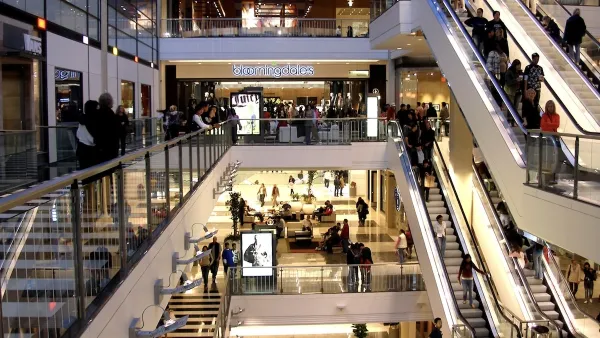
SF weighs putting data center inside abandoned mall
An unnamed technology company may buy the entire building, and convert one-third of it into what development consultants are calling a “regenerative urban energy center.”
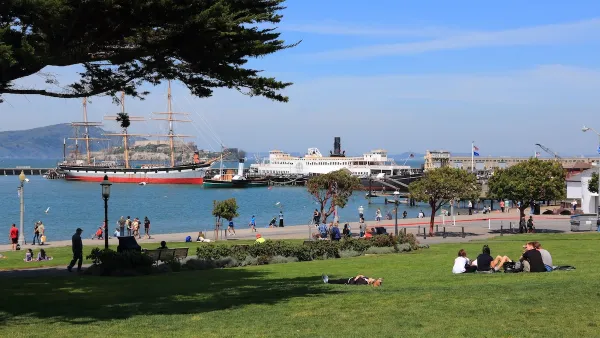
SF residents can no longer use potential shadows to block housing developments
The SHADE act also halves the allotted time for certain appeals before projects can progress.

Planetizen Federal Action Tracker
A weekly monitor of how Trump’s orders and actions are impacting planners and planning in America.
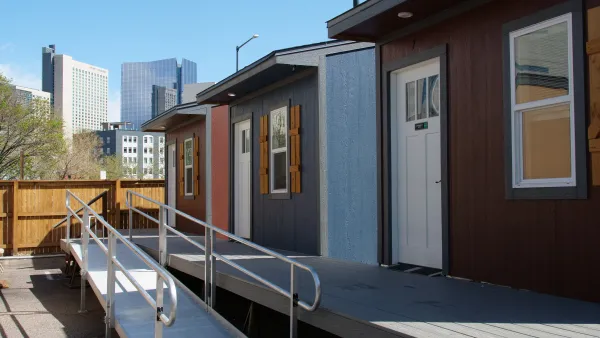
Denver is solving homelessness. Why aren't the rest of us?
Since 2023, Denver's street homeless population has decreased by 64%, proving that effective tools exist to support those in need of housing.

Chicago breaks ground on $3 billion megadevelopment
The new neighborhood, titled Foundry Park, will one day host 3,700 residences.

LA to bring bus rapid transit to its busiest corridor
The Vermont BRT line will feature 12.4 miles of dedicated bus lanes along the Vermont corridor.

The road design trend that's killing Americans
“Stroads,” street-road hybrids that channel high-speed traffic through residential areas, are increasingly common and often deadly for pedestrians.

Chicago's streets are littered with dead birds. Will the city protect them?
Chicago sits in the route of migratory birds traveling south. Its abundance of glass buildings and bright lights make it particularly disorienting for the animals.

FREE Course: Walkable City 1: Why Walkability?
After describing his path towards focusing on walkability as the essence of good planning, Jeff Speck marches through his five principal reasons for making more walkable places.
Reinventing Malls: Planning Alchemy—Turning Gray Fields Into Gold
The course focuses on the opportunities and imperatives that shape reinvention of mall sites.

City of Rosemead
Rutgers University, Edward J. Bloustein School of Planning and Public Policy
One Hundred Miles
The Architects Foundation
University of Cincinnati Online
Montrose County
Northern Illinois Transit Authority (NITA)
The Pocatello Development Authority