New Haven recently launched a campaign called RE: New Haven in the hopes of increasing the city’s homeownership rate. Will the incentive-backed, multimedia approach work in increasing residents' stake in the community?


Bill Bradley reports on the recent multimedia barrage from RE: New Haven—the marketing arm of a campaign designed to raise the city's homeownership rate from its current tendency to hover between 32 and 34 percent.
"They’ve plastered billboards along I-91 and I-95 and put ads on Metro North trains. The housing incentives have existed for years, but this new full-court press aims to get more people to move to New Haven and retain the residents who are already there. They’ve swapped out the city’s dusty old website with little resources for a flashy new web portal," writes Bradley.
As for why the city is going to such great lengths to attract homeowners: "It’s a program with its sights set on social equity. They want lower- and middle-income families to have a stake in the community."
The marketing campaign follows a largely ineffectual group of financial incentives, including forgivable home loans, forgivable loans for renovations, and in-state college tuition for local high school graduates—check out the article for more details.
Read the full story: Can a Glossy Website Convince People to Buy New Haven Homes?

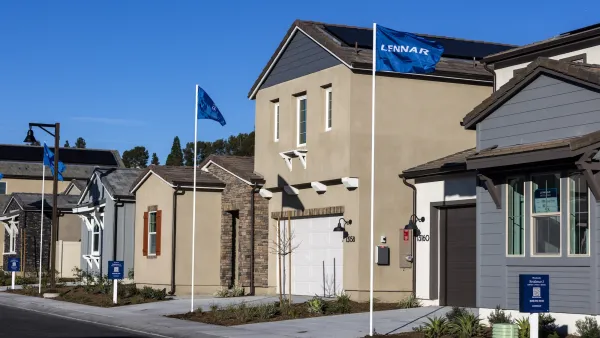
Just 17% of San Diego households can afford the city's $1M+ median home prices
The city is becoming increasingly unaffordable to prospective homebuyers.
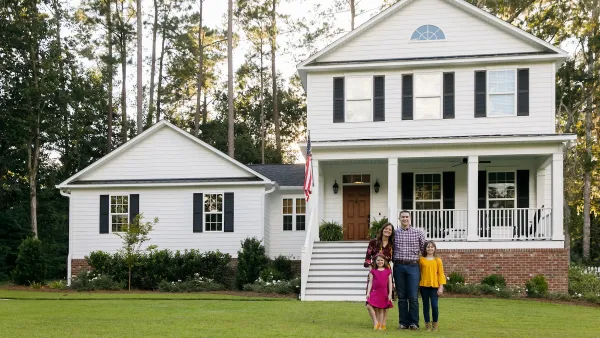
Report: Housing is becoming an 'inherited advantage'
As housing costs soar, buying a home is becoming unaffordable to a large swath of American families.
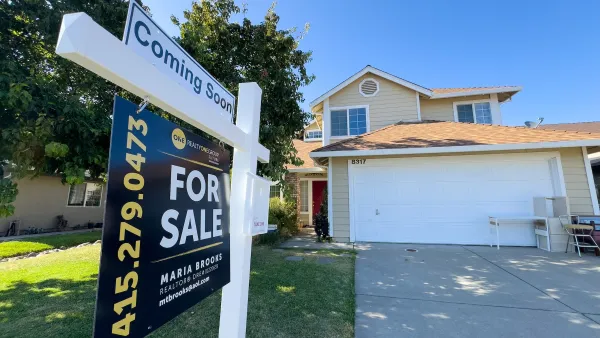
'Starter' homes cost over $1M in 242 US cities
Once concentrated in coastal regions, cities with starter homes valued at over $1 million are now spread across 26 states.

Planetizen Federal Action Tracker
A weekly monitor of how Trump’s orders and actions are impacting planners and planning in America.

Amtrak, CN end decades-long dispute with eight-year agreement
The new operating agreement establishes an updated framework for the companies to work together, including processes to resolve disputes.

Judges permit Denver to divert 77,000 acre feet from the Colorado River for reservoir expansion
Overuse and climate change have caused the Colorado River’s water levels to plummet.

NYC DOT wants faster, more permanent street upgrades
The city is examining ways to build more concrete infrastructure without getting entangled in 'decades-long' projects.

'Something we’ve never seen before:' rising utility rates could strain city finances nationwide
Data centers, climate change and other factors have caused utility rates in the United States to increase by 38% since 2020.

Trump to overrule local leaders, lease millions of acres of America’s Pacific Island territories’ seafloors to mining companies
International law says that the Indigenous people of America’s territories have a right to prior and informed consent regarding projects that impact their countries.

FREE Course: Walkable City 1: Why Walkability?
After describing his path towards focusing on walkability as the essence of good planning, Jeff Speck marches through his five principal reasons for making more walkable places.
Reinventing Malls: Planning Alchemy—Turning Gray Fields Into Gold
The course focuses on the opportunities and imperatives that shape reinvention of mall sites.

Harvard University Graduate School of Design
KFH Group Inc.
Greater Baltimore Committee
The Architects Foundation
University of Cincinnati Online
The Pocatello Development Authority
The Urban Renewal Agency of the City of Pocatello