A map released this week and shared on numerous websites shades the 4,871,270 U.S. Census Blocks with zero population. That includes rugged backcountry and suburban super malls.


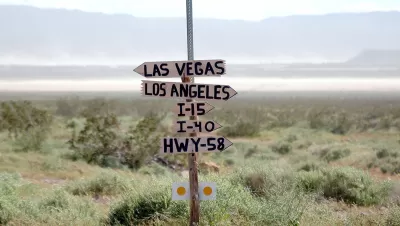
Intrepid mapmaker Nick Freeman released a map this week that shades all of the unoccupied territory in the United States.
“As of the 2010 census, the United States consists of 11,078,300 Census Blocks. Of them, 4,871,270 blocks totaling 4.61 million square kilometers were reported to have no population living inside them. Despite having a population of more than 310 million people, 47 percent of the USA remains unoccupied,” explains Freeman in his original post.
Freeman also makes the critical distinction between the two types of areas that are uninhabited:
- places where human habitation is physically restrictive or impossible, and
- places where human habitation is prohibited by social or legal convention.
Read the full story: Nobody Lives Here


Mapped: Racial Demographics, Down to the Census Block
An interactive map created by National Geographic creates a detailed look at the racial makeup of the United States.
Oregon cities are excluding a key tool that could help their housing goals: maps
An effort to use geospatial analysis to understand how housing and access to opportunity are distributed in Oregon cities has largely stalled.
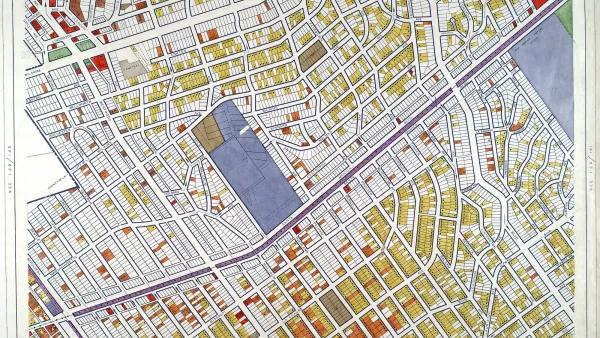
100 Years ago, Zoning Changed how US Cities Grow. Today, it is Ripe for Reform.
Euclidean zoning was enshrined in U.S. town planning by a 1926 Supreme Court decision. Cities are recognizing it’s time for some drastic changes.

Planetizen Federal Action Tracker
A weekly monitor of how Trump’s orders and actions are impacting planners and planning in America.

Amtrak, CN end decades-long dispute with eight-year agreement
The new operating agreement establishes an updated framework for the companies to work together, including processes to resolve disputes.

Judges permit Denver to divert 77,000 acre feet from the Colorado River for reservoir expansion
Overuse and climate change have caused the Colorado River’s water levels to plummet.

Maryland local governments examine if they should have more power to raise property taxes
Maryland’s housing market is out of reach for the majority of moderate-income residents.

Northwest rail fans eager for Sept. 30 debut of Amtrak’s Airo fleet
Get ready for that new train smell and more seats. But they won’t go faster or run more frequently on the Cascades route in Washington and Oregon.

NYC DOT wants faster, more permanent street upgrades
The city is examining ways to build more concrete infrastructure without getting entangled in 'decades-long' projects.

FREE Course: Walkable City 1: Why Walkability?
After describing his path towards focusing on walkability as the essence of good planning, Jeff Speck marches through his five principal reasons for making more walkable places.
Reinventing Malls: Planning Alchemy—Turning Gray Fields Into Gold
The course focuses on the opportunities and imperatives that shape reinvention of mall sites.

Harvard University Graduate School of Design
KFH Group Inc.
Greater Baltimore Committee
The Architects Foundation
University of Cincinnati Online
The Pocatello Development Authority
The Urban Renewal Agency of the City of Pocatello