The Downtown Activation Plan shifts from Euclidean to form-based zoning to encourage more commercial development.



Seattle Mayor Bruce Harrell’s recently unveiled Downtown Activation Plan significantly expands the types of businesses permitted in the city’s central core as part of an effort to revitalize the district.
Current rules, based in Euclidean zoning, prohibit businesses such as arts studios, medical offices, and printing shops from downtown Seattle. Harrell wants to fill vacant storefronts and transform downtown Seattle into a thriving, mixed-use neighborhood.
As Alan Ehrenhalt explains in Governing, “The idea was to keep downtown streets free of noxious enterprises such as factories and sweatshops that would be a nuisance to nearby residences. As the decades went by, however, the list of proscribed businesses grew in many places beyond the bounds of logic.”
Now, a shift toward form-based codes promotes a new way of thinking about zoning: “Instead of regulating commercial spaces according to what goes on within them, we should largely forget about uses and regulate design — how well a structure relates to its surroundings and how it works aesthetically.” Another planning concept, the ‘Gehl door average,’ uses the number of doors in a given commercial block as a proxy for vibrancy.
FULL STORY: The Obsolete Zoning Laws that Leave Downtowns Stagnant

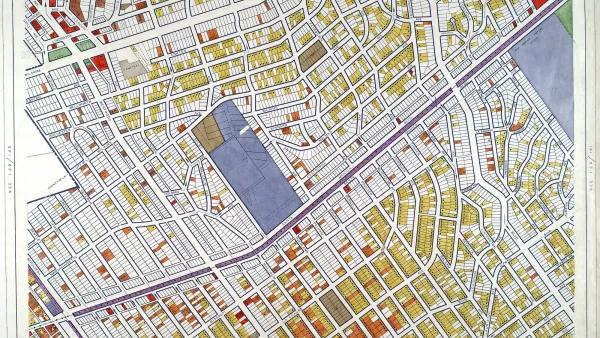
100 Years ago, Zoning Changed how US Cities Grow. Today, it is Ripe for Reform.
Euclidean zoning was enshrined in U.S. town planning by a 1926 Supreme Court decision. Cities are recognizing it’s time for some drastic changes.

Arlington’s New Form-Based Zoning Designed to Guide a Cohesive Public Realm
Form-based zoning focuses on the design of buildings and how they interact with the public realm.

Seattle Adopts a New Growth Plan, but Major Zoning Battles are Just Beginning
Approving the comprehensive plan update is just the first step in rewriting the city’s zoning code to accommodate more density and affordable housing.

The state-sanctioned urbicide of Austin
People don’t kill cities. Freeways do.

US to reduce Colorado River water deliveries to Mexico
A new Colorado Treaty amendment reduces Mexico’s Colorado River water allocation by 250,000 acre feet.

New Jersey’s second-largest city bans standalone data centers
Jersey City will continue to allow co-location facilities, such as those meant for research institutions that store their own data.

Amtrak not solely to blame for New Jersey commuter rail's unreliability, report finds
A new study from the Garden State Initiative found that NJ Transit’s budget grew 20% across a 4 year period, but reliability declined significantly over the same period.

EPA erases limits on planet-warming pollution from power plants
Under Monday’s plan, power plants would still have some limits on how much mercury, arsenic and other contaminants they can emit.

Phoenix announces new on-demand transit service, more frequent RAPID buses
Both new services will launch in October, and are part of Phoenix's Project Effective Access Solutions for Easing Congestion.

FREE Course: Walkable City 1: Why Walkability?
After describing his path towards focusing on walkability as the essence of good planning, Jeff Speck marches through his five principal reasons for making more walkable places.
Reinventing Malls: Planning Alchemy—Turning Gray Fields Into Gold
The course focuses on the opportunities and imperatives that shape reinvention of mall sites.

Eagle County Government
Harvard University Graduate School of Design
Nashville Planning Department
The Architects Foundation
University of Cincinnati Online
The Pocatello Development Authority
The Urban Renewal Agency of the City of Pocatello
Journal of the American Planning Association