To create more active and economically healthy downtowns, cities are seeking development on parking lots.


More and more downtowns are re-evaluating the value of their parking lots. As Romy Varghese reports, cities are creating incentives to build revenue-generating uses on parking lots. With a decline in driving and a desire for a more "pleasant pedestrian experience,” cities like Minneapolis and Baltimore are providing tax credits on parking lots to attract new development and considering prohibiting parking lots on main streets.
“Parking lots are natural for development because there’s often no demolition involved and chances of running into environmental issues are lower.” Varghese quotes Minneapolis' principal city planner Beth Elliott: “The more property investment, the more taxes we have to be able to make improvements in roads, in transit, in parks.”
Read the full story: Parking Lots Demolished in Cities’ Revenue Bid as Driving Wanes

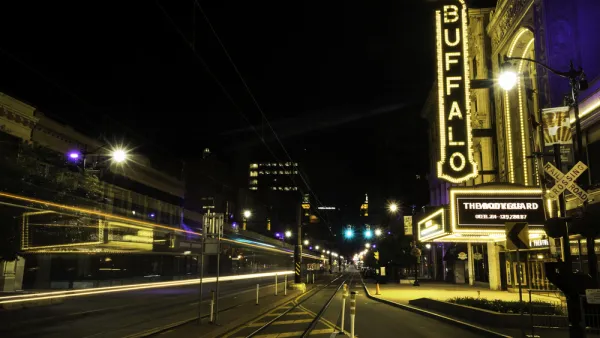
How Downtown Public Space Investments Impact Equity
Efforts to revitalize declining downtowns have, in some cases, become catalysts for supporting small, minority-owned, local businesses.
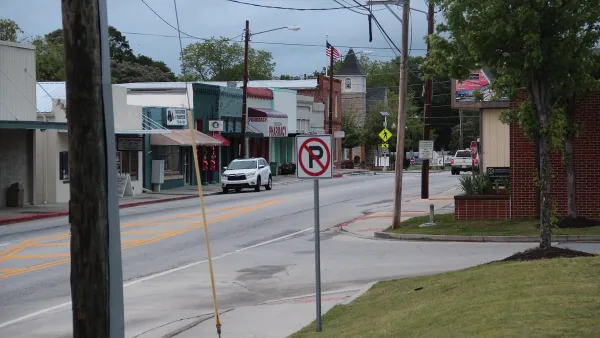
Planning a New Downtown in a Small Georgia Town
At a recent town hall meeting in Loganville, Georgia, local residents and stakeholders proposed ways to revitalize the city's downtown and build improved amenities for the city's residents.
Toledo Healthcare Nonprofit Wants City Parkland for a Parking Garage
ProMedica is a locally owned nonprofit healthcare organization that is in the process of moving 900 employees from various suburban locations in the Toledo area into its newly renovated riverfront headquarters in Downtown Toledo.

Planetizen Federal Action Tracker
A weekly monitor of how Trump’s orders and actions are impacting planners and planning in America.

California plans to bury El Niño’s downpour
If the state plays its cards right, it may be able to store a billion acre-feet of El Niño’s water in aquifers.

Chicago breaks ground on $3 billion megadevelopment
The new neighborhood, titled Foundry Park, will one day host 3,700 residences.

California High-Speed Rail Authority CEO resigns after $600,000 scandal
Under Ian Choudri, the authority used taxpayer dollars to fund first class flights and trips to nightclubs.

Want to study the Missouri River? Soon, you may need unanimous approval from 10 states
Legislation would require 10 governors’ permission to study or build projects moving water outside the basin.

Desperate measures: Advocates weigh draining Lake Powell to fill Colorado River
Draining the reservoir could reduce evaporation losses by a couple hundred thousand acre-feet.

FREE Course: Walkable City 1: Why Walkability?
After describing his path towards focusing on walkability as the essence of good planning, Jeff Speck marches through his five principal reasons for making more walkable places.
Reinventing Malls: Planning Alchemy—Turning Gray Fields Into Gold
The course focuses on the opportunities and imperatives that shape reinvention of mall sites.

City of Rosemead
Rutgers University, Edward J. Bloustein School of Planning and Public Policy
One Hundred Miles
Hunter College, City University of New York (CUNY)
The Architects Foundation
University of Cincinnati Online
City of Cambridge
Montrose County
The Pocatello Development Authority