The already brilliant city of Chicago is soon to get another big draw—the extension of a riverwalk promenade between State and Lake streets.


John Greenfield writes of signs of progress from the development of the Chicago Riverwalk extension—a promenade planned for the Chicago Rover between State and Lake streets. As described by Greenfield, “This promenade promises to be a major downtown attraction, as well as a scenic, car-free route for pedestrians and bicyclists.”
“This new segment of riverwalk will stretch about a half mile along the south bank of the waterway, incorporating six different themed sections delineated by the river bridges. The different areas would range from ‘The Jetty’ fishing area to ‘The Cove’ kayak dock to ‘The Swimming Hole’ water play zone.”
Project planners have already acquired key Congressional approvals to redefine the navigable waterway and a $98 million loan. Construction has already begun on the portion between State Street and LaSalle streets. The most recent sign of progress from the riverwalk, according to Greenfield’s report: “The city is looking for operators of recreational, cultural, entertainment, restaurant and retail establishments to help with the planning, development, operations and management of the new space.”
Read the full story: City Seeks Contractors to Run Concessions on the New Riverwalk

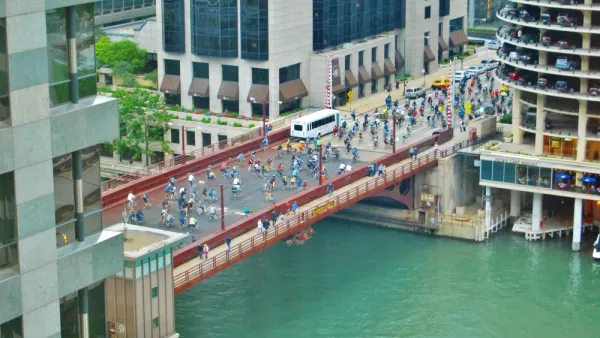
Watch: How the Chicago Riverwalk Project Will Transform the City
Sasaki Associates has produced a video about the under-construction Chicago Riverwalk. The lesson for all cities from the video, as well as the project: "If you can imagine it, you can built it."
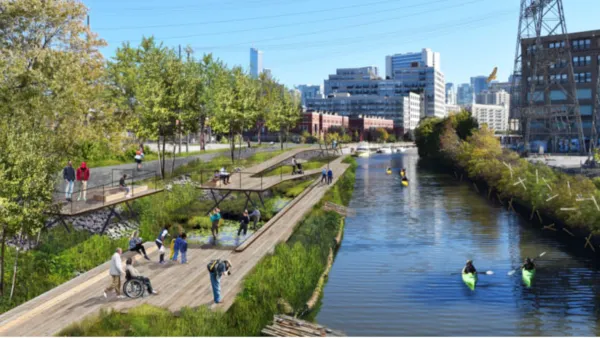
North Branch of the Chicago River Transforming Into a ‘Wild Mile’
A remarkable transformation is underway along the North Branch of the Chicago River, after being channelized and brutalized for well over a century.
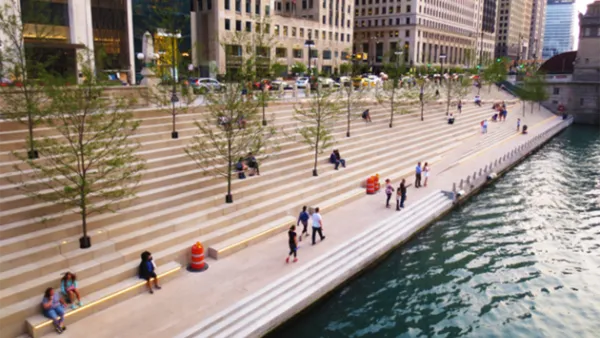
Embracing Rivers as a Vehicle for Urban Revitalization
A new study includes urban rivers as a potential powerful amenity for economic development and revitalization. The city of Chicago has already taken note.

Planetizen Federal Action Tracker
A weekly monitor of how Trump’s orders and actions are impacting planners and planning in America.

Amtrak, CN end decades-long dispute with eight-year agreement
The new operating agreement establishes an updated framework for the companies to work together, including processes to resolve disputes.

Judges permit Denver to divert 77,000 acre feet from the Colorado River for reservoir expansion
Overuse and climate change have caused the Colorado River’s water levels to plummet.

Idaho may see an 18% drop in federal surface transit funding — the largest estimated cut in the US
Transit systems in rural communities are much more reliant on federal funding to provide their services.

How ‘post-disaster gentrification’ alters neighborhoods after natural calamities
After hurricanes, fires or other calamities, the original residents of a community are often replaced by younger, wealthier residents.

Maryland local governments examine if they should have more power to raise property taxes
Maryland’s housing market is out of reach for the majority of moderate-income residents.

FREE Course: Walkable City 1: Why Walkability?
After describing his path towards focusing on walkability as the essence of good planning, Jeff Speck marches through his five principal reasons for making more walkable places.
Reinventing Malls: Planning Alchemy—Turning Gray Fields Into Gold
The course focuses on the opportunities and imperatives that shape reinvention of mall sites.

Harvard University Graduate School of Design
KFH Group Inc.
Greater Baltimore Committee
The Architects Foundation
University of Cincinnati Online
The Pocatello Development Authority
The Urban Renewal Agency of the City of Pocatello