The developers of a transit-tracking app have some for exciting news for public officials: There's a way to improve transit rider satisfaction without reducing fares, buying new vehicles or expanding service. Just give your users more information.


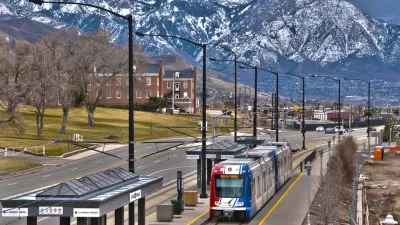
Emily Badger shares the findings made by Kari Watkins and her colleagues, who developed the popular transit-tracking app OneBusAway and have spent years studying the behaviors and opinions of transit riders. Simply by providing real-time information, Watkins and her colleagues were able to reduce anxiety over when the next bus or train would arrive and improve rider satisfaction. "In fact," notes Badger, "their results (Watkins has now extended this research to other cities) suggest that transit agencies might get a better payoff by telling people when buses will arrive than by making them arrive more often."
"We’d rather have real-time [data] than more frequent service," Watkins says.
"In an era when transit agencies are strapped for cash, this means they could provide better service without literally providing better service," adds Badger. "This also means that they could significantly improve their product by focusing not on the experience of riding the bus (or train), but by thinking more about what happens before we even board it."
Read the full story: For Bus Riders, Real-Time Arrival Data Is More Important Than Better Service

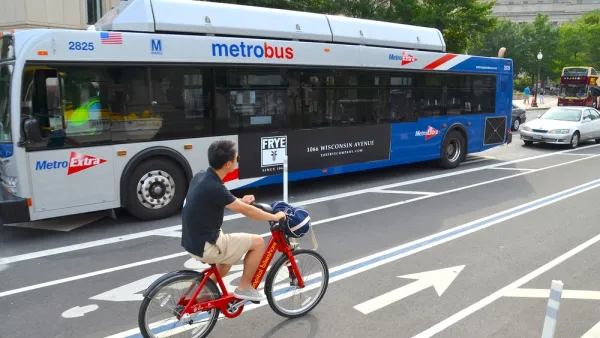
Auditing D.C. Metro's New Bus Prediction Technology
Regular bus riders know how integral an accurate real-time bus arrival system can be to the experience of bus transit. D.C. Metro just made a switch in technology, and Greater Greater Washington evaluated the results (so far).
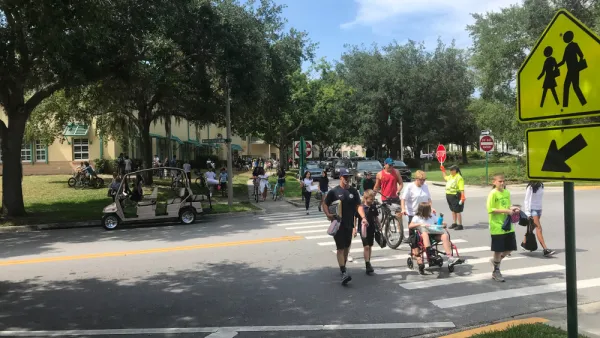
Earn Rewards for Traveling for by Foot, Bike, Bus, or Train
The city of Orlando is partnering with the Miles app.
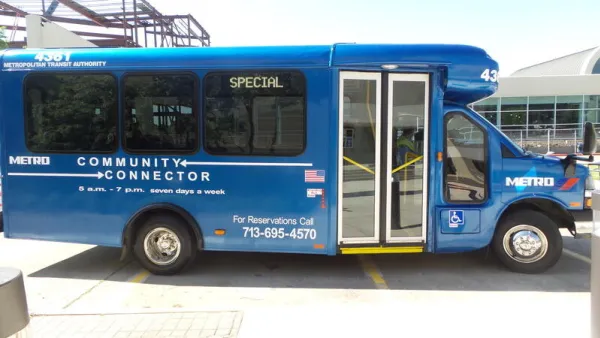
On-Demand Transit in Houston: There's an App for That
The city of Houston this week launched an app for its Community Connector shuttle service as part of a ten-month pilot project.

Planetizen Federal Action Tracker
A weekly monitor of how Trump’s orders and actions are impacting planners and planning in America.

Amtrak, CN end decades-long dispute with eight-year agreement
The new operating agreement establishes an updated framework for the companies to work together, including processes to resolve disputes.

Judges permit Denver to divert 77,000 acre feet from the Colorado River for reservoir expansion
Overuse and climate change have caused the Colorado River’s water levels to plummet.

NYC DOT wants faster, more permanent street upgrades
The city is examining ways to build more concrete infrastructure without getting entangled in 'decades-long' projects.

'Something we’ve never seen before:' rising utility rates could strain city finances nationwide
Data centers, climate change and other factors have caused utility rates in the United States to increase by 38% since 2020.

Trump to overrule local leaders, lease millions of acres of America’s Pacific Island territories’ seafloors to mining companies
International law says that the Indigenous people of America’s territories have a right to prior and informed consent regarding projects that impact their countries.

FREE Course: Walkable City 1: Why Walkability?
After describing his path towards focusing on walkability as the essence of good planning, Jeff Speck marches through his five principal reasons for making more walkable places.
Reinventing Malls: Planning Alchemy—Turning Gray Fields Into Gold
The course focuses on the opportunities and imperatives that shape reinvention of mall sites.

Harvard University Graduate School of Design
KFH Group Inc.
Greater Baltimore Committee
The Architects Foundation
University of Cincinnati Online
The Pocatello Development Authority
The Urban Renewal Agency of the City of Pocatello