Big trucks and big cities just don't mix. But a federal panel that's developing a strategic plan for national freight transportation is reportedly paying little attention to the conflict. Tanya Snyder explains why that may not be a bad thing.


"Big freight trucks are incompatible with cities in many ways, bringing danger, pollution, noise, and traffic congestion. They park in bike lanes and have shockingly big blind spots, putting everyone around them at risk," observes Tanya Snyder. "And yet, most cities haven’t found a way to reconcile the need to move goods with all their other priorities."
According to Snyder, "the interplay between urban freight transportation and smart growth" is receiving scant attention from a Freight Advisory Committee convened as part of the MAP-21 transportation bill. But that may not be a significant loss, argues Genevieve Giuliano, a member of the national Freight Advisory Committee, because freight management is best handled at the local level.
For those cities willing to take a more active role in managing their freight conflicts, Snyder details four potential solutions:
- Smaller trucks
- Off-peak delivery times
- Load consolidation
- Cargo bikes
Read the full story: Trucks and Cities Are Like Oil and Water. Is There a Solution?

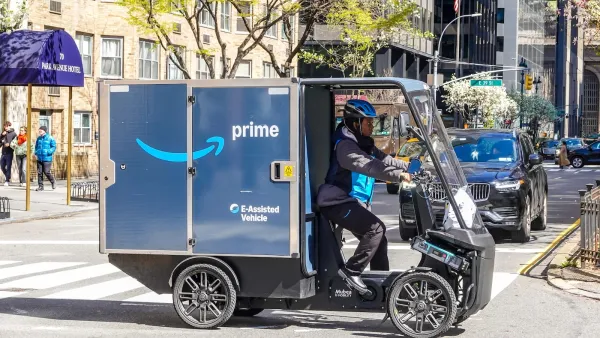
Amazon launches cargo bike deliveries in DC
The e-commerce giant is deploying micromobility devices including cargo bikes and mopeds in several global markets to reduce the need for larger trucks and vans for last-mile deliveries.
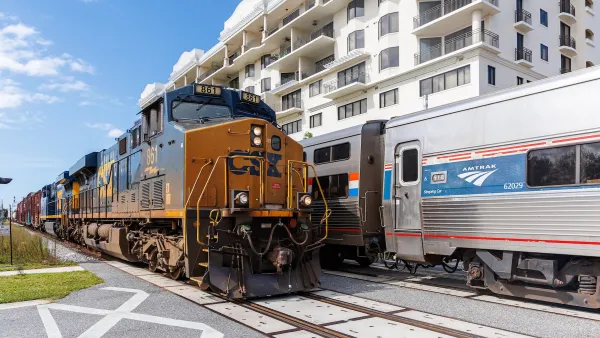
Who owns US railroad tracks?
Nearly three-quarters of Amtrak's trains operate on tracks owned by private companies. What does this mean for U.S. passenger rail?
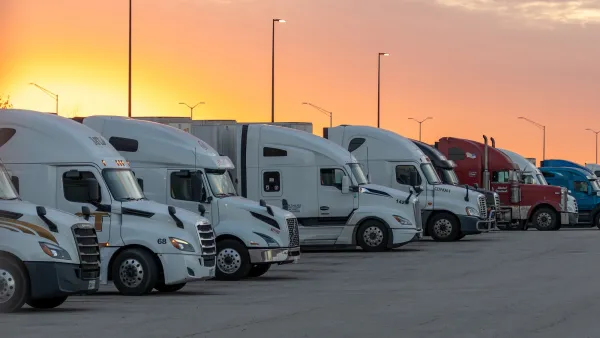
New Federal Rules Require Comprehensive State Plans for Truck Parking
States will now have to inventory and account for truck parking facilities on freight corridors.

Planetizen Federal Action Tracker
A weekly monitor of how Trump’s orders and actions are impacting planners and planning in America.

‘Going backwards:’ Baltimore mayor, students rally against state's transit funding plan
Maryland's proposed six-year plan provides no funding for Baltimore’s BMORE bus program and reduces its road maintenance funding.

Detroit to transform waterfront with $2.2 billion investment
Developers will convert about 18 acres of unused parking lot space into civic spaces.

U.S.-Iran war may have ‘devastating’ impact on cost to warm homes
Vermont and Maine residents may see a 76% increase in the cost of warming their homes this winter.

Senate bill would ‘overhaul’ environmental permitting laws
Under the proposed act, government agencies would also not be able to suspend or rescind permits after granting them.

Exemption applications for NYC’s pied-à-terre tax see 55% success rate
The city sent nearly 40% of its initial pied-à-terre tax warnings erroneously.

FREE Course: Walkable City 1: Why Walkability?
After describing his path towards focusing on walkability as the essence of good planning, Jeff Speck marches through his five principal reasons for making more walkable places.
Reinventing Malls: Planning Alchemy—Turning Gray Fields Into Gold
The course focuses on the opportunities and imperatives that shape reinvention of mall sites.

One Hundred Miles
County of Mendocino
planning NEXT
The Architects Foundation
University of Cincinnati Online
Montrose County
Northern Illinois Transit Authority (NITA)
The Pocatello Development Authority