Many of America's national treasures sit in low lying areas of D.C. that are vulnerable to extreme floods (it was built atop a tidal plain, after all). With such floods likely to increase, planners and engineers are devising protection plans.


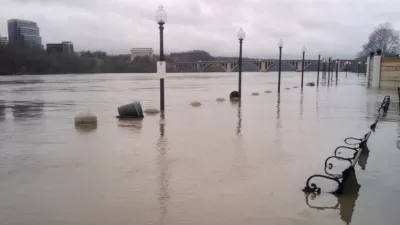
"The Mall is where people mean when they say Washington was built on a swamp — or more precisely, malarial marshland," observes Jennifer Ludden. "Constitution Avenue was once a boggy creek. So you can easily imagine water rushing over manicured lawns, pouring into marble lobbies, threatening the national treasures within — just like in one of those D.C. disaster movies that Hollywood loves."
"Except it already happened [PDF] — in 2006, [Amy Tarce, a federal urban planner with the National Capital Planning Commission] says, after a week of continuous rain."
"There's a very interesting discussion always about how bad is it going to get in 50 years," says Brendan Shane, chief of the Office of Policy and Sustainability for the District of Columbia's Department of the Environment. "Well, the problem is, it could get really bad already."
Flood barriers, automatic flood gates, green roofs, and a huge underground pumping station are among the defense measures being considered and built to keep the flood waters away.
Read the full story: With National Treasures At Risk, D.C. Fights Against Flooding
Lessons from Louisiana
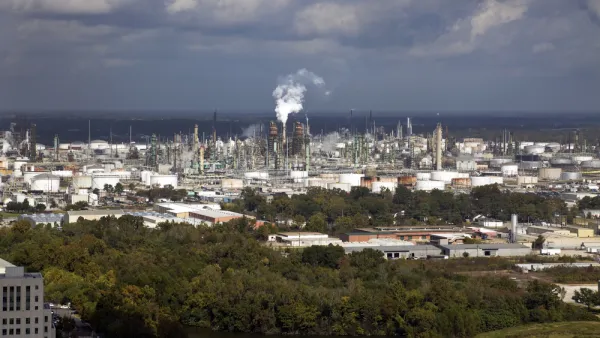
We should have seen the historic flooding in the Florida Parishes region of Louisiana coming—both in preparation and in response—says a pair of recent articles.
NOAA Launching Storm Surge Mapping System
Americans tend to pay more attention to wind strength than storm surge when evaluating whether or not to evacuate before a hurricane. A new NOAA mapping project is designed to change perceptions about the multiple risks of storm events.
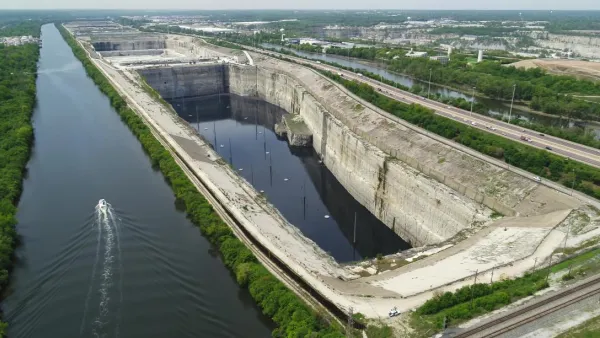
Chicago's underground flood control system is almost full
The system known as Deep Tunnel has never filled much more than halfway, but the cumulative effect of recent rains is putting suburban communities at risk of flooding.

Planetizen Federal Action Tracker
A weekly monitor of how Trump’s orders and actions are impacting planners and planning in America.

California plans to bury El Niño’s downpour
If the state plays its cards right, it may be able to store a billion acre-feet of El Niño’s water in aquifers.

Desperate measures: Advocates weigh draining Lake Powell to fill Colorado River
Draining the reservoir could reduce evaporation losses by a couple hundred thousand acre-feet.

Los Angeles just elected an urban planner as its mayor
Transportation analysts are optimistic that Raman will be more aggressive in addressing transit issues than Bass.

Mamdani’s pied-à-terre tax survives legal challenge
A panel of judges found that the plaintiffs failed to demonstrate injury as a result of New York City's implementation of the tax.

Eastern Nebraska is running out of electricity
Data centers and electrification are straining eastern Nebraska’s grid, throttling economic development.

FREE Course: Walkable City 1: Why Walkability?
After describing his path towards focusing on walkability as the essence of good planning, Jeff Speck marches through his five principal reasons for making more walkable places.
Reinventing Malls: Planning Alchemy—Turning Gray Fields Into Gold
The course focuses on the opportunities and imperatives that shape reinvention of mall sites.

City of Rosemead
Rutgers University, Edward J. Bloustein School of Planning and Public Policy
One Hundred Miles
University of Michigan School for Environment and Sustainability (SEAS)
Hunter College, City University of New York (CUNY)
The Architects Foundation
City of Cambridge
Montrose County
The Pocatello Development Authority