Though smart cities and smart phones have tended to dominate professional discussions of late, the smart home has been a gleam in the eye of futurists for decades. Experts predict home automation will accelerate over the next few years.


"From complete home systems to individual Internet-connected products such as high-tech appliances and power strips, the smart home is no longer a futuristic gimmick," write Andrew Khouri and Andrea Chang.
"The technology behind smart gadgets — items that can be controlled remotely or perform tasks on their own — has been around for decades, but until recently the devices were rudimentary and, above all, expensive," they explain. "Wireless Internet and the widespread proliferation of smartphones are making smart home technologies more sophisticated — and affordable."
"'This used to be something out of 'The Jetsons' or limited to the super-rich,' said Jonathan Dorsheimer, an analyst at Canaccord Genuity. But as smart home technology has improved and costs have come down, 'it's becoming more mainstream.'"
Read the full story: Home smart home
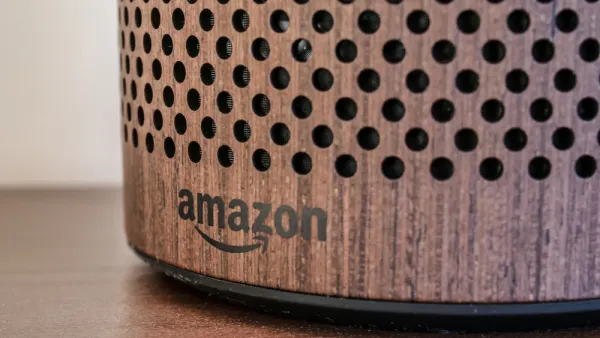
Amazon's First Forays Into Homebuilding Are Worth Watching
A new player with a very familiar name has entered into the residential homebuilding market.
Why Some Smart Home Gadgets Are Dumb
An article in Quartz laments the underwhelming results of a generation of gadgets intended to make houses technologically enabled.
Why Would Anyone Want a Smart Home?
A tech columnist reviews the current state of smart home technology and finds that improvements will be necessary before widespread adoption can be expected.

Desperate measures: Advocates weigh draining Lake Powell to fill Colorado River
Draining the reservoir could reduce evaporation losses by a couple hundred thousand acre-feet.

Eastern Nebraska is running out of electricity
Data centers and electrification are straining eastern Nebraska’s grid, throttling economic development.

Malls are becoming the midtowns of the future
Mall and office park redevelopments are a generational opportunity to create new nodes of urbanity.

NYC breaks ground on anti-flooding infrastructure project
New York City's new system will reduce stormwater flows to local sewers by 90%.

One Kentucky town’s secret to affordable housing
The Smoketown Community Land Trust has already built seven affordable homes for community members.

Houston gains petal-shaped cooling infrastructure to make streets more ‘delightful’
The city has installed the pavilions along 15 blocks in Houston.

FREE Course: Walkable City 1: Why Walkability?
After describing his path towards focusing on walkability as the essence of good planning, Jeff Speck marches through his five principal reasons for making more walkable places.
Reinventing Malls: Planning Alchemy—Turning Gray Fields Into Gold
The course focuses on the opportunities and imperatives that shape reinvention of mall sites.

City of Rosemead
Rutgers University, Edward J. Bloustein School of Planning and Public Policy
One Hundred Miles
University of Michigan School for Environment and Sustainability (SEAS)
Hunter College, City University of New York (CUNY)
The Architects Foundation
City of Cambridge
Montrose County
The Pocatello Development Authority