The mystery of what outgoing mayor Michael Bloomberg and his top lieutenants will do for their next act has been solved. Many will continue to work together at a new consultancy exporting the ideas they've championed in New York to other cities.


"Michael R. Bloomberg, determined to parlay his government experience and vast fortune into a kind of global mayoralty, is creating a high-powered consulting group to help him reshape cities around the world long after he leaves office," reports Michael Barbaro. "The organization, to be called Bloomberg Associates, will act as an urban SWAT team, deployed at the invitation of local governments to solve knotty, long-term challenges, like turning a blighted waterfront into a gleaming public space, or building subway-friendly residential neighborhoods."
"In a twist on the traditional business model of consulting, clients will not be charged," he notes. Like many of his other philanthropic and advocacy campaigns, it will be financed by the mayor's considerable fortune, "with no expectation of earning a profit".
"The group resembles a government in exile. Mr. Bloomberg has recruited at least half a dozen top aides from his administration, including Janette Sadik-Khan, the transportation commissioner; Katherine Oliver, the commissioner of media and entertainment; and Kate D. Levin, the cultural affairs commissioner."
Read the full story: Bloomberg Focuses on Rest (as in Rest of the World)
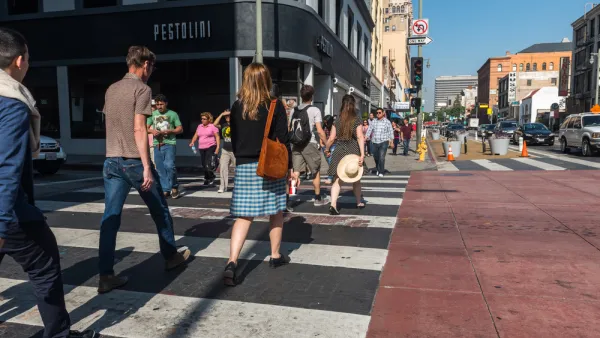
Questionable Progress in Los Angeles Traffic Safety
Despite enacting a Vision Zero policy in 2015, traffic fatalities continue to rise in Los Angeles
Michael Bloomberg's New International Roles on Cities and Climate Change
The former three-term New York City mayor, already president of the C40 Cities Climate Leadership Group has been appointed to a special United Nations envoy position on cities and climate change by Secretary-General Ban Ki-moon.
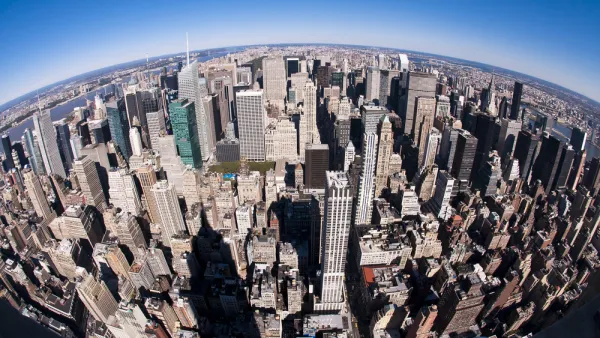
A Design and Planning To-Do List for NYC's Next Mayor
Over the past 12 years, New York has been transformed. For the better in some instances (bike lanes, pedestrian plazas), and perhaps not in others (unaffordability). Michael Kimmelman suggests how to build on the successes and correct the problems.

Planetizen Federal Action Tracker
A weekly monitor of how Trump’s orders and actions are impacting planners and planning in America.

California plans to bury El Niño’s downpour
If the state plays its cards right, it may be able to store a billion acre-feet of El Niño’s water in aquifers.

Desperate measures: Advocates weigh draining Lake Powell to fill Colorado River
Draining the reservoir could reduce evaporation losses by a couple hundred thousand acre-feet.

Los Angeles just elected an urban planner as its mayor
Transportation analysts are optimistic that Raman will be more aggressive in addressing transit issues than Bass.

Mamdani’s pied-à-terre tax survives legal challenge
A panel of judges found that the plaintiffs failed to demonstrate injury as a result of New York City's implementation of the tax.

Eastern Nebraska is running out of electricity
Data centers and electrification are straining eastern Nebraska’s grid, throttling economic development.

FREE Course: Walkable City 1: Why Walkability?
After describing his path towards focusing on walkability as the essence of good planning, Jeff Speck marches through his five principal reasons for making more walkable places.
Reinventing Malls: Planning Alchemy—Turning Gray Fields Into Gold
The course focuses on the opportunities and imperatives that shape reinvention of mall sites.

City of Rosemead
Rutgers University, Edward J. Bloustein School of Planning and Public Policy
One Hundred Miles
University of Michigan School for Environment and Sustainability (SEAS)
Hunter College, City University of New York (CUNY)
The Architects Foundation
City of Cambridge
Montrose County
The Pocatello Development Authority