A federal study shows that America's wetlands are disappearing faster than efforts can restore and recreate them, with serious consequences for endangered species and our quality of life.


"Over a four-year span, the United States lost more than 360,000 acres of freshwater and saltwater wetlands to fierce storms, sea-level rise and booming development along the coasts, according to a newly released federal study," reports Darryl Fears.
"The disappearance of so much grass and forest marsh on the edge of waterways is a disturbing sign that government projects to restore wetlands are failing to keep pace, environmentalists said, as storms intensify, the sea level creeps up and development paves the way for rising coastal populations."
"The disappearance of marshes during the period covered in the study — between 2004 and 2009 — represented a 25 percent increase in the rate of loss in the same areas from the previous survey [PDF], which covered the six-year period between 1998 to 2004," notes Fears.
Read the full story: Study says U.S. can’t keep up with loss of ecologically-sensitive wetlands

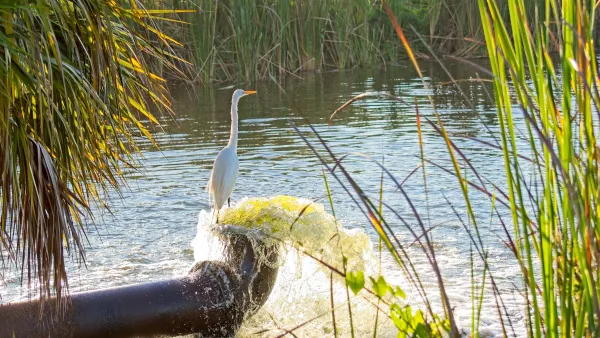
94% of wetlands could lose federal protections under proposed EPA rule
The ruling would only allot federal protections to waterways that flow nearly everyday, which few wetlands do.

Beavers and bobcats populate a 210-acre 'secret garden' in Las Vegas
The Clark County Wetlands Park is home to over 300 species of birds and 70 species of mammals.
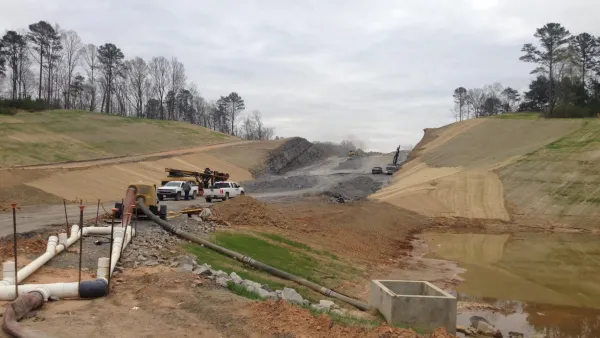
Alabama DOT wants to fill wetlands for interstate project
The Birmingham Northern Beltline would run roughly 52 miles through forests and wetlands that are home to multiple endangered species.

Planetizen Federal Action Tracker
A weekly monitor of how Trump’s orders and actions are impacting planners and planning in America.

California plans to bury El Niño’s downpour
If the state plays its cards right, it may be able to store a billion acre-feet of El Niño’s water in aquifers.

Chicago breaks ground on $3 billion megadevelopment
The new neighborhood, titled Foundry Park, will one day host 3,700 residences.

California High-Speed Rail Authority CEO resigns after $600,000 scandal
Under Ian Choudri, the authority used taxpayer dollars to fund first class flights and trips to nightclubs.

Want to study the Missouri River? Soon, you may need unanimous approval from 10 states
Legislation would require 10 governors’ permission to study or build projects moving water outside the basin.

Desperate measures: Advocates weigh draining Lake Powell to fill Colorado River
Draining the reservoir could reduce evaporation losses by a couple hundred thousand acre-feet.

FREE Course: Walkable City 1: Why Walkability?
After describing his path towards focusing on walkability as the essence of good planning, Jeff Speck marches through his five principal reasons for making more walkable places.
Reinventing Malls: Planning Alchemy—Turning Gray Fields Into Gold
The course focuses on the opportunities and imperatives that shape reinvention of mall sites.

City of Rosemead
Rutgers University, Edward J. Bloustein School of Planning and Public Policy
One Hundred Miles
Hunter College, City University of New York (CUNY)
The Architects Foundation
University of Cincinnati Online
City of Cambridge
Montrose County
The Pocatello Development Authority