A new report by multinational professional services firm PricewaterhouseCoopers (PwC) calls the suburban-to-urban movement of Canadian residents and businesses one of the most significant current real estate trends.


“Traffic in Canada is becoming a serious problem,” writes Daniel Tencer. “Infrastructure isn’t keeping up as the population grows and commute times are growing.”
“And Canadians are fed up — so fed up they’re moving back into city centres and reshaping the country, says a new report from PricewaterhouseCoopers.”
“'Reverse migration from the suburbs to downtown areas [is] one of the most forceful and rapidly emerging trends in both corporate office and residential real estate,' PwC said in its report, Emerging Trends In Real Estate 2014.”
“The report sees another element at play here,” Tencer continues. “Some parts of Canada are literally running out space to build suburbs.”
“One such place is Greater Toronto, where a greenbelt around the metro area, put into place by the province in 2005, means the region will soon run out of space for new developments.”
Read the full story: Commuting In Canada So Bad It's Reshaping Cities: PwC
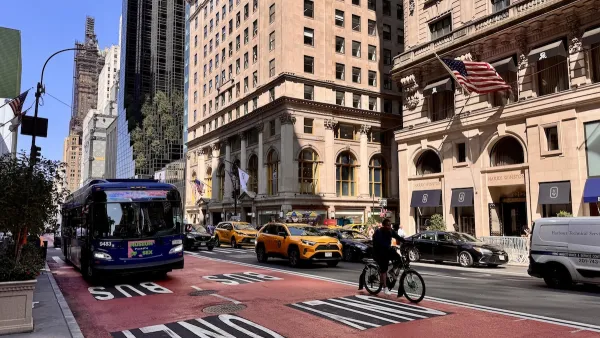
Congestion Costing Reality Check, Part 3: Smart congestion relief
There are many better ways to reduce congestion in your city than expensive roadway expansion projects. Win-win strategies reduce congestion and provide many other benefits.
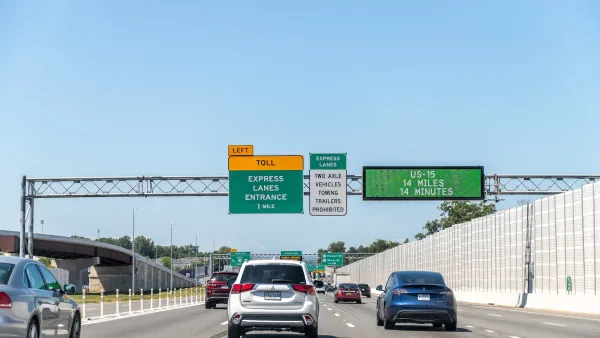
Congestion Costing Reality Check, Part 2: A congestion costing critique
There are good reasons to be skeptical of highway industry claims that traffic congestion is a growing problem. Their analysis is often incomplete and biased. Let’s pull back the curtain on some major congestion cost studies.

Induced demand is real: Commutes on Houston's 26-lane freeway take 51% longer after expansion
A massive freeway expansion only led to longer drive times, showing that building more lanes won't solve congestion.

Planetizen Federal Action Tracker
A weekly monitor of how Trump’s orders and actions are impacting planners and planning in America.

California plans to bury El Niño’s downpour
If the state plays its cards right, it may be able to store a billion acre-feet of El Niño’s water in aquifers.

Desperate measures: Advocates weigh draining Lake Powell to fill Colorado River
Draining the reservoir could reduce evaporation losses by a couple hundred thousand acre-feet.

Housing is the top priority of Seattle’s sole new councilmember
Jenks campaigned on building 1,000 new units of affordable housing.

New tax cuts may slash $1.5 billion in funding for Miami transit, public parks
Amendment 3 will save Miami-Dade homeowners $2,700 in 2028.

Arizona, Wisconsin, Pennsylvania hope to finally advance climate goals post-midterms
The three states have spent years under Republican or divided control.

FREE Course: Walkable City 1: Why Walkability?
After describing his path towards focusing on walkability as the essence of good planning, Jeff Speck marches through his five principal reasons for making more walkable places.
Reinventing Malls: Planning Alchemy—Turning Gray Fields Into Gold
The course focuses on the opportunities and imperatives that shape reinvention of mall sites.

City of Rosemead
Rutgers University, Edward J. Bloustein School of Planning and Public Policy
One Hundred Miles
University of Michigan School for Environment and Sustainability (SEAS)
Hunter College, City University of New York (CUNY)
The Architects Foundation
City of Cambridge
Montrose County
The Pocatello Development Authority