Archaeologists have discovered what may be "the earliest prehistoric town plan ever found in eastern North America" where the Metropolitan Miami project is to rise. Developers and local officials are discussing how to balance history with progress.


"As work began on one of the last pieces of undeveloped ground in Miami's fast-changing downtown, archaeologists uncovered the site of an American Indian village," reports Greg Allen. Archaeologist Bob Carr believes that "a series of six circles outlined by postholes cut in the bedrock" found at the two-acre site are likely the remains of a 1,500-year-old Tequesta village.
"The developer that owns the site, the MDM Group, says it's pleased with the discoveries there. But it's still moving ahead with plans to build an upscale shopping complex," adds Allen. "The company has said it has signed leases with tenants and plans to have it finished late next year."
"MDM is in discussions with city and county officials about the site, and scenarios for preserving all or part of it."
Read the full story: Once An Ancient Village, Soon An Entertainment Complex?
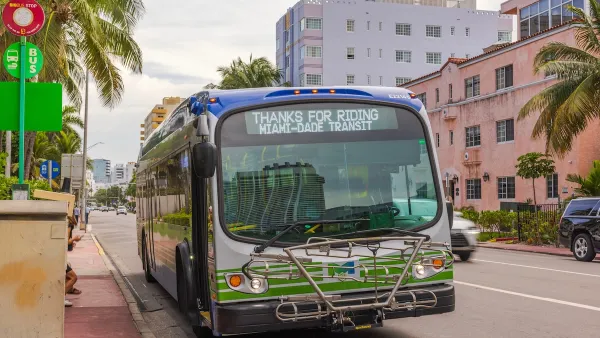
More money, less service: Miami-Dade slashes bus routes after hiking fare
The department is facing a multi-million dollar funding gap.

Miami Considers Airport-to-Port Train to Ease Cruise Ship Traffic
Miami’s port is one of the world’s busiest cruise ship terminals.
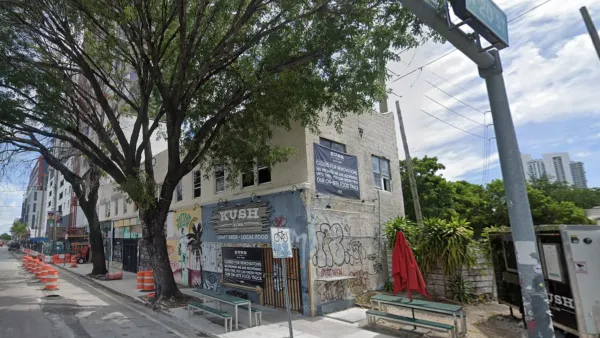
Miami Restaurant Rebuild Includes 10 Units of Affordable Workforce Housing
The restaurant’s owner worked with a local community redevelopment agency to preserve a historic building.

Planetizen Federal Action Tracker
A weekly monitor of how Trump’s orders and actions are impacting planners and planning in America.

California plans to bury El Niño’s downpour
If the state plays its cards right, it may be able to store a billion acre-feet of El Niño’s water in aquifers.

Desperate measures: Advocates weigh draining Lake Powell to fill Colorado River
Draining the reservoir could reduce evaporation losses by a couple hundred thousand acre-feet.

In Texas, data centers are swallowing promised parkland
Residents who moved to Taylor, Texas for a rural community now have to contend with three data centers in their backyard.

How a Chicago-sized wind farm beat the odds and powered on
The project spanned five presidential administrations and a standoff with a U.S. military base.

MTA gives itself 30 days to transform pit into basketball court
The site has been under construction since 2022; the city originally estimated it would finish the court in 2024.

FREE Course: Walkable City 1: Why Walkability?
After describing his path towards focusing on walkability as the essence of good planning, Jeff Speck marches through his five principal reasons for making more walkable places.
Reinventing Malls: Planning Alchemy—Turning Gray Fields Into Gold
The course focuses on the opportunities and imperatives that shape reinvention of mall sites.

City of Rosemead
Rutgers University, Edward J. Bloustein School of Planning and Public Policy
One Hundred Miles
Hunter College, City University of New York (CUNY)
The Architects Foundation
University of Cincinnati Online
City of Cambridge
Montrose County
The Pocatello Development Authority