In an acknowledgement that significant climate change is a real and growing threat (and unlikely to be averted), President Obama will direct federal agencies to make it easier for localities plan for, and adapt to, a warming planet.


"White House aides said President Obama would sign an executive order on Friday morning directing federal agencies to make it easier for states and communities to build resilience against storms, droughts and other weather extremes," reports Justin Gillis.
"In addition, the White House will set up a high-level task force of state and local leaders to offer advice to the federal government. At least six governors — all Democrats — have agreed to serve, along with mayors and other local leaders representing both political parties. The plan also calls for better coordination among federal agencies."
"Some communities trying to incorporate climate change into their planning have long complained that they have trouble getting authoritative data and predictions from the federal government," adds Gillis. "[John P. Holdren, the president’s science adviser] said the administration’s plan would include a web portal to make such information more accessible."
Read the full story: White House Will Focus on Climate Shifts While Trying to Cut Greenhouse Gases
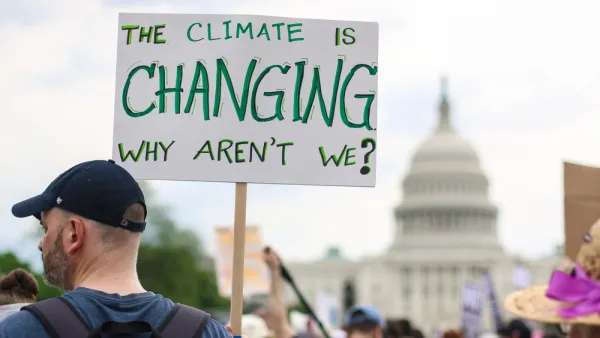
How Cities Can Curb Climate Change and Protect Vulnerable Residents
A new U.N. report urges cities to upgrade their infrastructure to bolster climate resilience and build more sustainable, climate-friendly places.
The Built Environment in 2022: Challenges and Opportunities
As climate change, the pandemic, and a historic housing crisis continue to impact the nation, experts weigh in on the issues that could shape the future of the built environment in 2022.
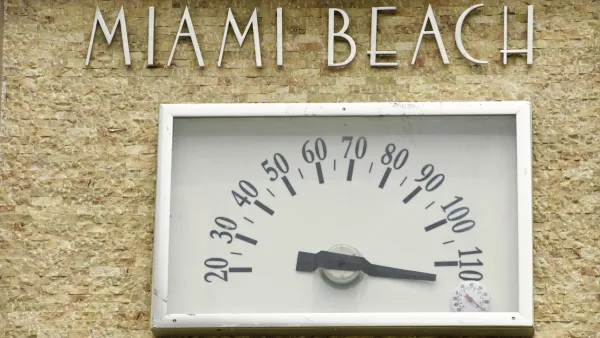
Urban Heat Waves Likely to Hit Harder
Yet another climate change side effect: more frequent urban heat waves. And because urban temperatures tend higher than rural ones, cities should be ready to protect the most vulnerable.

Desperate measures: Advocates weigh draining Lake Powell to fill Colorado River
Draining the reservoir could reduce evaporation losses by a couple hundred thousand acre-feet.

Eastern Nebraska is running out of electricity
Data centers and electrification are straining eastern Nebraska’s grid, throttling economic development.

Move over, LA: St. Louis gears up for Olympics, invests millions in downtown redevelopment
The Missouri city will host the 2028 Olympic soccer group stage and knockout matches.

California, Hawaii, Rhode Island approve housing propositions
Hawaii and Rhode Island each approved their sole proposition, while California approved two of its three.

Officials claim feds 'rushed' Amtrak environmental review
Amtrak plans to move their Chicago maintenance facility from an industrial area to a residential one.

NYC breaks ground on anti-flooding infrastructure project
New York City's new system will reduce stormwater flows to local sewers by 90%.

FREE Course: Walkable City 1: Why Walkability?
After describing his path towards focusing on walkability as the essence of good planning, Jeff Speck marches through his five principal reasons for making more walkable places.
Reinventing Malls: Planning Alchemy—Turning Gray Fields Into Gold
The course focuses on the opportunities and imperatives that shape reinvention of mall sites.

City of Rosemead
Rutgers University, Edward J. Bloustein School of Planning and Public Policy
One Hundred Miles
University of Michigan School for Environment and Sustainability (SEAS)
Hunter College, City University of New York (CUNY)
The Architects Foundation
City of Cambridge
Montrose County
The Pocatello Development Authority