As we've noted here, some of the most popular bike share systems have been victims of their own success, with high use docking stations often full or empty - depending on the time of day. Henry Grabar examines efforts to automate the rebalancing act.


Rebalancing is the most crucial problem plaguing the world's steadily growing portfolio of urban bike share systems, writes Henry Grabar. "The solution is a fleet of trucks and vans that reposition bicycles from what academics call 'attractive' stations to 'repulsive' stations. On the one hand, this is ironic: Bike share is widely praised as a sustainable transit solution but requires the round-the-clock service of heavy vehicles to keep it primed for operation."
"But it’s a crucial element of a successful system. If bike share is to be taken seriously as a transit mode — and its staunchest supporters believe it is an indispensable tool in the planner’s arsenal — it must be able to meet the demands of professional life," he adds. "Every time a user is unable to find a bike or a place to park, the system’s reliability is jeopardized."
Can computerized tools and algorithms solve the problem?
Read the full story: Bike shares can be perfect!: Solving the commuting algorithm
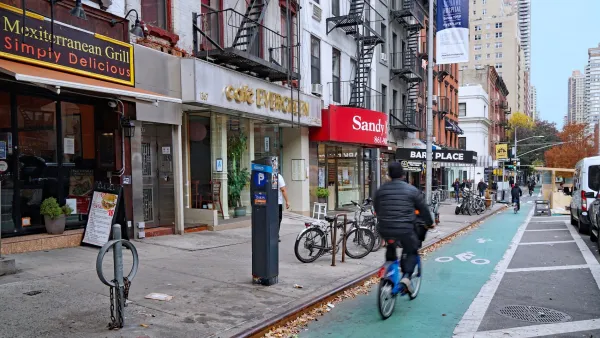
Study: Protected bike lanes increase Citi Bike rides by nearly 400 rides a month
An analysis of millions of NYC bike share rides reveals that only protected bike lanes have a 'statistically significant' increase in ridership.
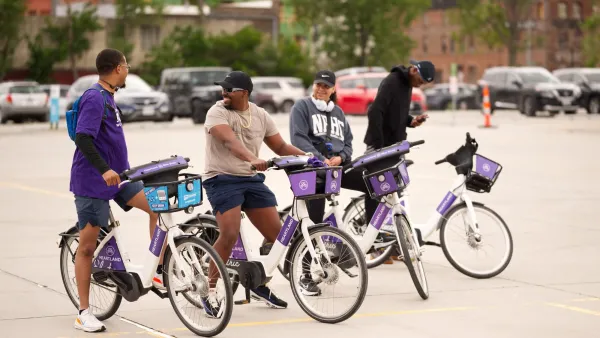
Omaha's 400 shared e-bikes are now free to all residents
Before eliminating fares for locals, the Heartland system only recovered 10%-15% of its operating costs through fare revenue.
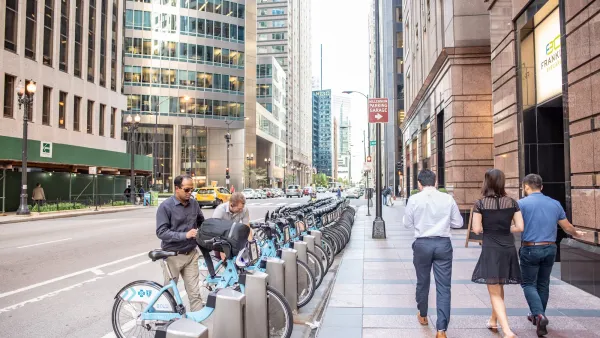
Chicago to Add or Upgrade 200 Bike Share Stations
The Divvy bike share system saw its highest ridership ever in 2025 with 6.8 million trips.

Desperate measures: Advocates weigh draining Lake Powell to fill Colorado River
Draining the reservoir could reduce evaporation losses by a couple hundred thousand acre-feet.

Eastern Nebraska is running out of electricity
Data centers and electrification are straining eastern Nebraska’s grid, throttling economic development.

Malls are becoming the midtowns of the future
Mall and office park redevelopments are a generational opportunity to create new nodes of urbanity.

NYC breaks ground on anti-flooding infrastructure project
New York City's new system will reduce stormwater flows to local sewers by 90%.

One Kentucky town’s secret to affordable housing
The Smoketown Community Land Trust has already built seven affordable homes for community members.

Houston gains petal-shaped cooling infrastructure to make streets more ‘delightful’
The city has installed the pavilions along 15 blocks in Houston.

FREE Course: Walkable City 1: Why Walkability?
After describing his path towards focusing on walkability as the essence of good planning, Jeff Speck marches through his five principal reasons for making more walkable places.
Reinventing Malls: Planning Alchemy—Turning Gray Fields Into Gold
The course focuses on the opportunities and imperatives that shape reinvention of mall sites.

City of Rosemead
Rutgers University, Edward J. Bloustein School of Planning and Public Policy
One Hundred Miles
University of Michigan School for Environment and Sustainability (SEAS)
Hunter College, City University of New York (CUNY)
The Architects Foundation
City of Cambridge
Montrose County
The Pocatello Development Authority