This week the World Monuments Fund (WMF) published their biannual list of the globe's cultural heritage most at risk "from the forces of nature and the impact of social, political, and economic change." 67 sites in 41 countries made this year's list.


"These sites—and countless others like them—recount our human history and highlight our achievements," said WMF president Bonnie Burnham in a press release. "It takes vigilance to keep them active in the world; yet it is often the case that the very places that provide rich character and texture to our lives need more assistance and attention than they are given."
"Six of the 67 sites are located in the United States: Chinati Foundation (Marfa, Texas), George Nakashima House, Studio, and Workshop (Bucks County, Pennsylvania), Henry Klumb House (San Juan, Puerto Rico), Jefferson National Expansion Memorial (St. Louis, Missouri), The Cloisters (New York, New York), and Taliesin (Spring Green, Wisconsin), the only U.S. site on this year's list which has appeared on the list before," writes Sara Johnson.
In St. Louis, Eero Saarinen's iconic stainless steel Arch suffers from corrosion and decreased government funding. "The complexity of preserving both the structural integrity and aesthetic qualities of the Arch compels cooperation between the public and private sectors to ensure that adequate expertise and resources are brought to bear in the preservation of this important landmark and national symbol," says WMF.
Read the full story: World Monuments Watch 2014 List Released
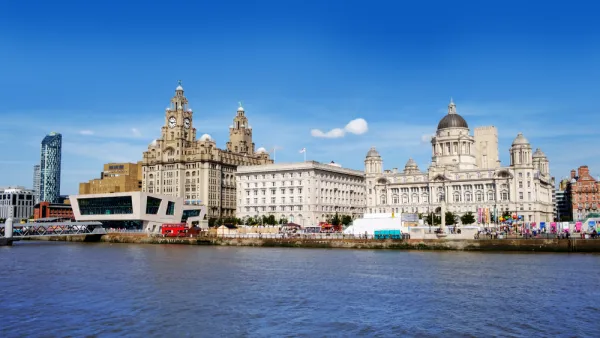
Liverpool Could Lose UNESCO World Heritage Status
New and planned developments are risking the integrity of Liverpool's historic waterfront, according to the United Nations Education, Scientific and Cultural Organisation (UNESCO).
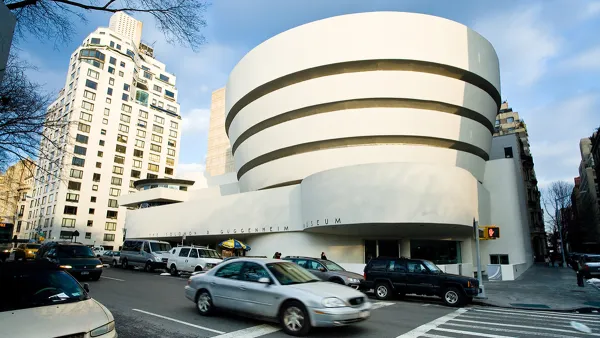
8 Frank Lloyd Wright Buildings Nominated as UNESCO World Heritage Sites
If accepted as UNESCO World Heritage sites, the eight Frank Lloyd Wright buildings would be the first examples of modern architecture in the United States included in that august company.
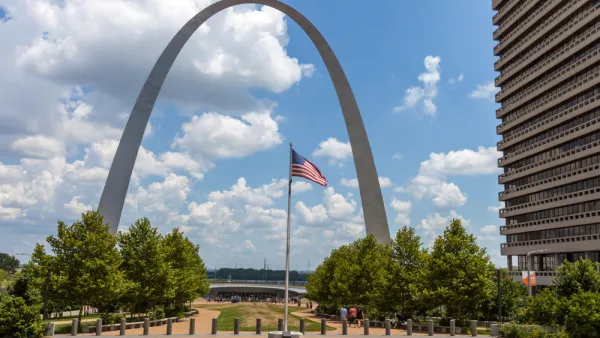
Newly Minted St. Louis Gateway Arch National Park Reviewed
The recently revitalized and designated as a National Park St. Louis Gateway Arch National Park is described by park planner Clement Lau.

Desperate measures: Advocates weigh draining Lake Powell to fill Colorado River
Draining the reservoir could reduce evaporation losses by a couple hundred thousand acre-feet.

Eastern Nebraska is running out of electricity
Data centers and electrification are straining eastern Nebraska’s grid, throttling economic development.

Malls are becoming the midtowns of the future
Mall and office park redevelopments are a generational opportunity to create new nodes of urbanity.

NYC breaks ground on anti-flooding infrastructure project
New York City's new system will reduce stormwater flows to local sewers by 90%.

One Kentucky town’s secret to affordable housing
The Smoketown Community Land Trust has already built seven affordable homes for community members.

Houston gains petal-shaped cooling infrastructure to make streets more ‘delightful’
The city has installed the pavilions along 15 blocks in Houston.

FREE Course: Walkable City 1: Why Walkability?
After describing his path towards focusing on walkability as the essence of good planning, Jeff Speck marches through his five principal reasons for making more walkable places.
Reinventing Malls: Planning Alchemy—Turning Gray Fields Into Gold
The course focuses on the opportunities and imperatives that shape reinvention of mall sites.

City of Rosemead
Rutgers University, Edward J. Bloustein School of Planning and Public Policy
One Hundred Miles
University of Michigan School for Environment and Sustainability (SEAS)
Hunter College, City University of New York (CUNY)
The Architects Foundation
City of Cambridge
Montrose County
The Pocatello Development Authority