It may be hard to image fleets of cargo bikes replacing the large polluting trucks that tear up our city streets. But a European Union project estimates that the majority of freight in 322 cities studied could be moved by cargo bike.


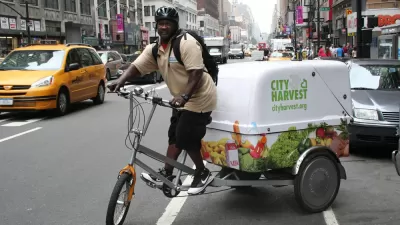
"The European Union is running a three-year project (ending next year) to try to move cities' freight deliveries from heavy, road-ripping, and dangerous and polluting freight trucks to lower-impact cargo bikes and delivery trikes," reports April Streeter. "And the data coming in from 322 European cities seems to indicate that at least half of freight deliveries could be transferred to bike delivery!"
In addition to reducing congestion and improving street safety, "[m]oving freight delivery to bike is also good news for city air quality and climate change control - while freight moving comprises only about 15 percent of all transport trips in a city, it makes up 30% of transport's energy consumption."
Read the full story: More than 50% of city freight could shift from truck to bike

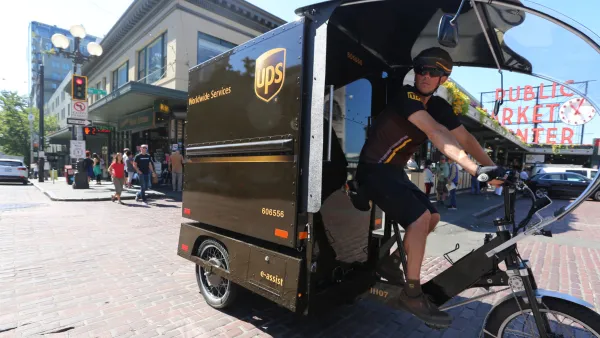
Cargo Bike Pilot Reduces Emissions by 30%
The program deployed electric cargo bikes in a small Seattle neighborhood to test the effectiveness of replacing delivery trucks with lighter vehicles in the last mile of delivery.

Online Retail Curbs Urban Traffic
Despite claims that urban truck traffic continues to rise, recent data shows no real increase in urban vehicle miles traveled. Online shopping may be helping keep people off the roads.
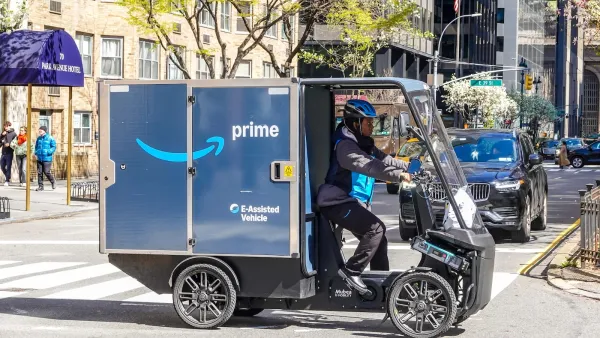
Amazon launches cargo bike deliveries in DC
The e-commerce giant is deploying micromobility devices including cargo bikes and mopeds in several global markets to reduce the need for larger trucks and vans for last-mile deliveries.

Planetizen Federal Action Tracker
A weekly monitor of how Trump’s orders and actions are impacting planners and planning in America.

Amtrak, CN end decades-long dispute with eight-year agreement
The new operating agreement establishes an updated framework for the companies to work together, including processes to resolve disputes.

Judges permit Denver to divert 77,000 acre feet from the Colorado River for reservoir expansion
Overuse and climate change have caused the Colorado River’s water levels to plummet.

NYC DOT wants faster, more permanent street upgrades
The city is examining ways to build more concrete infrastructure without getting entangled in 'decades-long' projects.

'Something we’ve never seen before:' rising utility rates could strain city finances nationwide
Data centers, climate change and other factors have caused utility rates in the United States to increase by 38% since 2020.

Trump to overrule local leaders, lease millions of acres of America’s Pacific Island territories’ seafloors to mining companies
International law says that the Indigenous people of America’s territories have a right to prior and informed consent regarding projects that impact their countries.

FREE Course: Walkable City 1: Why Walkability?
After describing his path towards focusing on walkability as the essence of good planning, Jeff Speck marches through his five principal reasons for making more walkable places.
Reinventing Malls: Planning Alchemy—Turning Gray Fields Into Gold
The course focuses on the opportunities and imperatives that shape reinvention of mall sites.


Harvard University Graduate School of Design
KFH Group Inc.
Greater Baltimore Committee
The Architects Foundation
University of Cincinnati Online
The Pocatello Development Authority
The Urban Renewal Agency of the City of Pocatello