Five years after San Francisco hired its first sustainability director for the city's school system, the controversial decision is paying off in environmental benefits and substantial energy savings.


"There were more than a few skeptics when San Francisco city officials foisted an environmental guru on the school district five years ago," writes Jill Tucker. "But now, with some results to look at, it appears the guru gambit wasn't a mistake."
Initiatives led by Nik Kaestner such as a tree-planting campaign, introducing water bottle refilling stations and getting teachers to better manage the temperature of their rooms have produced environmental and cost benefits. "In the 2011-12 academic year, city schools saved $363,000 in energy costs compared with the year before - about an 8 percent reduction overall. And in 2012-13, as of June, schools had already saved $455,000 over the prior year."
"Still, despite the cost savings, some question whether the district needs to pay someone's salary to make those arguments, especially since it reduces the amount the district would get to pay for extras like art and physical education needs, which is what Proposition H generally funds," notes Tucker.
Read the full story: S.F. schools gambit on green guru pays off

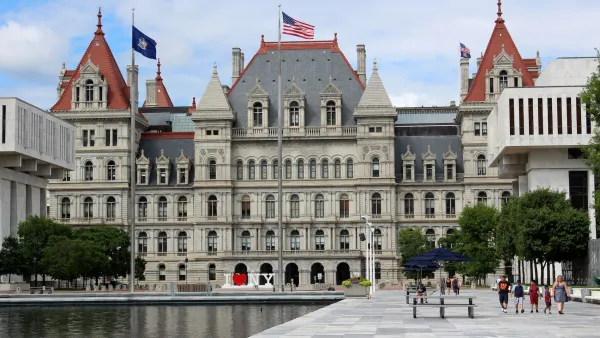
New York legislature passes one-year data center ban
The bill also calls for an impact report from the state's environmental agency and public hearings for large data center proposals.

How Smart Street Lights Can Help Cities Achieve Sustainability Goals
Switching to energy-efficient LEDs and using tech to program when and how street lighting operates can save cities millions in electricity expenses and bring down carbon emissions.

Data centers are consuming nearly 25% of Oregon’s power
The state has 111 data centers, with 32 more either planned or under construction.

Planetizen Federal Action Tracker
A weekly monitor of how Trump’s orders and actions are impacting planners and planning in America.

‘Going backwards:’ Baltimore mayor, students rally against state's transit funding plan
Maryland's proposed six-year plan provides no funding for Baltimore’s BMORE bus program and reduces its road maintenance funding.

Detroit to transform waterfront with $2.2 billion investment
Developers will convert about 18 acres of unused parking lot space into civic spaces.

U.S.-Iran war may have ‘devastating’ impact on cost to warm homes
Vermont and Maine residents may see a 76% increase in the cost of warming their homes this winter.

Senate bill would ‘overhaul’ environmental permitting laws
Under the proposed act, government agencies would also not be able to suspend or rescind permits after granting them.

Exemption applications for NYC’s pied-à-terre tax see 55% success rate
The city sent nearly 40% of its initial pied-à-terre tax warnings erroneously.

FREE Course: Walkable City 1: Why Walkability?
After describing his path towards focusing on walkability as the essence of good planning, Jeff Speck marches through his five principal reasons for making more walkable places.
Reinventing Malls: Planning Alchemy—Turning Gray Fields Into Gold
The course focuses on the opportunities and imperatives that shape reinvention of mall sites.

One Hundred Miles
County of Mendocino
planning NEXT
The Architects Foundation
University of Cincinnati Online
Montrose County
Northern Illinois Transit Authority (NITA)
The Pocatello Development Authority