At Franklin Park, a group of Washington city planners and their team of consultants are seeking to succeed where others have failed - revive an old D.C. park - and provide a model for similar spaces in the process.


As part of a special report on the shifting landscape of downtown D.C. appearing in The Washington Post Magazine, "a laboratory that could help the District join a renaissance of park development that is sweeping the country."
Although the city has found success in creating new parks with federal and private partners, it "has not yet cracked the code of reanimating that most archetypal of urban open spaces, the simple old city park," writes Montgomery. "That’s where Franklin Park comes in. The city and the National Park Service (which owns Franklin and most green acres in Washington) have budgeted $1 million through 2014 to plan and design a revitalized Franklin, with prodding from surrounding businesses via the Downtown Business Improvement District."
In addition to finding the funds to actually complete the work once the plan is completed, "[t]he challenge [for designers] will be finding the proper balance between active and passive, constructed and open, trendy and eternal," notes Montgomery.
Read the full story: Creating the park of the future

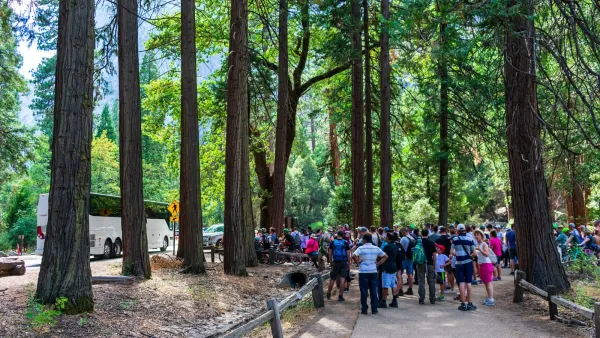
Yosemite crowds wait hours to enter park after NPS ends reservation system
Bumper-to-bumper traffic and a lack of parking foreshadowed a potentially chaotic summer.
National Parks Layoffs Will Cause Communities to Lose Billions
Thousands of essential park workers were laid off this week, just before the busy spring break season.
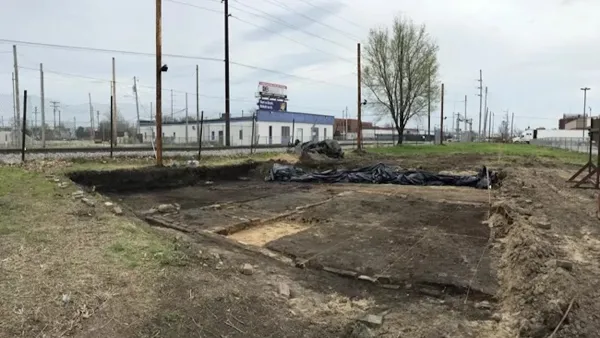
Site of Race Riot in Springfield, Illinois, Designated as National Monument
President Biden has designated the site of the 1908 Springfield race riot as a national monument, honoring its historical significance.

Planetizen Federal Action Tracker
A weekly monitor of how Trump’s orders and actions are impacting planners and planning in America.

California plans to bury El Niño’s downpour
If the state plays its cards right, it may be able to store a billion acre-feet of El Niño’s water in aquifers.

Chicago breaks ground on $3 billion megadevelopment
The new neighborhood, titled Foundry Park, will one day host 3,700 residences.

Move over, LA: St. Louis gears up for Olympics, invests millions in downtown redevelopment
The Missouri city will host the 2028 Olympic soccer group stage and knockout matches.

Satanic place names
From streams and lakes to valleys and canyons, I mapped more than 1,000 places named after the Devil.

California High-Speed Rail Authority CEO resigns after $600,000 scandal
Under Ian Choudri, the authority used taxpayer dollars to fund first class flights and trips to nightclubs.

FREE Course: Walkable City 1: Why Walkability?
After describing his path towards focusing on walkability as the essence of good planning, Jeff Speck marches through his five principal reasons for making more walkable places.
Reinventing Malls: Planning Alchemy—Turning Gray Fields Into Gold
The course focuses on the opportunities and imperatives that shape reinvention of mall sites.

City of Rosemead
Rutgers University, Edward J. Bloustein School of Planning and Public Policy
One Hundred Miles
Hunter College, City University of New York (CUNY)
The Architects Foundation
University of Cincinnati Online
City of Cambridge
Montrose County
The Pocatello Development Authority