They sound too good to be true: houses that remain a comfortable temperature throughout the year without traditional climate control systems. Yet 30,000 such homes have been built in Europe. Why haven't passive houses caught on in the U.S.?


"On paper, at least, the Ritchies’ home sounds too good to be true: an environmentally responsible house without traditional heating and air-conditioning systems that will be an airy 70 to 74 degrees on the coldest day of winter and the hottest day of summer, but use only a fraction of the energy consumed by a typical house."
"And yet it’s not some experiment or futuristic dream," writes Sandy Keenan. "Nearly 30,000 of these houses have already been built in Europe. In Germany, an entire neighborhood with 5,000 of these super-insulated, low-energy homes is under construction, and the City of Brussels is rewriting its building code to reflect passive standards."
"But in the United States, since the first passive house went up 10 years ago, in Urbana, Ill., only about 90 have been certified. Why aren’t they catching on here?"
Read the full story: The Passive House: Sealed for Freshness


Seattle upzoning proposal seeks to boost density, support eco-friendly building materials
A city committee advanced the plan to target areas already open to multifamily development for additional density and encourage passive house and mass timber construction.
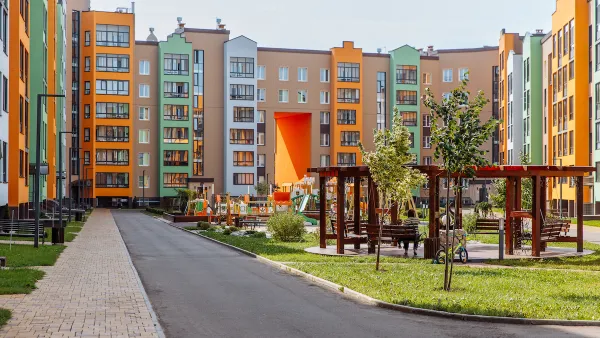
Ten Trends Shaping Affordable Housing
From Passive House design to a broader range of amenities, affordable housing developers are finding new ways to make housing more efficient, comfortable, and flexible for residents.
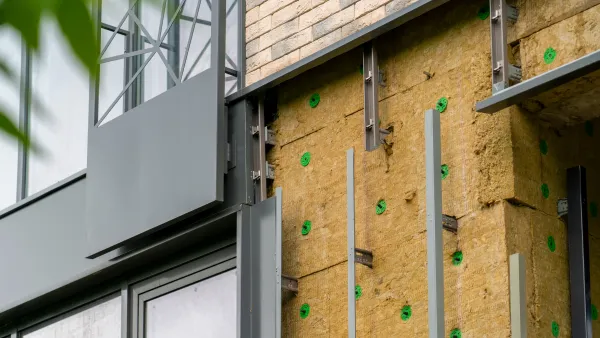
‘Passive House’ Standard Gaining Ground in Multifamily Housing
Developers in Chicago and around the country are taking notice of a design standard that encourages energy efficiency and sustainable materials.

Planetizen Federal Action Tracker
A weekly monitor of how Trump’s orders and actions are impacting planners and planning in America.

Amtrak, CN end decades-long dispute with eight-year agreement
The new operating agreement establishes an updated framework for the companies to work together, including processes to resolve disputes.

Judges permit Denver to divert 77,000 acre feet from the Colorado River for reservoir expansion
Overuse and climate change have caused the Colorado River’s water levels to plummet.

Atlanta City Council unanimously backs $3.5 billion Beltline light rail project
The resolution was drafted after Atlanta Mayor Andre Dickens pulled support for the Atlanta Streetcar extension last year.

SEPTA to bring nearby frequent transit to over 1 million new riders as part of decade-long plan
The agency's Accelerate plan will also bring frequent transit to twice the amount of jobs that are currently located near it.

NYC plants over 18,000 trees, the most new foliage in a decade
Many of the trees were planted in communities vulnerable to extreme heat.

FREE Course: Walkable City 1: Why Walkability?
After describing his path towards focusing on walkability as the essence of good planning, Jeff Speck marches through his five principal reasons for making more walkable places.
Reinventing Malls: Planning Alchemy—Turning Gray Fields Into Gold
The course focuses on the opportunities and imperatives that shape reinvention of mall sites.

City of Thousand Oaks
City of Wisconsin Rapids
Harvard University Graduate School of Design
The Architects Foundation
University of Cincinnati Online
The Pocatello Development Authority
The Urban Renewal Agency of the City of Pocatello