The unprecedented decline in Arctic sea ice could cause the catastrophic release of methane, imperiling the world's climate and economy, reports a new paper published in the journal Nature.


"Rapid thawing of the Arctic could trigger a catastrophic 'economic timebomb' which would cost trillions of dollars and undermine the global financial system, say a group of economists and polar scientists."
"Governments and industry have expected the widespread warming of the Arctic region in the past 20 years to be an economic boon, allowing the exploitation of new gas and oilfields and enabling shipping to travel faster between Europe and Asia," notes John Vidal. "But the release of a single giant 'pulse' of methane from thawing Arctic permafrost beneath the East Siberian sea 'could come with a $60tn [£39tn] global price tag', according to the researchers who have for the first time quantified the effects on the global economy."
"Even the slow emission of a much smaller proportion of the vast quantities of methane locked up in the Arctic permafrost and offshore waters could trigger catastrophic climate change and 'steep' economic losses, they say."
UPDATE: A blogger for The Washington Post, and others, have commented on the implausibility of the "methane pulse" scenario. See the back and forth here, at The New York Times' Dot Earth blog.
Read the full story: Rapid Arctic thawing could be economic timebomb, scientists say
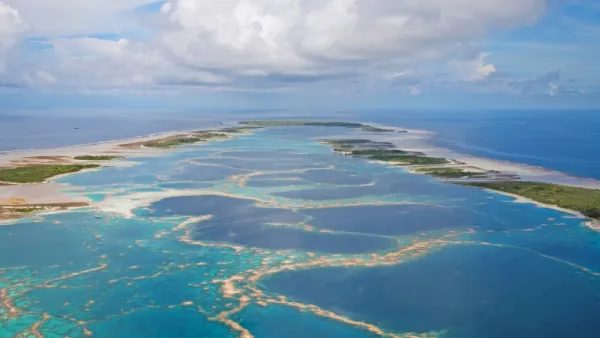
Sea Level Rise Will Not Be Uniform
As the climate warms, the world's glaciers and ice sheets are melting, but sea level increase will be greater in some places due to the earth's rotation and gravity, according to a newly released study by the NASA Jet Propulsion Laboratory.
Big Changes for the National Geographic Atlas of the World Due to Melting Arctic Ice
National Geographic Geographer Juan José Valdés calls the changes in the map of Arctic ice in the 10th edition of the National Geographic Atlas of the World, "the biggest visible change other than the breakup of the U.S.S.R."
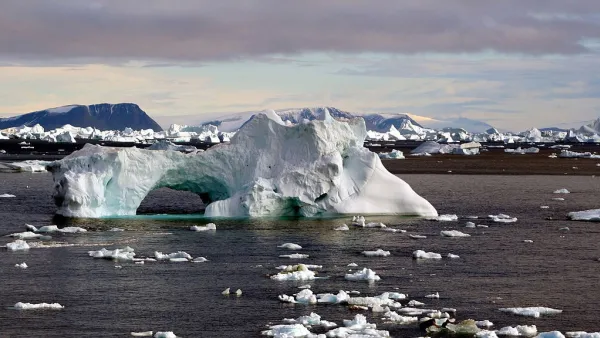
Astonishing Arctic Ice Melt Becomes National Security Threat
The Arctic may become ice free as soon as 2015, 85 years earlier than recent predictions, prompting a briefing of top U.S. government officials, including those from the Pentagon and the Department of Homeland Security, by Arctic specialists.

Desperate measures: Advocates weigh draining Lake Powell to fill Colorado River
Draining the reservoir could reduce evaporation losses by a couple hundred thousand acre-feet.

Eastern Nebraska is running out of electricity
Data centers and electrification are straining eastern Nebraska’s grid, throttling economic development.

Malls are becoming the midtowns of the future
Mall and office park redevelopments are a generational opportunity to create new nodes of urbanity.

NYC breaks ground on anti-flooding infrastructure project
New York City's new system will reduce stormwater flows to local sewers by 90%.

One Kentucky town’s secret to affordable housing
The Smoketown Community Land Trust has already built seven affordable homes for community members.

Houston gains petal-shaped cooling infrastructure to make streets more ‘delightful’
The city has installed the pavilions along 15 blocks in Houston.

FREE Course: Walkable City 1: Why Walkability?
After describing his path towards focusing on walkability as the essence of good planning, Jeff Speck marches through his five principal reasons for making more walkable places.
Reinventing Malls: Planning Alchemy—Turning Gray Fields Into Gold
The course focuses on the opportunities and imperatives that shape reinvention of mall sites.

City of Rosemead
Rutgers University, Edward J. Bloustein School of Planning and Public Policy
One Hundred Miles
University of Michigan School for Environment and Sustainability (SEAS)
Hunter College, City University of New York (CUNY)
The Architects Foundation
City of Cambridge
Montrose County
The Pocatello Development Authority