The Arctic may become ice free as soon as 2015, 85 years earlier than recent predictions, prompting a briefing of top U.S. government officials, including those from the Pentagon and the Department of Homeland Security, by Arctic specialists.


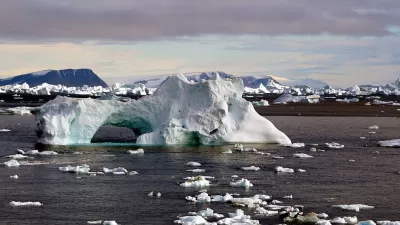
"Senior US government officials are to be briefed at the White House this week on the danger of an ice-free Arctic in the summer within two years," reports Nafeez Ahmed. "This is the latest indication that US officials are increasingly concerned about the international and domestic security implications of climate change."
"Extreme weather events over the last few years apparently driven by the accelerating Arctic melt process - including unprecedented heatwaves and droughts in the US and Russia, along with snowstorms and cold weather in northern Europe – have undermined harvests, dramatically impacting global food production and contributing to civil unrest," notes Ahmed.
Read the full story: White House warned on imminent Arctic ice death spiral
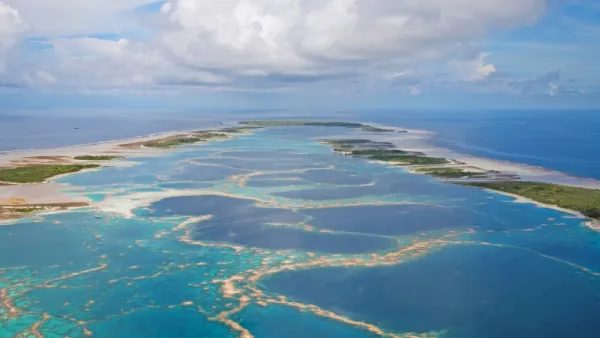
Sea Level Rise Will Not Be Uniform
As the climate warms, the world's glaciers and ice sheets are melting, but sea level increase will be greater in some places due to the earth's rotation and gravity, according to a newly released study by the NASA Jet Propulsion Laboratory.
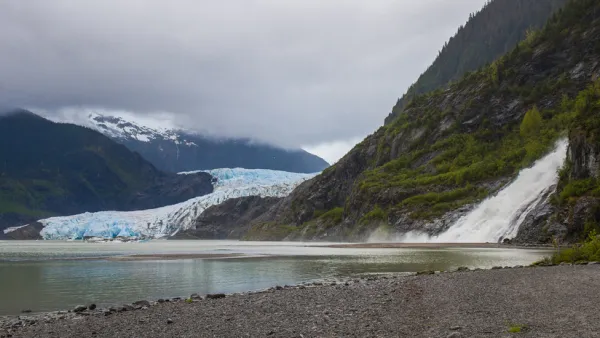
Climate Change Having Dramatic Effect on Mountains
The ecology of mountains around the world is changing as summer plants bloom earlier and forests march up hill to newly temperate ground.
When You live at 78ºN, You Become an Expert in Everything
Christin Kristoffersen, former mayor of Longyearbyen, talks about the challenges and adventures of daily life in the Arctic Circle, and the growing impact of climate change.

Planetizen Federal Action Tracker
A weekly monitor of how Trump’s orders and actions are impacting planners and planning in America.

Eastern Nebraska is running out of electricity
Data centers and electrification are straining eastern Nebraska’s grid, throttling economic development.

Study reveals best places in the U.S. for cycling, walking
New research from Streetlight Data examines bicycle and pedestrian miles per capita in the 100 largest U.S. cities by population.

Next-generation nuclear reactors are coming to Texas
The reactors will not require towering containment structures thanks to new safety features.

California distributes $1.3 billion to prevent transit service cuts, bolster projects
Twenty-eight projects across California received a portion of the funding.

Pennsylvania Democrats have 15 affordability, clean energy bills for flipped state Senate
Bills in consideration include a bill supporting geothermal energy and a bill supporting solar on warehouses.

FREE Course: Walkable City 1: Why Walkability?
After describing his path towards focusing on walkability as the essence of good planning, Jeff Speck marches through his five principal reasons for making more walkable places.
Reinventing Malls: Planning Alchemy—Turning Gray Fields Into Gold
The course focuses on the opportunities and imperatives that shape reinvention of mall sites.


City of Charlotte
City of Rosemead
Rutgers University, Edward J. Bloustein School of Planning and Public Policy
University of Michigan School for Environment and Sustainability (SEAS)
Hunter College, City University of New York (CUNY)
The Architects Foundation
City of Cambridge
The Pocatello Development Authority
The Urban Renewal Agency of the City of Pocatello