A pilot program will reserve 900 on-street parking spaces for car-sharing vehicles. While the number of spaces is just .3 percent of the on-street supply, the program is expected to generate controversy in a city "where parking is at a premium".


"As many as 900 on-street parking spaces in San Francisco will be reserved for car-sharing vehicles as soon as January under a two-year experiment approved Tuesday by the Municipal Transportation Agency," reports Michael Cabanatuan.
"Car sharing is thriving in San Francisco, and rising in popularity, so the city wants to accommodate that growth by making it easier for the car sharing services to find parking spaces," he explains. "But in San Francisco, where parking is at a premium, taking away hundreds of parking spaces is certain to engender controversy. Each parking space converted for car share use will require neighborhood outreach, a public hearing and approval by the MTA Board of Directors."
Read the full story: S.F. experiment to create parking for car sharing
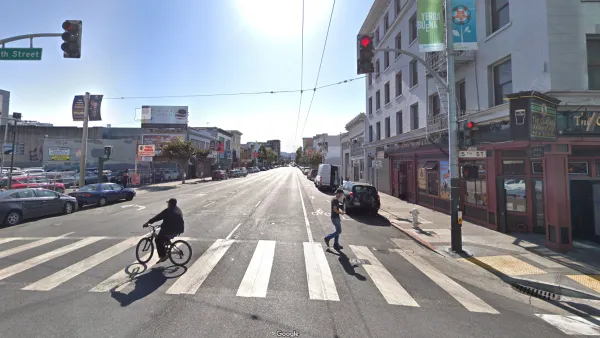
It Takes a Fatality to Remove On-Street Parking
On March 8, 30-year-old Tess Rothstein of Berkeley was riding a rented Ford GoBike in San Francisco's SoMa district when a car door suddenly opened, forcing her outside the narrow white line of the conventional bike lane into the path of a truck.
Indicators of a Sustainable Urban Future.
Parking lots hurting for cars, garages being converted to storage, corporate headquarters moving from edge city to center city—these are some of things happening in U.S. cities that hold promise for change, writes former SPUR ED Jim Chappell.
Street Parking as Car Share Incentive
SFMTA is allowing three car share services: Zip, Get Around and the non-profit CityCar Share to receive designated access to up 450 street and city garage parking spaces in order to promote car sharing as an alternative to auto ownership.

Desperate measures: Advocates weigh draining Lake Powell to fill Colorado River
Draining the reservoir could reduce evaporation losses by a couple hundred thousand acre-feet.

Eastern Nebraska is running out of electricity
Data centers and electrification are straining eastern Nebraska’s grid, throttling economic development.

Move over, LA: St. Louis gears up for Olympics, invests millions in downtown redevelopment
The Missouri city will host the 2028 Olympic soccer group stage and knockout matches.

Mass. votes against statewide minimum lot size for single-family homes
Over 2 million residents voted on Question 7; it was decided by just over 30,000 votes.

Maryland’s $15 billion bridge project gains key approval
The Maryland Transit Authority said the project will create over 60,000 jobs and add $23 billion to the local economy.

‘No clear next steps’ for Chicago's permanent festival grounds
Eleventh Ward Ald. Nicole Lee has suggested Soldier Field as a possible location for the permanent event space.

FREE Course: Walkable City 1: Why Walkability?
After describing his path towards focusing on walkability as the essence of good planning, Jeff Speck marches through his five principal reasons for making more walkable places.
Reinventing Malls: Planning Alchemy—Turning Gray Fields Into Gold
The course focuses on the opportunities and imperatives that shape reinvention of mall sites.

City of Rosemead
Rutgers University, Edward J. Bloustein School of Planning and Public Policy
One Hundred Miles
University of Michigan School for Environment and Sustainability (SEAS)
Hunter College, City University of New York (CUNY)
The Architects Foundation
City of Cambridge
Montrose County
The Pocatello Development Authority