Public transit that serves rural communities is no less essential to the everyday needs of their users as those systems that serve cities. So, why do some states seem so eager to cut subsidies to rural transit providers?


"In the city, many working people and senior citizens rely on public transit to get to the office, doctor appointments, or shopping. No one questions the value of this service to the public good," writes David Holtzman. "The same needs exist in rural areas, but rural public transit is almost invisible. Yet, because most people live so far from commercial and civic centers, transit is just as critical as it is in the city for getting anywhere, if not more so."
"Despite its importance to so many people, public transit in rural areas is one of the first things to face the budgetary chopping block during tough economic times," he laments. "There is a perception among some citizens and legislators that transit is somehow a frill, and that many of the people who use it do not really need it."
"Virginia is one state that is looking at a new model in which they will no longer provide aid to transit providers based on their spending needs."
Read the full story: Rural Transit: A Matter of Life or Death, and in Danger

Rural Missouri Transit Service Could Lose State Funding
OATS Transit offers low-cost rides to primarily elderly rural residents with little or no access to other transportation options.
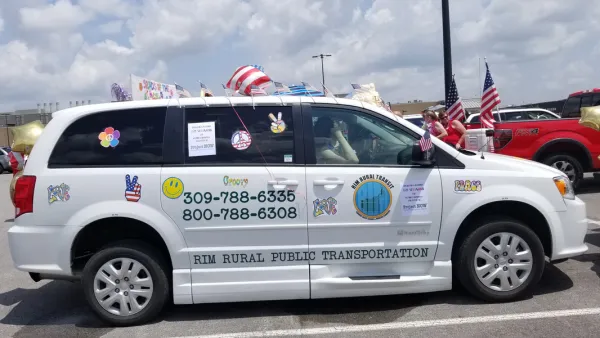
Rural Illinois Transit Brings $4 in Economic Benefits for Every Dollar Spent
Chronically underfunded rural public transit systems are key lifelines are economic engines for rural communities.
The Wave of Transit ‘Fiscal Cliffs,’ Explained
Covid and inflation played a role. But for many agencies, the crisis goes much deeper.

Desperate measures: Advocates weigh draining Lake Powell to fill Colorado River
Draining the reservoir could reduce evaporation losses by a couple hundred thousand acre-feet.

Eastern Nebraska is running out of electricity
Data centers and electrification are straining eastern Nebraska’s grid, throttling economic development.

Malls are becoming the midtowns of the future
Mall and office park redevelopments are a generational opportunity to create new nodes of urbanity.

NYC breaks ground on anti-flooding infrastructure project
New York City's new system will reduce stormwater flows to local sewers by 90%.

One Kentucky town’s secret to affordable housing
The Smoketown Community Land Trust has already built seven affordable homes for community members.

Houston gains petal-shaped cooling infrastructure to make streets more ‘delightful’
The city has installed the pavilions along 15 blocks in Houston.

FREE Course: Walkable City 1: Why Walkability?
After describing his path towards focusing on walkability as the essence of good planning, Jeff Speck marches through his five principal reasons for making more walkable places.
Reinventing Malls: Planning Alchemy—Turning Gray Fields Into Gold
The course focuses on the opportunities and imperatives that shape reinvention of mall sites.

City of Rosemead
Rutgers University, Edward J. Bloustein School of Planning and Public Policy
One Hundred Miles
University of Michigan School for Environment and Sustainability (SEAS)
Hunter College, City University of New York (CUNY)
The Architects Foundation
City of Cambridge
Montrose County
The Pocatello Development Authority