Move over Amsterdam. A new study of London's road use patterns has found that bicycles account for 24 percent of all road traffic during the morning commute. At nearly a fifth of the areas monitored, bikes actually outnumbered other vehicles.


"The biggest ever census of bike use in the city reveals one in four road users during the morning rush hour is a cyclist - and on key routes such as river crossings and roundabouts bikes even outnumber all other vehicles," reports Matthew Beard. "Separate Transport for London figures already show that cyclists now make 570,000 trips in London every day compared with 290,000 trips in 2001."
So how do these astonishing figues compare to Amsterdam, the global icon of bicycle-friendliness. "Almost 9,300 riders - 11 a minute - cross London Bridge a day. Along Amsterdam’s busiest cycle route through the Rijksmuseum there is a daily frequency of 13,000," notes Beard.
"Andrew Gilligan, London Mayor Boris Johnson's cycling commissioner, said: 'These incredible, near-Dutch results show how enormous cycling already is in London and how urgent the task of catering for it has become. Cyclists may make up 24 per cent of the traffic across central London, but they still get much less than 24 per cent of policy-makers’ attention. These extraordinary figures disprove any claim that cycling is marginal and that investing in it is indulgent.'”
"Research was commissioned by Mr Johnson and the findings will help City Hall deliver the Mayor’s £1 billion cycle revolution through a more extensive cycle network," adds Beard.
Read the full story: Move over Amsterdam, the London cycling revolution is in top gear
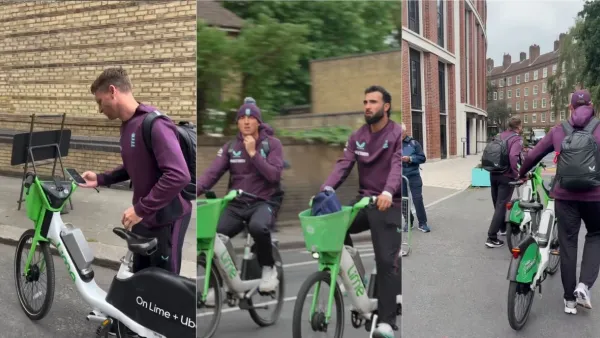
Bikeshare for the Win: Team Pedals to London Cricket Match, Beats Rivals Stuck in Traffic
While their opponents sat in gridlock, England's national cricket team hopped Lime bikes, riding to a 3-0 victory.
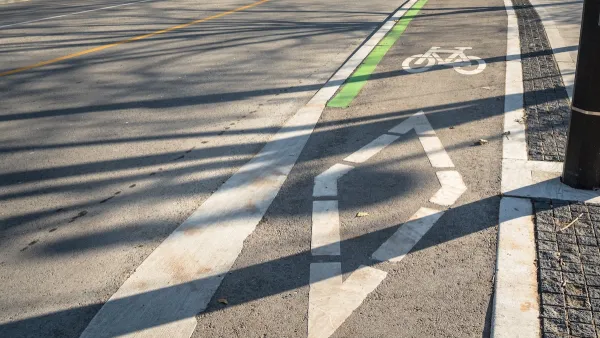
A Troubling Trend of Backlash to Bike Lanes
Some cities are going so far as to rip out protected bike infrastructure that took years of advocacy to build.
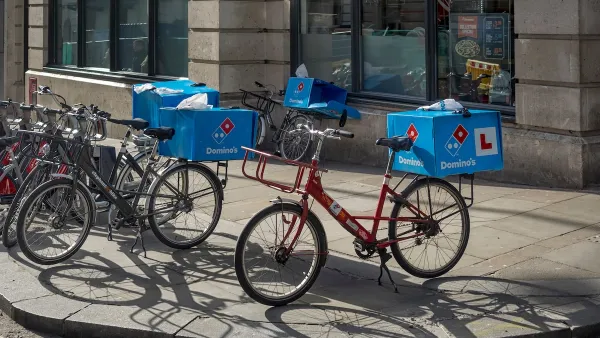
Cargo Bike Use Up Dramatically in London
Bike advocates attribute the growth to new protected bike lanes.

Desperate measures: Advocates weigh draining Lake Powell to fill Colorado River
Draining the reservoir could reduce evaporation losses by a couple hundred thousand acre-feet.

Eastern Nebraska is running out of electricity
Data centers and electrification are straining eastern Nebraska’s grid, throttling economic development.

Malls are becoming the midtowns of the future
Mall and office park redevelopments are a generational opportunity to create new nodes of urbanity.

NYC breaks ground on anti-flooding infrastructure project
New York City's new system will reduce stormwater flows to local sewers by 90%.

One Kentucky town’s secret to affordable housing
The Smoketown Community Land Trust has already built seven affordable homes for community members.

Houston gains petal-shaped cooling infrastructure to make streets more ‘delightful’
The city has installed the pavilions along 15 blocks in Houston.

FREE Course: Walkable City 1: Why Walkability?
After describing his path towards focusing on walkability as the essence of good planning, Jeff Speck marches through his five principal reasons for making more walkable places.
Reinventing Malls: Planning Alchemy—Turning Gray Fields Into Gold
The course focuses on the opportunities and imperatives that shape reinvention of mall sites.

City of Rosemead
Rutgers University, Edward J. Bloustein School of Planning and Public Policy
One Hundred Miles
University of Michigan School for Environment and Sustainability (SEAS)
Hunter College, City University of New York (CUNY)
The Architects Foundation
City of Cambridge
Montrose County
The Pocatello Development Authority