Japan's Mt. Fuji, Italy's Medici Villas and Gardens, and a historical port town in Fiji are among the 19 new additions to UNESCO's vaunted World Heritage List; bringing to 981 the number of cultural, natural, and mixed sites comprising the list.


"During its 37th session in Phnom Penh, Cambodia, the UNESCO World Heritage Committee inscribed 19 sites to its World Heritage List, which includes notable destinations such as Yellowstone National Park and the Galapagos Islands of Ecuador," reports the Los Angeles Times' travel blog. Additions to the list include the historic core of Agadez, in Niger, which dates to the 15th century and "is characterized by mudbrick architecture, including the Grand Mosque", and 64 square miles of rice terraces in the province of Yunnan in southern China, which have been "developed over 1,300 years by the Hani people."
As the article notes, "[b]esides prestige and tourism, inscription offers opportunities for preservation aid."
Read the full story: 19 sites inscribed to UNESCO World Heritage list

Banning Russian Oil, Part II
Part I occurred when President Biden banned the importation of all Russian fossil fuels on March 8. A month later, Congress passed legislation to codify the embargo. Getting the European Union onboard is proving cumbersome.

Shipping Delays Causing Construction Slowdown
Materials procured overseas are taking longer to arrive in the United States, and the delays are causing a ripple effect in the construction industry.
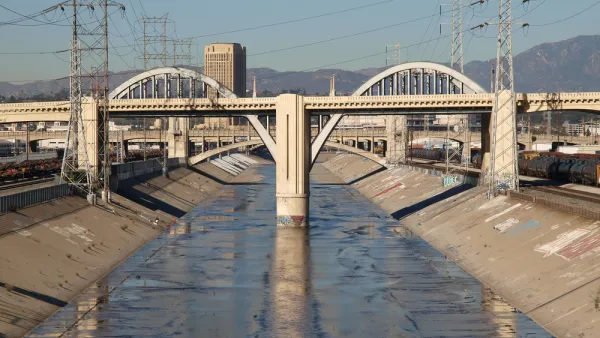
Concrete’s Contribution to the Rise and Decline of Civilization
As the world becomes more encased in concrete, the detrimental effects of its widespread use are increasing in scale and severity.

Planetizen Federal Action Tracker
A weekly monitor of how Trump’s orders and actions are impacting planners and planning in America.

Amtrak, CN end decades-long dispute with eight-year agreement
The new operating agreement establishes an updated framework for the companies to work together, including processes to resolve disputes.

Judges permit Denver to divert 77,000 acre feet from the Colorado River for reservoir expansion
Overuse and climate change have caused the Colorado River’s water levels to plummet.

NYC DOT wants faster, more permanent street upgrades
The city is examining ways to build more concrete infrastructure without getting entangled in 'decades-long' projects.

'Something we’ve never seen before:' rising utility rates could strain city finances nationwide
Data centers, climate change and other factors have caused utility rates in the United States to increase by 38% since 2020.

Trump to overrule local leaders, lease millions of acres of America’s Pacific Island territories’ seafloors to mining companies
International law says that the Indigenous people of America’s territories have a right to prior and informed consent regarding projects that impact their countries.

FREE Course: Walkable City 1: Why Walkability?
After describing his path towards focusing on walkability as the essence of good planning, Jeff Speck marches through his five principal reasons for making more walkable places.
Reinventing Malls: Planning Alchemy—Turning Gray Fields Into Gold
The course focuses on the opportunities and imperatives that shape reinvention of mall sites.

Harvard University Graduate School of Design
KFH Group Inc.
Greater Baltimore Committee
The Architects Foundation
University of Cincinnati Online
The Pocatello Development Authority
The Urban Renewal Agency of the City of Pocatello