A new study by the Sonoran Institute finds unmet demand for walkable neighborhoods in the western American states of Idaho, Montana and Colorado. In these states, houses in walkable areas sell for markedly more than in sprawling areas.


"People in Idaho, Montana, and Colorado want to live in walkable places. That’s the finding of a recent housing market study by Sonoran Institute, a group that supports conservation and community development in the American West," reports Angie Schmitt. "The increasing preference for walkability and mixed-use development among Americans has been well documented, and this study shows it’s not isolated to major urban areas on the coasts."
"The study also included a survey portion," she adds. "Among those surveyed, 90 percent said it was important to live in a place where they could walk to other destinations in the community, like schools, parks, and shops. Moreover, 62 percent said they would be willing to trade some lot size at home for access to parks, trails, and recreation."
Read the full story: Housing Market Study: Idahoans Demanding Walkable Urbanism
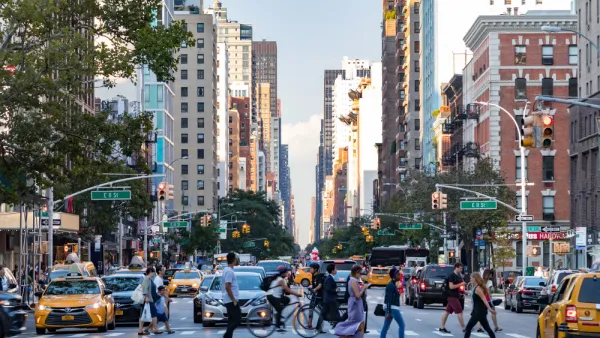
Foot Traffic Ahead: Report Reveals the Resilience of Walkable Places
Reports of the city’s death have been greatly exaggerated, according to new research from Smart Growth America.
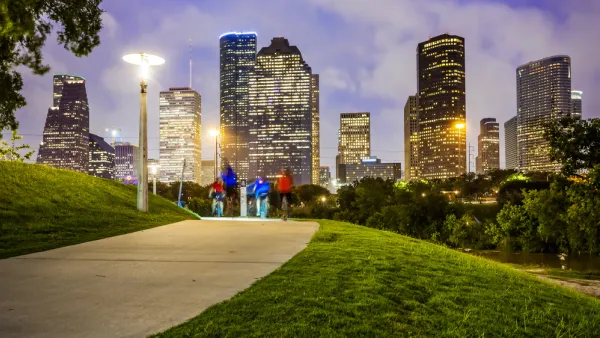
Houston's Latest Push for Walkable Neighborhoods
Building on 2009's Transit Corridor Ordinance, Houston's Walkable Places Committee is creating a process for specific neighborhoods to adopt new rules emphasizing walkability.

Shifting Attitudes Toward Walkable Urbanism in Houston
According to this survey, many Houston residents increasingly prefer mixed-use areas over single-family suburbia. But there's only so much downtown available.

Planetizen Federal Action Tracker
A weekly monitor of how Trump’s orders and actions are impacting planners and planning in America.

Eastern Nebraska is running out of electricity
Data centers and electrification are straining eastern Nebraska’s grid, throttling economic development.

Washington state to charge fee to drivers with fuel-efficient cars
Revenue from the fee will go towards supporting the state’s highways.

Instead of building new housing, LA developers are turning mansions into mega-mansions
In the richest areas, the number of houses valued at $30 million with demolition permits has skyrocketed since 2018.

Illinois considers spending $1 billion in taxpayer money on data center
A quantum computing campus and data center are currently under construction in Chicago.

As development costs rise, Boston moves to lessen affordable housing requirements
The Boston Zoning Commission and the City Council still need to approve Boston Mayor Michelle Wu’s proposed changes

FREE Course: Walkable City 1: Why Walkability?
After describing his path towards focusing on walkability as the essence of good planning, Jeff Speck marches through his five principal reasons for making more walkable places.
Reinventing Malls: Planning Alchemy—Turning Gray Fields Into Gold
The course focuses on the opportunities and imperatives that shape reinvention of mall sites.

City of Charlotte
City of Rosemead
Rutgers University, Edward J. Bloustein School of Planning and Public Policy
University of Michigan School for Environment and Sustainability (SEAS)
Hunter College, City University of New York (CUNY)
The Architects Foundation
University District Partnership
City of Cambridge
The Pocatello Development Authority