Many assume that the affluence of the surrounding neighborhood determines the health of New York City's parks. According to Lisa W. Foderaro, elected leadership, rather than location, determines which parks in the city are better maintained.


Through a comparison of crumbling Kelly Park, in Sheepshead Bay, and thriving Canarsie Park, Foderaro examines the role that the city's elected officials play in determining the health of the parks in their district.
"This tale of two parks is echoed around New York City, and not for the reason usually given: that private money in wealthy neighborhoods is used to buff and polish already pristine parks," she explains. "Rather, the disparities between the Sheepshead Bay and Canarsie sections of Brooklyn, which share the same blue-collar demographic, stem from a little-noticed budget reality: With many smaller capital projects, the parks department is often constrained by the preferences of City Council members and borough presidents."
"The reliance on elected officials, whose priorities may not align with those of the parks department, is a focus of a new platform by New Yorkers for Parks, a nonprofit advocacy group. The platform, drawn up after conversations with advocates in the five boroughs, is being presented to community boards and mayoral candidates. It calls for more financing for park maintenance, greater transparency by park conservancies and stricter regulation on the use of parks for private purposes. While acknowledging that parks under Mayor Michael R. Bloomberg have experienced an extraordinary level of expansion and refurbishment, the group says that many smaller parks were left behind."
Read the full story: A Little-Known Reason for Disparities in New York’s Parks
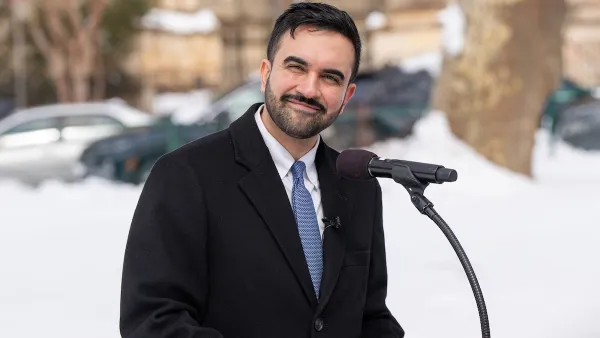
Mamdani’s pied-à-terre tax survives legal challenge
A panel of judges found that the plaintiffs failed to demonstrate injury as a result of New York City's implementation of the tax.
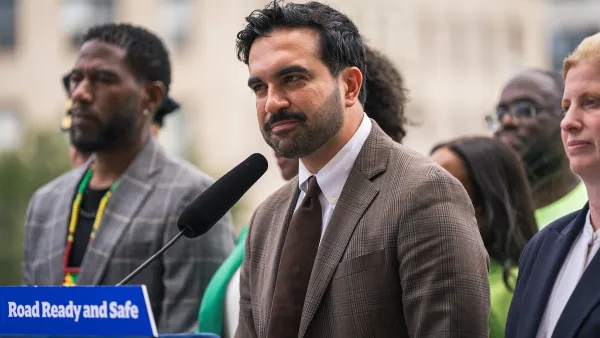
NYC votes to cut outdoor dining red tape, speed up permitting
New York City also voted to allow the Department of Transportation to begin work on urgent projects before notifying elected officials.
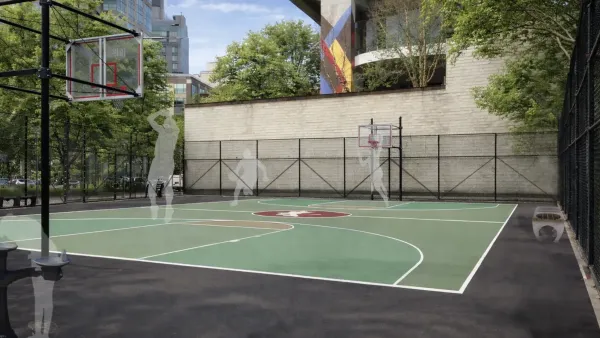
MTA gives itself 30 days to transform pit into basketball court
The site has been under construction since 2022; the city originally estimated it would finish the court in 2024.

Planetizen Federal Action Tracker
A weekly monitor of how Trump’s orders and actions are impacting planners and planning in America.

California plans to bury El Niño’s downpour
If the state plays its cards right, it may be able to store a billion acre-feet of El Niño’s water in aquifers.

Desperate measures: Advocates weigh draining Lake Powell to fill Colorado River
Draining the reservoir could reduce evaporation losses by a couple hundred thousand acre-feet.

Los Angeles just elected an urban planner as its mayor
Transportation analysts are optimistic that Raman will be more aggressive in addressing transit issues than Bass.

Mamdani’s pied-à-terre tax survives legal challenge
A panel of judges found that the plaintiffs failed to demonstrate injury as a result of New York City's implementation of the tax.

Eastern Nebraska is running out of electricity
Data centers and electrification are straining eastern Nebraska’s grid, throttling economic development.

FREE Course: Walkable City 1: Why Walkability?
After describing his path towards focusing on walkability as the essence of good planning, Jeff Speck marches through his five principal reasons for making more walkable places.
Reinventing Malls: Planning Alchemy—Turning Gray Fields Into Gold
The course focuses on the opportunities and imperatives that shape reinvention of mall sites.

City of Rosemead
Rutgers University, Edward J. Bloustein School of Planning and Public Policy
One Hundred Miles
University of Michigan School for Environment and Sustainability (SEAS)
Hunter College, City University of New York (CUNY)
The Architects Foundation
City of Cambridge
Montrose County
The Pocatello Development Authority