For Americans under 34, the amount of money spent dining out has increased by more than 20% over the last decade; as the recording industry has been in a tailspin. In the battle to earn urbanites' dollars, food purveyors are the new rock stars.


"Over the past decade, we’ve seen the rise of the foodie class and decline of the record industry. Are the two related?" asks Chris Richards. "When did we start talking about new food trucks instead of new bands? When did the line outside El Centro D.F. taqueria get longer than the line outside the Black Cat? Is $8 a reasonable price for an order of duck fat french fries just because we can stream our music for free on Spotify?"
Although the direct connection may be a stretch, Richards makes a persuasive argument that "gastronomical adventures provide the thrills that rock-and-roll used to."
"New restaurants appeal to our sense of discovery," he says. "Our diets can reflect our identities, our politics. For fans of thrash metal and/or live octopus sashimi, food is a way to sate cravings for the maximal, visceral and extreme."
"And above all, unlike music, food provides a sensual pleasure that can’t be transmitted digitally. We can’t download a banh mi."
Read the full story: Are foodies quietly killing rock-and-roll?

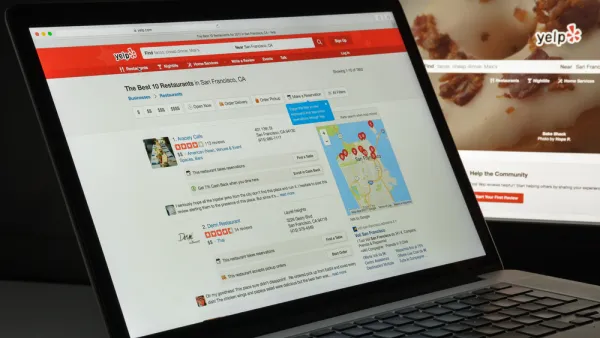
Are Your Yelp Reviews Causing Gentrification?
As "foodies" venture into new territory in search of exciting food experiences, they contribute to the transformation of urban foodscapes that have been built by people of color.
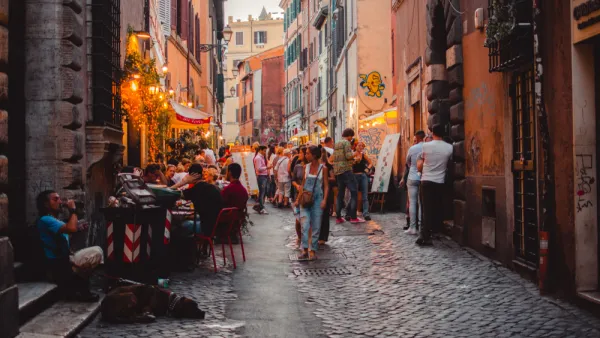
Friday Fun: Top 25 Destinations for Foodies
Readers of Travel + Leisure voted for their the top food destinations. Keep this list in mind for when we can travel more freely.
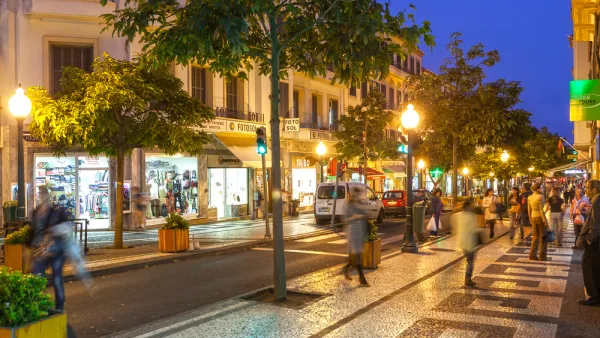
Friday Funny: City Wants to Skip the Hard Parts of Revitalization
The Onion provides a fake dispatch from a city that wants lobster roll stands and high-end noodle bars on every corner, like now.

Planetizen Federal Action Tracker
A weekly monitor of how Trump’s orders and actions are impacting planners and planning in America.

Northwest rail fans eager for Sept. 30 debut of Amtrak’s Airo fleet
Get ready for that new train smell and more seats. But they won’t go faster or run more frequently on the Cascades route in Washington and Oregon.

Trump is considering data centers on 6 states' public land — some state officials say they had no idea
If the administration approves the proposed projects, data center and data center-related developments will cover 17,600 acres of public land.

California high-speed rail accomplishes only one legislative goal in 2026
The majority of the agency's failed pitches were never developed into written proposals.

Sharp cuts to federal passenger rail, public transit funding arrive today
The American Public Transportation Associations estimates the stopgap bill will result in an over 80% cut to federal passenger rail investment and 20% cut to public transit investment.

Chicago to showcase country’s first battery-operated passenger train
Metra estimates the trains will be ready for passenger use around the start of 2028.

FREE Course: Walkable City 1: Why Walkability?
After describing his path towards focusing on walkability as the essence of good planning, Jeff Speck marches through his five principal reasons for making more walkable places.
Reinventing Malls: Planning Alchemy—Turning Gray Fields Into Gold
The course focuses on the opportunities and imperatives that shape reinvention of mall sites.

City of Thousand Oaks
City of Wisconsin Rapids
Harvard University Graduate School of Design
The Architects Foundation
University of Cincinnati Online
Northern Illinois Transit Authority (NITA)
The Pocatello Development Authority
The Urban Renewal Agency of the City of Pocatello