Reflecting a nationwide trend, gas stations across the Washington D.C. metro area are disappearing, as rising land values and shrinking margins have station owners eager to sell.


"In Bethesda, in the middle of car-loving suburbia, gas stations are going the way of the drive-in movie," observes Katherine Shaver. "Along busy Wisconsin Avenue, two Exxons and a BP have stopped selling gas or have closed completely, making way for a high-rise apartment building and a new bank. A Sunoco, the area’s last Wisconsin Avenue station, is being sold to a developer with plans for a six-floor office building."
"The dwindling number of stations reflects a transformation underway in some of Washington’s innersuburbs [sic] as they continue to evolve from car-centric sprawl into more densely developed hubs built around walking, cycling and public transit. It also underscores recent changes in the gas station industry that have made it more difficult for stations on smaller parcels to make money, leaving owners more eager to sell."
Read the full story: Gas stations are vanishing from Washington’s inner suburbs
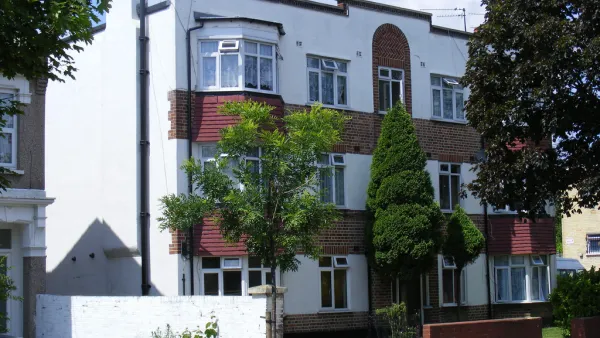
Single-Lot Densification Faces Zoning, Economic Challenges
Small-scale development on single lots is an alternative to the centralized mid-rise norm. But this kind of classic infilling may not be as easy as build-it-and-they-will-come.
Effort to Urbanize Las Vegas Hits a Political Wall
In a delicious irony, the Las Vegas City Council has overturned the mixed-use zoning of a parcel in an area planned for more density to make room for a gas station.
Successful Strategies for Building Up the Suburbs
A new report from the Urban Land Institute highlights successful strategies for adapting the infrastructure of America's suburbs to accommodate a densification of development.

Planetizen Federal Action Tracker
A weekly monitor of how Trump’s orders and actions are impacting planners and planning in America.

Eastern Nebraska is running out of electricity
Data centers and electrification are straining eastern Nebraska’s grid, throttling economic development.

Move over, LA: St. Louis gears up for Olympics, invests millions in downtown redevelopment
The Missouri city will host the 2028 Olympic soccer group stage and knockout matches.

Dallas releases zoning code overhaul to officials
The drafted overhaul is over 400 pages long.

NYC renovations for dangerous, ‘mercilessly crammed’ street delayed until 2027
Construction was supposed to begin this fall.

San Diego’s Midway Rising project gets greenlight from city council
The project looks to become the largest affordable housing development in California's history.

FREE Course: Walkable City 1: Why Walkability?
After describing his path towards focusing on walkability as the essence of good planning, Jeff Speck marches through his five principal reasons for making more walkable places.
Reinventing Malls: Planning Alchemy—Turning Gray Fields Into Gold
The course focuses on the opportunities and imperatives that shape reinvention of mall sites.

City of Rosemead
Rutgers University, Edward J. Bloustein School of Planning and Public Policy
One Hundred Miles
University of Michigan School for Environment and Sustainability (SEAS)
Hunter College, City University of New York (CUNY)
The Architects Foundation
City of Cambridge
The Pocatello Development Authority
The Urban Renewal Agency of the City of Pocatello