From traditional stormwater management to storm surge abatement and conserving drinking water and watersheds, green infrastructure improves our cities, explains Adrian Benepe of the Trust for Public Land.


According to Adrian Benepe, the term green infrastructure (GI) occupies an interdisciplinary threshold even though its textbook definition relates simply to stormwater management.
He chronicles the history of GI, beginning with Olmsted's design for Back Bay Fens in Boston, and how, in recent years, NYC under Mayor Bloomberg and Philadelphia under Mayor Nutter have implemented GI to update, improve and expand urban parkland and abate water pollution in their cities.
With "Greenstreet" initiatives that bring together engineers, landscape designers, nonprofits and local government and collaborations between their departments of environment and education, both cities have redefined the look and function of urban surfaces and the runoff systems beneath them, capturing and redirecting thousands of gallons of runoff.
Benepe also discusses how other major U.S. cities, including Boston, Chicago, Los Angeles, New Orleans and Washington, D.C. have tackled stormwater management with the protection of their rivers in mind.
Read the full story: Green infrastructure as parks: how need, design, and technology can make cities better
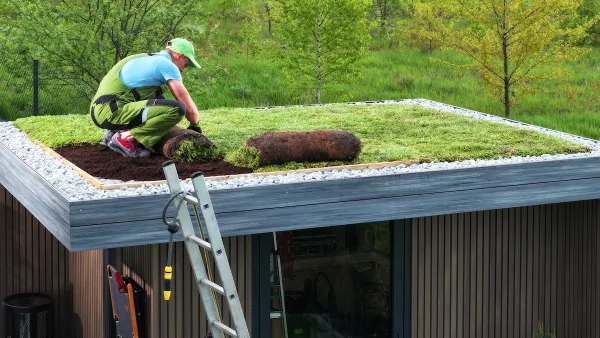
The next era of climate resilience will be measured in co-benefits
Why the strongest resilience investments solve more than one problem at once.
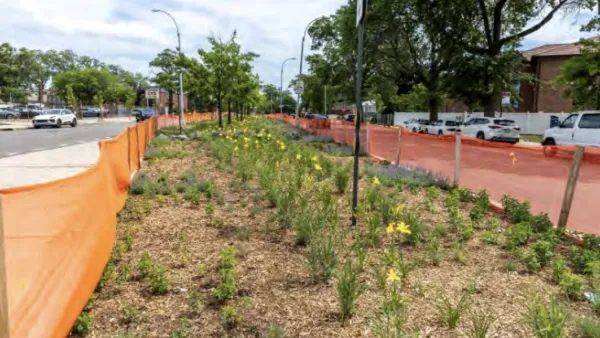
New NYC ‘sponge’ medians will absorb 5 million gallons of stormwater per year
The project will turn three medians in Queens into green infrastructure designed to absorb stormwater.
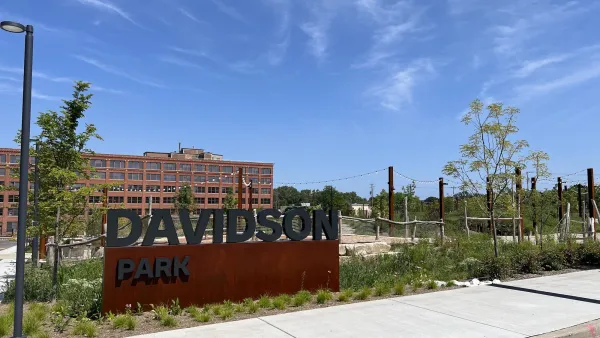
Harley-Davidson turned a Milwaukee parking lot into a green oasis
The park, adjacent to Harley-Davidson headquarters, doubles as stormwater retention infrastructure.

Planetizen Federal Action Tracker
A weekly monitor of how Trump’s orders and actions are impacting planners and planning in America.

California plans to bury El Niño’s downpour
If the state plays its cards right, it may be able to store a billion acre-feet of El Niño’s water in aquifers.

Desperate measures: Advocates weigh draining Lake Powell to fill Colorado River
Draining the reservoir could reduce evaporation losses by a couple hundred thousand acre-feet.

Los Angeles just elected an urban planner as its mayor
Transportation analysts are optimistic that Raman will be more aggressive in addressing transit issues than Bass.

Mamdani’s pied-à-terre tax survives legal challenge
A panel of judges found that the plaintiffs failed to demonstrate injury as a result of New York City's implementation of the tax.

Eastern Nebraska is running out of electricity
Data centers and electrification are straining eastern Nebraska’s grid, throttling economic development.

FREE Course: Walkable City 1: Why Walkability?
After describing his path towards focusing on walkability as the essence of good planning, Jeff Speck marches through his five principal reasons for making more walkable places.
Reinventing Malls: Planning Alchemy—Turning Gray Fields Into Gold
The course focuses on the opportunities and imperatives that shape reinvention of mall sites.

City of Rosemead
Rutgers University, Edward J. Bloustein School of Planning and Public Policy
One Hundred Miles
University of Michigan School for Environment and Sustainability (SEAS)
Hunter College, City University of New York (CUNY)
The Architects Foundation
City of Cambridge
Montrose County
The Pocatello Development Authority