Despite falling ridership numbers on the region's public transit system (bucking the nationwide trend), the Georgia Department of Transportation is studying options for building a multi-modal transit hub in downtown Atlanta.


Ariel Hart discusses the findings of "a preliminary report considering three designs for a passenger terminal and real estate development proposed for the 'Gulch' area of downtown Atlanta."
"The state has not yet committed to funding the project," she adds, "no matter what design is chosen. A financial feasibility report is expected this summer. Backers hope real estate development around or above the terminal could generate profits to help pay for the terminal."
With the state holding off on making its recommendation on the complex until the end of the year, officials will have plenty of time to consider the implications of the Metropolitan Atlanta Rapid Transit Authority's (MARTA) declining ridership.
"Unlike most public transit systems in the United States, last year, MARTA continued a downward spiral in declining ridership at a time when that trend should be turning around: the economy is improving; the younger Millennials favor transit more than older Baby Boomers or Gen Xers; gas prices remain high," writes Steve Visser.
"MARTA calculates its buses and trains carry 123,400 people daily to jobs, school and shopping, but since 2001 that ridership has fallen by about 15 percent on trains and 31 percent on buses, according to reports from the American Public Transit Association."
Read the full story: Transit hub could stretch from park to Five Points

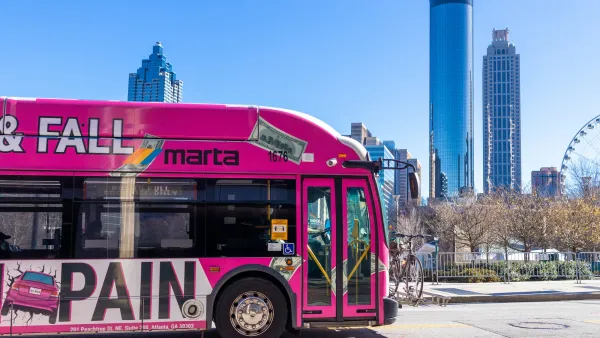
MARTA’s NextGen Bus System to Relaunch With Increased Frequency, New Last-mile Rideshare Program
Atlanta’s transit agency will enhance service on some routes while compensating for service cuts on others with a new on-demand service.
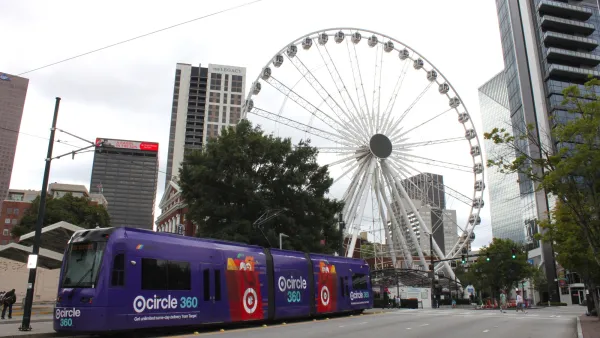
MARTA Streetcar Returns February 3
Streetcar service in Atlanta was suspended for five months for repairs and upgrades.

MARTA CEO Steps Down Amid Citizenship Concerns
MARTA’s board announced Thursday that its chief, who is from Canada, is resigning due to questions about his immigration status.

Planetizen Federal Action Tracker
A weekly monitor of how Trump’s orders and actions are impacting planners and planning in America.

Amtrak, CN end decades-long dispute with eight-year agreement
The new operating agreement establishes an updated framework for the companies to work together, including processes to resolve disputes.

Judges permit Denver to divert 77,000 acre feet from the Colorado River for reservoir expansion
Overuse and climate change have caused the Colorado River’s water levels to plummet.

NYC DOT wants faster, more permanent street upgrades
The city is examining ways to build more concrete infrastructure without getting entangled in 'decades-long' projects.

'Something we’ve never seen before:' rising utility rates could strain city finances nationwide
Data centers, climate change and other factors have caused utility rates in the United States to increase by 38% since 2020.

Trump to overrule local leaders, lease millions of acres of America’s Pacific Island territories’ seafloors to mining companies
International law says that the Indigenous people of America’s territories have a right to prior and informed consent regarding projects that impact their countries.

FREE Course: Walkable City 1: Why Walkability?
After describing his path towards focusing on walkability as the essence of good planning, Jeff Speck marches through his five principal reasons for making more walkable places.
Reinventing Malls: Planning Alchemy—Turning Gray Fields Into Gold
The course focuses on the opportunities and imperatives that shape reinvention of mall sites.

Harvard University Graduate School of Design
KFH Group Inc.
Greater Baltimore Committee
The Architects Foundation
University of Cincinnati Online
The Pocatello Development Authority
The Urban Renewal Agency of the City of Pocatello