In this supposed progressive paradise, the recent removal of a transportation consultant reveals the conflicting agendas of residents that want to reduce congestion and those who want to build more parking. Then there are those that want both.


On the surface, transportation consultant Jeffery Tumlin was removed from the team working on a new zoning ordinance for Santa Monica after the Santa Monica Coalition for a Livable City (SMCLC) lobbied for his ouster for referring to some of the city's residents as NIMBYS in his resume.
In reality, says Gary Kavanagh, "[t]he controversy over using the word nimby was most likely a convenient pretense for the real reason SMCLC wanted him gone: he has been pitching ideas to reform our outdated parking policies."
"Looking back over the SMCLC letter, there is the line '…we are concerned by Mr. Tumlin’s proposal to decrease the amount of parking required by new developments in our city– this in spite of residents asking for MORE parking not less…'. One could also just as forcefully assert that residents have asked for less traffic congestion, perhaps even more loudly than for more parking. These two goals are at odds with each other in most contexts, especially locations as popular as Santa Monica."
"The changing needs of the present, and the compelling and plausible shifts on the horizon in the foreseeable future, require a rethink of our approach to parking, and no amount of wishful thinking is going to change that," argues Kavanagh, a Santa Monica resident. "If we are as serious about sustainability in Santa Monica as we like to claim to be, there simply is no getting around the need to stop forcing automobile-centrism onto the landscape."
Read the full story: They Paved Paradise, Parking In Santa Monica
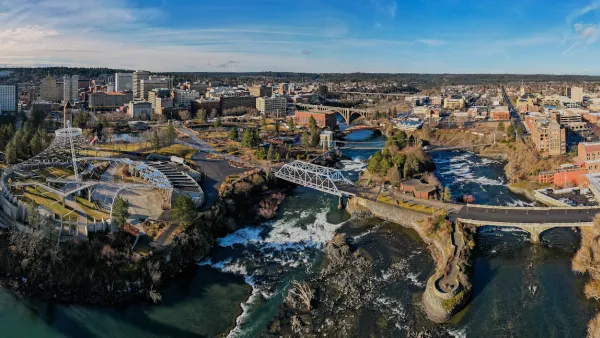
Spokane Could Eliminate Parking Minimums Near Transit
A Washington state proposal to reduce parking minimums failed in the state legislature earlier this year.
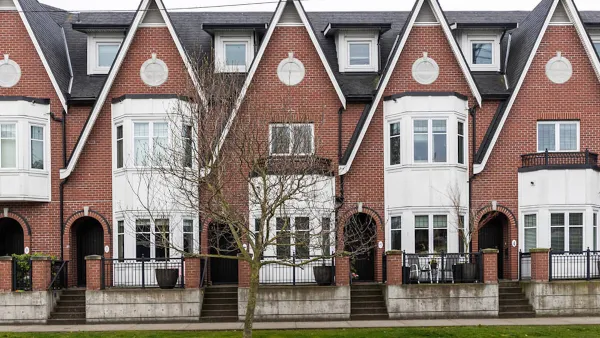
More Affordable Housing for People, Less for Cars
Most jurisdictions have off-street parking requirements that increase motorists’ convenience but reduce housing affordability. It’s time to reform these policies for the sake of efficiency and fairness.

No More Parking Minimums in Hartford
Earlier this month, the Hartford Planning and Zoning Commission voted unanimously on a revised zoning code that lets builders forgo parking citywide.

Planetizen Federal Action Tracker
A weekly monitor of how Trump’s orders and actions are impacting planners and planning in America.

California plans to bury El Niño’s downpour
If the state plays its cards right, it may be able to store a billion acre-feet of El Niño’s water in aquifers.

Desperate measures: Advocates weigh draining Lake Powell to fill Colorado River
Draining the reservoir could reduce evaporation losses by a couple hundred thousand acre-feet.

Los Angeles just elected an urban planner as its mayor
Transportation analysts are optimistic that Raman will be more aggressive in addressing transit issues than Bass.

Mamdani’s pied-à-terre tax survives legal challenge
A panel of judges found that the plaintiffs failed to demonstrate injury as a result of New York City's implementation of the tax.

Eastern Nebraska is running out of electricity
Data centers and electrification are straining eastern Nebraska’s grid, throttling economic development.

FREE Course: Walkable City 1: Why Walkability?
After describing his path towards focusing on walkability as the essence of good planning, Jeff Speck marches through his five principal reasons for making more walkable places.
Reinventing Malls: Planning Alchemy—Turning Gray Fields Into Gold
The course focuses on the opportunities and imperatives that shape reinvention of mall sites.

City of Rosemead
Rutgers University, Edward J. Bloustein School of Planning and Public Policy
One Hundred Miles
University of Michigan School for Environment and Sustainability (SEAS)
Hunter College, City University of New York (CUNY)
The Architects Foundation
City of Cambridge
Montrose County
The Pocatello Development Authority