Matthew Power profiles Bradley L. Garrett, Ph.D. and his "research subjects," who are active participants in the urban explorer movement, which aims to "rediscover, reappropriate, and reimagine the urban landscape."


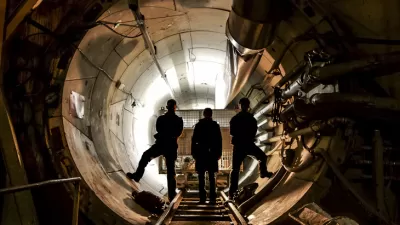
As Power explains, Garrett has a close relationship with his academic research. "His dissertation in human geography, which he had defended the previous year, was entitled 'Place Hacking.' The title came from his argument that physical space is coded just like the operating system of a computer network, and it could be hacked—explored, infiltrated, re-coded—in precisely the same ways."
"He conducted a deep ethnographic study of a small crew of self-described 'urban explorers' who over several years had infiltrated an astonishing array of off-limits sites above and below London and across Europe: abandoned Tube stations, uncompleted skyscrapers, World War II bomb shelters, derelict submarines, and half-built Olympic stadiums. . . .The London crew's objective, as much as any of them could agree on one, was to rediscover, reappropriate, and reimagine the urban landscape in what is perhaps the most highly surveilled and tightly controlled city on earth."
Not only is Garrett an observer of "Urbex" - as the urban explorer movement is called - he's an active participant. "He sees this kind of unsanctioned reclamation of space as the best means to regain freedom in a society that is utterly cordoned and securitized. He carries sheets of stickers that read explore everything, which he affixes as a sort of calling card everywhere he goes."
Power tags along with Garrett and his "project participants" as they explore off-limits sites in London and Paris.
Read the full story: Excuse Us While We Kiss The Sky

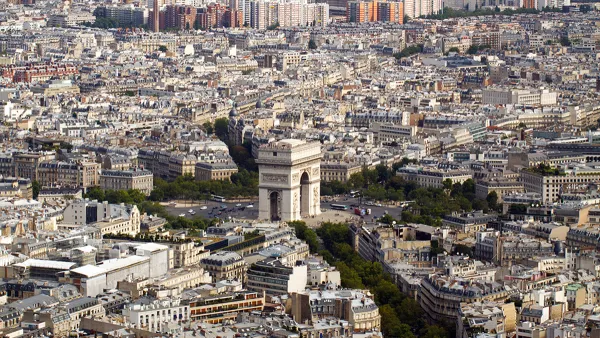
From Paris to Portland: The 15-Minute City Goes Mainstream
Raising the bar on the 20-minute neighborhood model, cities around the world are embracing the appeal of the 15-minute city during the coronavirus pandemic.
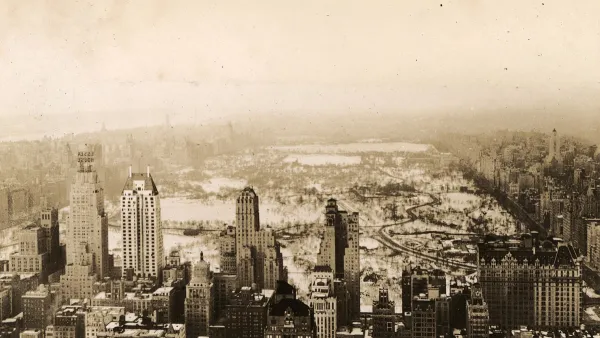
Design in the Time of Cholera: How Pandemics Reshaped the Built Environment
Some of the most beloved public parks and essential advances in public sanitation can be traced back to their roots in the Cholera outbreaks in the 1800s.
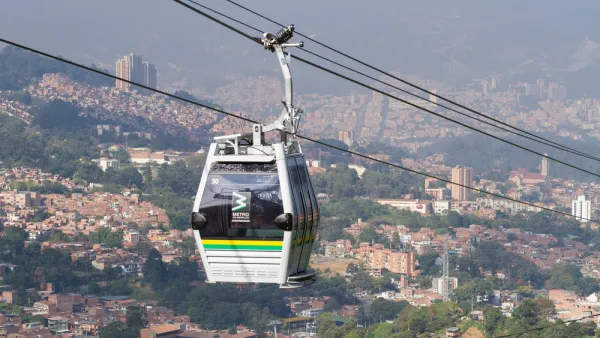
On Public Transit, Some of the World’s Best Sightseeing
From Los Angeles to Hong Kong to Sydney, the best—and the cheapest—views are on ferries, buses, trains, and gondolas.

Planetizen Federal Action Tracker
A weekly monitor of how Trump’s orders and actions are impacting planners and planning in America.

Amtrak, CN end decades-long dispute with eight-year agreement
The new operating agreement establishes an updated framework for the companies to work together, including processes to resolve disputes.

Judges permit Denver to divert 77,000 acre feet from the Colorado River for reservoir expansion
Overuse and climate change have caused the Colorado River’s water levels to plummet.

Boston has spent millions making the Green Line more accessible — and there’s no end in sight
While the city has invested millions into expanding and adding platforms to the Green Line to make it more accessible, new train cars set to arrive next year will be too tall for disabled passengers to board without raising the current platforms.

Idaho may see an 18% drop in federal surface transit funding — the largest estimated cut in the US
Transit systems in rural communities are much more reliant on federal funding to provide their services.

How ‘post-disaster gentrification’ alters neighborhoods after natural calamities
After hurricanes, fires or other calamities, the original residents of a community are often replaced by younger, wealthier residents.

FREE Course: Walkable City 1: Why Walkability?
After describing his path towards focusing on walkability as the essence of good planning, Jeff Speck marches through his five principal reasons for making more walkable places.
Reinventing Malls: Planning Alchemy—Turning Gray Fields Into Gold
The course focuses on the opportunities and imperatives that shape reinvention of mall sites.


City of Wisconsin Rapids
Harvard University Graduate School of Design
KFH Group Inc.
The Architects Foundation
University of Cincinnati Online
The Pocatello Development Authority
The Urban Renewal Agency of the City of Pocatello