As aging baby boomers enter retirement and seek to downsize from their large single-family homes (the "great senior sell-off") they'll find a housing market increasingly uninterested in what they're selling, says researcher Arthur C. Nelson.


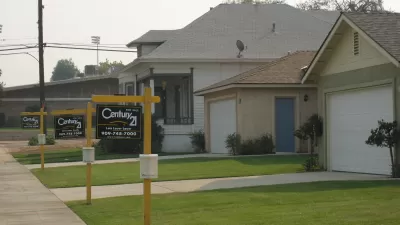
We've heard a lot about the demographic wave (the "Silver Tsunami") that is just beginning to break across the U.S., and emerging trends in retirement preferences. Emily Badger goes one step further, and looks at how these trends will impact the larger housing market - and it's not a pretty picture.
"In the coming years, baby boomers will be moving on (inching further through the python, if you will). 'They will want to sell their homes, and they’re hoping there are people behind them to buy their homes,' says Nelson, director of the Metropolitan Research Center at the University of Utah. He expects that in growing metros like Atlanta and Dallas, those buyers will be waiting. But elsewhere, in shrinking and stagnant cities across the country, the story will be quite different. Nelson calls what’s coming the 'great senior sell-off.' It’ll start sometime later this decade (Nelson is defining baby boomers as those people born between 1946 and 1964). And he predicts that it could cause our next real housing crisis."
“Between changing preferences and declining median household income because of poor education – because we’re not willing to spend money on education,” Nelson says, “that means we can predict the next housing crash, and that’ll be in about 2020.”
"In that environment, he says, there will be two classes of seniors in America: those “aging in place” voluntarily, and those “aging in place” involuntarily because they can’t sell their homes."
Read the full story: The Great Senior Sell-Off Could Cause the Next Housing Crisis

Downsizing Baby Boomers May Ease the Housing Crisis
Some hope that a ‘silver tsunami’ of downsizing baby boomers will bring down housing costs, but the reality is likely much more complicated.
Back To The City
Babay boomers are leaving the suburbs and moving to pedestrian-friendly cities.

Home Prices are Stabilizing. Will it Last?
Housing costs are growing at a slower rate than in recent years, but experts say significant home price reductions won’t happen in the short term.

Planetizen Federal Action Tracker
A weekly monitor of how Trump’s orders and actions are impacting planners and planning in America.

California plans to bury El Niño’s downpour
If the state plays its cards right, it may be able to store a billion acre-feet of El Niño’s water in aquifers.

Chicago breaks ground on $3 billion megadevelopment
The new neighborhood, titled Foundry Park, will one day host 3,700 residences.

This road in NYC is infamously dangerous — and Mamdani can't fix it
New York City's Ocean Parkway is known for reckless driving, but the power to implement safety measures lies with the state rather than the city.

One of Denver’s busiest corridors to gain BRT
The project will span 18 miles and contain 74 bus rapid transit stations.

275,000 bus trips are at stake on Seattle's ballot
If passed, the Seattle Transit Measure would trigger a 0.3% sales tax and raise an average of $138 million per year to maintain and expand Seattle’s bus services.

FREE Course: Walkable City 1: Why Walkability?
After describing his path towards focusing on walkability as the essence of good planning, Jeff Speck marches through his five principal reasons for making more walkable places.
Reinventing Malls: Planning Alchemy—Turning Gray Fields Into Gold
The course focuses on the opportunities and imperatives that shape reinvention of mall sites.

City of Rosemead
Rutgers University, Edward J. Bloustein School of Planning and Public Policy
One Hundred Miles
Hunter College, City University of New York (CUNY)
The Architects Foundation
University of Cincinnati Online
City of Cambridge
Montrose County
The Pocatello Development Authority