The Spanish city of Pontevedra has developed an innovative, and attractive, map of pedestrian connections based on the color-coded subway maps common to cities around the world; burnishing its reputation as "a leader in walker-friendly urban policy."


Eduardo Ares discusses Pontevedra's award-winning Metrominuto map, the latest effort by city leaders to protect their historic streets from oppressive automobile traffic, and promote non-motorized transportation. Past efforts have included widening sidewalks, establishing a free bike-lending service, and banning motorized transport in sections of the city.
"To further improve walkability," explains Ares, "Pontevedra's city council produced a map that visualizes the distances and travel times between key places on foot at an average speed of five kilometers per hour. Known as Metrominuto, the map has color-coded lines that resemble those of a subway guide. The pink line from Peregrina Square shows that it takes about 14 minutes to walk from there to the train and bus stations. Free parking areas are marked to encourage visitors to leave their cars outside the city center."
"Metrominuto reminds residents and visitors that many automobile trips can be made in a more convenient, environmentally friendly and healthy way by walking."
Read the full story: Visualizing a Walkable City

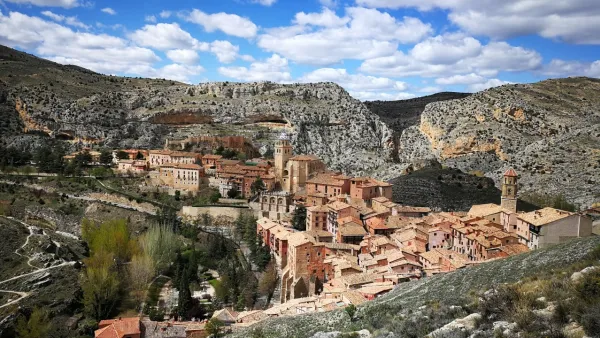
Abandoned Rural Spain Rebounds With People Fleeing Cities
COVID-19 is leading an exodus to rural areas, according to this article. The shift could hurt the economies of cities, but it also presents opportunities for younger residents and people looking for a more sustainable lifestyle.
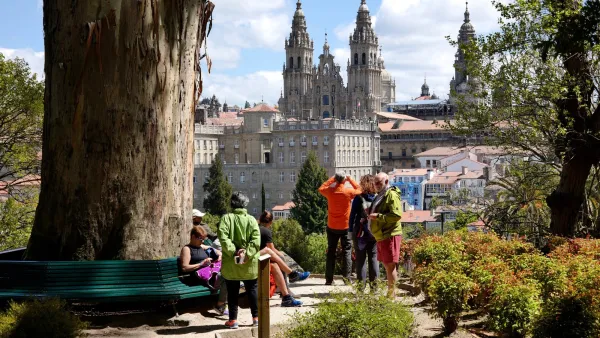
The Practical Confessions of an Urbanist Pilgrim
After 12 days of walking the Portuguese Camino, the importance of many urban planning and development debates—from balanced growth to banning cars—became abundantly clear.
A Sea of Infrastructure
An ex-pat American returns home to Milwaukee, and is overwhelmed by the extensive auto-oriented infrastructure needed to support the U.S. lifestyle, very different from his life in Almeria, Spain.

Amtrak, CN end decades-long dispute with eight-year agreement
The new operating agreement establishes an updated framework for the companies to work together, including processes to resolve disputes.

Judges permit Denver to divert 77,000 acre feet from the Colorado River for reservoir expansion
Overuse and climate change have caused the Colorado River’s water levels to plummet.
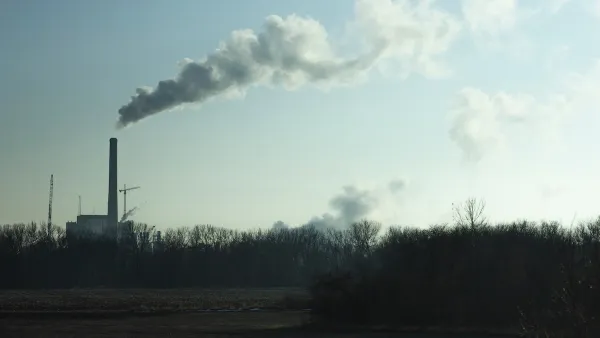
Nation's most wind-powered state turns to coal as data centers increase energy demand
For the first time in decades, Iowa has increased its generation of coal power.

Boston has spent millions making the Green Line more accessible — and there’s no end in sight
While the city has invested millions into expanding and adding platforms to the Green Line to make it more accessible, new train cars set to arrive next year will be too tall for disabled passengers to board without raising the current platforms.

Idaho may see an 18% drop in federal surface transit funding — the largest estimated cut in the US
Transit systems in rural communities are much more reliant on federal funding to provide their services.

How ‘post-disaster gentrification’ alters neighborhoods after natural calamities
After hurricanes, fires or other calamities, the original residents of a community are often replaced by younger, wealthier residents.

FREE Course: Walkable City 1: Why Walkability?
After describing his path towards focusing on walkability as the essence of good planning, Jeff Speck marches through his five principal reasons for making more walkable places.
Reinventing Malls: Planning Alchemy—Turning Gray Fields Into Gold
The course focuses on the opportunities and imperatives that shape reinvention of mall sites.

City of Wisconsin Rapids
Harvard University Graduate School of Design
KFH Group Inc.
The Architects Foundation
University of Cincinnati Online
The Pocatello Development Authority
The Urban Renewal Agency of the City of Pocatello