A new exhibition at the NAiM/Bureau Europa, in the Netherlands, examines the debt of gratitude that designers such as Mies van der Rohe, John Lautner, and George Nelson owe to the men's magazine for its promotion of the design trends of the day.


Since its founding in 1953 by Hugh Hefner, Playboy has not only featured images of beautiful women, but endeavored to inform its readers how to woo such women. Or, as Belinda Lanks explains, "it taught [the American male] how he could leverage architecture and design to bag a babe."
"That’s the thesis of Architecture in Playboy, 1953–1979, an exhibition at the NAiM/Bureau Europa, in the Netherlands, that explores how the magazine depicted the major design players of the time. And it’s actually not too much of a stretch. Almost from its very start, Playboy made a point of featuring architect’s big shots, from Frank Lloyd Wright and Mies van der Rohe to Buckminster Fuller and John Lautner. And who can forget the famous (and downright respectable) spread featuring the midcentury design greats George Nelson, Edward Wormley, Eero Saarinen, Harry Bertoia, Charles Eames, and Jens Risom with their respective chairs?"
"The message here: Architecture and design are major forces influencing the world, and if you’re not familiar with the heavy hitters, perhaps you’re not a Playboy."
Read the full story: How “Playboy” Magazine Helped Make Eames And Mies Famous


San Francisco to Dismantle its Polarizing Brutalist Fountain
The Vaillancourt Fountain stands as a symbol of the tension between the city’s past and future.
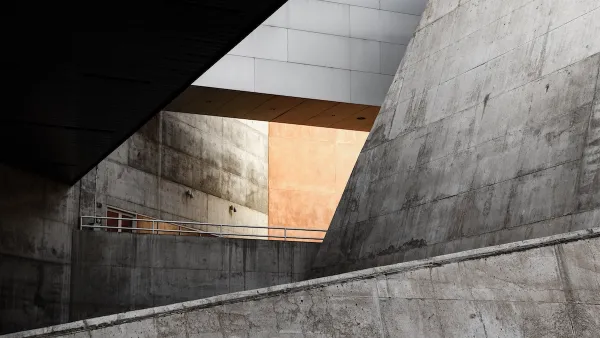
What ‘The Brutalist’ Teaches Us About Modern Cities
How architecture and urban landscapes reflect the trauma and dysfunction of the post-war experience.
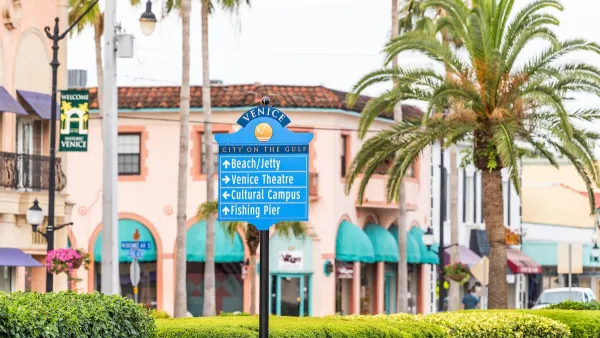
Learning From Venice, Florida
How a community planned in the 1920s has gracefully navigated change, offering a model for other places.

Planetizen Federal Action Tracker
A weekly monitor of how Trump’s orders and actions are impacting planners and planning in America.

The state-sanctioned urbicide of Austin
People don’t kill cities. Freeways do.

Colorado’s Largest Data Center Could Rise Next to Homes — Without a Public Hearing
The proposed campus would consume 11 times the power of Denver International Airport; as it has across the country, opposition mounts.

Judges permit Denver to divert 77,000 acre feet from the Colorado River for reservoir expansion
Overuse and climate change have caused the Colorado River’s water levels to plummet.

Amtrak, CN end decades-long dispute with eight-year agreement
The new operating agreement establishes an updated framework for the companies to work together, including processes to resolve disputes.

Raised interest rates may kill financially vulnerable construction projects
The chief economist at ConstructConnect warns that if construction project owners are negatively impacted by the raised rates, it could result in delayed payments to contractors.

FREE Course: Walkable City 1: Why Walkability?
After describing his path towards focusing on walkability as the essence of good planning, Jeff Speck marches through his five principal reasons for making more walkable places.
Reinventing Malls: Planning Alchemy—Turning Gray Fields Into Gold
The course focuses on the opportunities and imperatives that shape reinvention of mall sites.

Greater Baltimore Committee
Eagle County Government
Harvard University Graduate School of Design
The Architects Foundation
University of Cincinnati Online
The Pocatello Development Authority
The Urban Renewal Agency of the City of Pocatello
Journal of the American Planning Association