Kelly Anderson's documentary My Brooklyn tells the story of gentrification through the lens of corporate interests in urban planning.


Kelly Anderson's documentary My Brooklyn focuses on the effects of rezoning on gentrification.
A Brooklyn resident for 25 years, Anderson collaborated with race historian Craig Wilder to reveal that gentrification is not just about people moving in and out of neighborhoods. She "decided not to dig into the well-worn territory" of the gentrification story, which highlights the displacement of black and Latino groups by white residents, but focused her narrative on the effort of corporations to "revitalize" Downtown Brooklyn and Fulton Mall by lifting building height restrictions, building luxury condos, offering property tax incentives to prospective buyers and undercutting small businesses like pizza parlors, barbershops and bookstores.
The documentary features failed efforts by the Downtown Brooklyn community and its representatives like Families United For Racial and Economic Equality (FUREE) to present their case to the New York City Economic Development Corporation (NYCED), and includes interviews with prominent locally bred musicians, shoppers and business owners who feel like they are fighting a losing battle.
The film is playing through Feb. 3 at reRun Theatre in DUMBO.
Read the full story: The Real Story Behind the Gentrification of Brooklyn
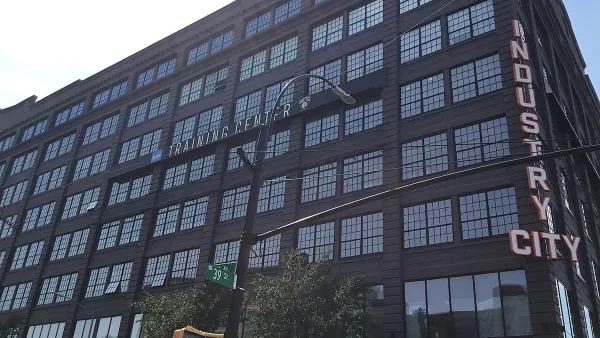
‘Emergent City’ Documentary Highlights Rare Anti-Gentrification Victory
The film charts the saga of a Brooklyn site called Industry City.
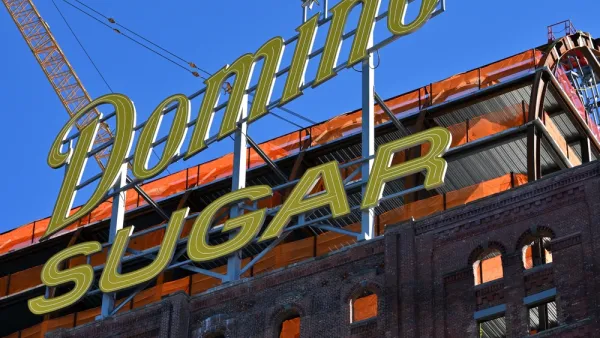
Bitter Irony Behind Brooklyn’s Sweet Domino Sugar Sign
A new feature on the Brooklyn waterfront is a reminder that Domino Sugar has made several unsavory appearances in the history of Puerto Rican communities.
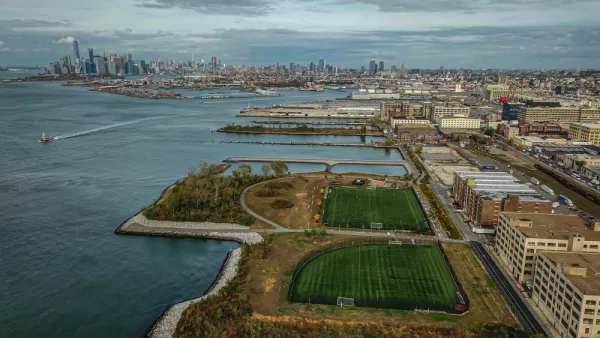
A Planning Showdown in New York City
The proposal to rezone the Industry City redevelopment area in the Sunset Park neighborhood of Brooklyn has won a key approval, but a controversial showdown in the City Council still awaits.

Planetizen Federal Action Tracker
A weekly monitor of how Trump’s orders and actions are impacting planners and planning in America.

California plans to bury El Niño’s downpour
If the state plays its cards right, it may be able to store a billion acre-feet of El Niño’s water in aquifers.

Desperate measures: Advocates weigh draining Lake Powell to fill Colorado River
Draining the reservoir could reduce evaporation losses by a couple hundred thousand acre-feet.

Los Angeles just elected an urban planner as its mayor
Transportation analysts are optimistic that Raman will be more aggressive in addressing transit issues than Bass.

Mamdani’s pied-à-terre tax survives legal challenge
A panel of judges found that the plaintiffs failed to demonstrate injury as a result of New York City's implementation of the tax.

Eastern Nebraska is running out of electricity
Data centers and electrification are straining eastern Nebraska’s grid, throttling economic development.

FREE Course: Walkable City 1: Why Walkability?
After describing his path towards focusing on walkability as the essence of good planning, Jeff Speck marches through his five principal reasons for making more walkable places.
Reinventing Malls: Planning Alchemy—Turning Gray Fields Into Gold
The course focuses on the opportunities and imperatives that shape reinvention of mall sites.

City of Rosemead
Rutgers University, Edward J. Bloustein School of Planning and Public Policy
One Hundred Miles
University of Michigan School for Environment and Sustainability (SEAS)
Hunter College, City University of New York (CUNY)
The Architects Foundation
City of Cambridge
Montrose County
The Pocatello Development Authority