Angie Schmitt delivers news that will bring some post-holiday cheer to transit and smart growth advocates. The Federal Transit Administration has revised the criteria by which it judges projects vying for funds from two popular programs.


By considering a broader range of factors, including environmental and economic benefits, the popular New Starts and Small Starts programs, which provided roughly half the funding for transit expansions in the U.S. last year, will likely support more projects in dense urban environments.
"Previously," writes Schmitt, "the FTA relied heavily on 'travel time savings' to judge the merits of a project. The new formula will focus instead on the number of passengers expected to be served. Economic benefits like the impact on development will also be considered."
"The new criteria also employ broader measures of the environmental benefits of transit. Instead of using the EPA’s air quality formula as the sole measure of a project’s environmental benefits, the new evaluation process will also incorporate the expected effects on public health (including traffic fatality rates) and energy use."
"Advocates say the new rules will streamline the approval process and open the door to federal funding for a wider variety of transit projects."
Read the full story: FTA Opens the Door For More Transit Expansions to Receive Federal Funding

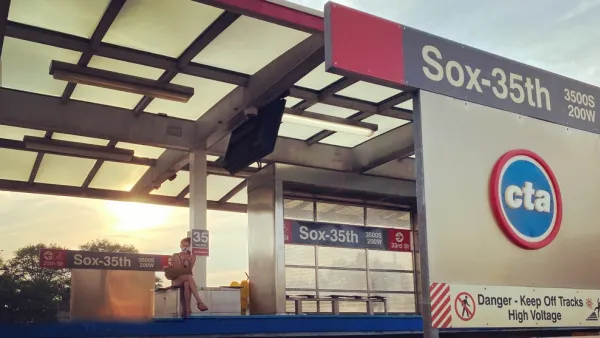
$2 Billion Federal Grant for Red Line Extension Project to Chicago’s South Side
A plan to extend the Chicago Transit Authority (CTA) Red Line 5.6 miles to the south won a $2 billion grant from the federal government.
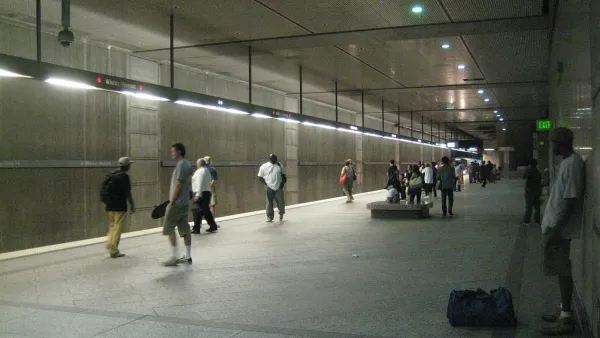
Federal Transit Grants Delayed by the Trump Administration
Congress has continued to fund transit projects despite the Trump Administration's stated desire to end federal funding for federal transit. Now it appears the Trump Administration is killing transit with bureaucracy.
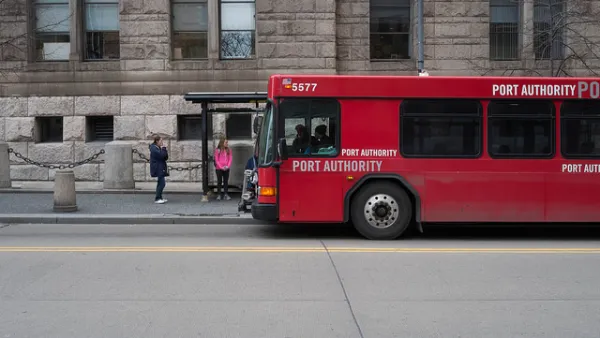
Downtown Pittsburgh to Oakland BRT Moving Forward, With or Without Federal Money
Expect more cities and transit agencies around the country to wrestle with funding quandaries if the Trump Administration gets its way with existing capital investment grants.

Planetizen Federal Action Tracker
A weekly monitor of how Trump’s orders and actions are impacting planners and planning in America.

California plans to bury El Niño’s downpour
If the state plays its cards right, it may be able to store a billion acre-feet of El Niño’s water in aquifers.

Chicago breaks ground on $3 billion megadevelopment
The new neighborhood, titled Foundry Park, will one day host 3,700 residences.

California High-Speed Rail Authority CEO resigns after $600,000 scandal
Under Ian Choudri, the authority used taxpayer dollars to fund first class flights and trips to nightclubs.

Want to study the Missouri River? Soon, you may need unanimous approval from 10 states
Legislation would require 10 governors’ permission to study or build projects moving water outside the basin.

Desperate measures: Advocates weigh draining Lake Powell to fill Colorado River
Draining the reservoir could reduce evaporation losses by a couple hundred thousand acre-feet.

FREE Course: Walkable City 1: Why Walkability?
After describing his path towards focusing on walkability as the essence of good planning, Jeff Speck marches through his five principal reasons for making more walkable places.
Reinventing Malls: Planning Alchemy—Turning Gray Fields Into Gold
The course focuses on the opportunities and imperatives that shape reinvention of mall sites.

City of Rosemead
Rutgers University, Edward J. Bloustein School of Planning and Public Policy
One Hundred Miles
Hunter College, City University of New York (CUNY)
The Architects Foundation
University of Cincinnati Online
City of Cambridge
Montrose County
The Pocatello Development Authority