Alison M. Rice looks at the transformation of the Washington D.C. suburb of Merrifield, Va. from an industrial-suburban wasteland to a $542 million mixed-use development.


"There are very few sites left in the country that are undeveloped and that have the density and strength of a permanent and daytime consumer base within a 10-minute drive time," said Jodie W. McLean, the president and chief investment officer for Edens. Her company is the private retail developer that has helped replace the auto body shop, fast-food restaurants, and acres of surface parking of Merrifield's past and brought in the Angelika Film Center, a 150-room Hyatt House hotel, 73,000 square feet of office space, and shops and restaurants. Her firm's project - the 31-acre Mosaic District - will be "divided into four geographic districts: fashion and retail; film and dining; market, which includes specialty food shops; and residential."
The District, which was named "to refer to the many different Northern Virginia neighborhoods that encircle Merrifield," is the center of the redevelopment. There is a one-acre park with an outdoor movie screen, specialty shops arranged by type, and a mix of national retailers and tiny local shops. Edens wanted to provide a unique shopping experience, and the firm hopes customers visit the district at least twice a week.
"As the district comes together, though," says Rice, "one piece remains stubbornly hard to fit: walkability. Intended as a pedestrian-friendly town center and less than a mile from a Metro station, Mosaic is still best reached for many visitors by car or bus, rather than on foot, because of traffic on nearby roads."
"Such a mixed bag of infrastructure takes time to convert into a walkable neighborhood," notes Rice. "Elected officials say recent road improvements intended to divert traffic away from known Merrifield bottlenecks should help. So should many of the residential projects under construction in the area, which will expand the sidewalk network and create the new street grid, they said."
Read the full story: A Suburban Wasteland in Virginia Gets a Modern Urban Feel

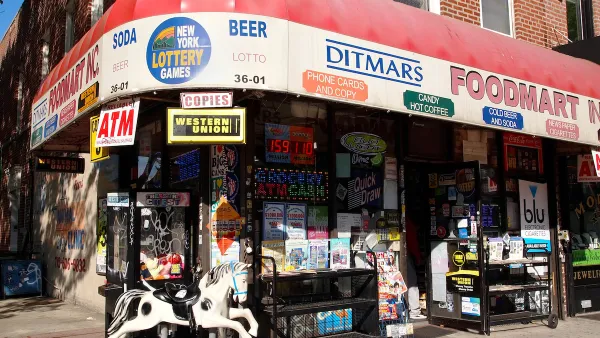
Bring Back the Corner Store
‘Accessory commercial units’ were once common across U.S. towns and cities. Now, zoning regulations make them illegal in many places.

Chamblee, Georgia Receives Funding to Fuel its Walkability Ambitions
A small grant with big meaning for the city of Chamblee.
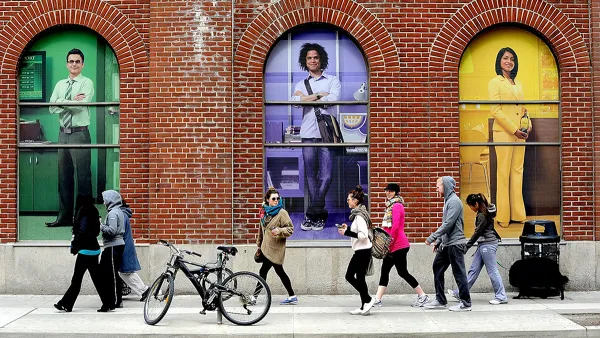
The Sidewalk to Hell is Paved with Good Intentions
When the vision's all right but the outcomes are all wrong, zoning's often the problem. And the public realm is left holding the bag.

Planetizen Federal Action Tracker
A weekly monitor of how Trump’s orders and actions are impacting planners and planning in America.

Chicago breaks ground on $3 billion megadevelopment
The new neighborhood, titled Foundry Park, will one day host 3,700 residences.

This MA town is drowning in its own sewage — and residents like it that way
Susan Murcott, a waste water expert, said if Carlisle didn't address their leaking sewage, the problem could turn “deadly.”

Iowa taxpayers are paying thousands to clean manure out of their water
While the Clean Water Act makes states responsible for regulating factory farms that discharge pollutants, Iowa has turned a blind eye to the polluting farms.

Amtrak cuts ribbon on Seattle Airo maintenance facility
The $250 million, nearly 100,000-square-foot building can house an entire Cascades Airo trainset.

To power data centers, Google seeks autonomous control of thousands of homes’ electricity
The tech company has signed a deal to indirectly pay Mid-Atlantic residents to reduce their power demand when the grid is strained.

FREE Course: Walkable City 1: Why Walkability?
After describing his path towards focusing on walkability as the essence of good planning, Jeff Speck marches through his five principal reasons for making more walkable places.
Reinventing Malls: Planning Alchemy—Turning Gray Fields Into Gold
The course focuses on the opportunities and imperatives that shape reinvention of mall sites.

City of Rosemead
Rutgers University, Edward J. Bloustein School of Planning and Public Policy
One Hundred Miles
The Architects Foundation
University of Cincinnati Online
Montrose County
The Pocatello Development Authority
The Urban Renewal Agency of the City of Pocatello