Ohio has been one of the hardest hit states by the recent wave of foreclosures, with filings continuing to rise. Susie Cagle looks at the variety of state and local policies and programs arming communities with new tools to fight blight.


The most recent development in Ohio's battle against blight is a bill that came before the state House this week that would, "allow people to clean up vacant, blighted properties without fear of a trespassing charge." If the effort in "harnessing NIMBY instincts for good" fails, there's always the public shaming approach. On Wednesday, notes Cagle, "The Columbus Dispatch and a city website published the names of negligent owners of more than 100 blighted properties." These efforts follow on programs aimed at stabilizing Cleveland by sanctioning real estate speculators and tearing down abandoned houses.
Whatever the tactic, and it sounds like Ohio is trying out as many as it can devise, the state is clearly giving the fight against blight all that it can muster. "The Rust Belt may be gritty, beat-down, and other patronizing adjectives we seem to reserve for post-industrial American cities," says Cagle, "but there’s a lot of hope in it yet."
Read the full story: Ohio fights a multi-front war against blight
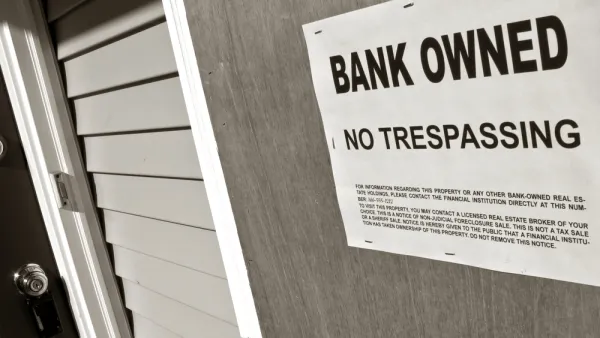
Mapping Tool Enables Housing Action in Detroit and Beyond
A web tool that helped Detroit develop a housing plan may ultimately provide public data on every parcel in the country.
New Jersey Communities Build Coalition to Track Abandoned Properties
The residents of Camden County in New Jersey, across the Delaware River from Philadelphia, banded together to catalog the abandoned properties in their neighborhoods, where the problem of abandoned, or "zombie" properties, is growing.
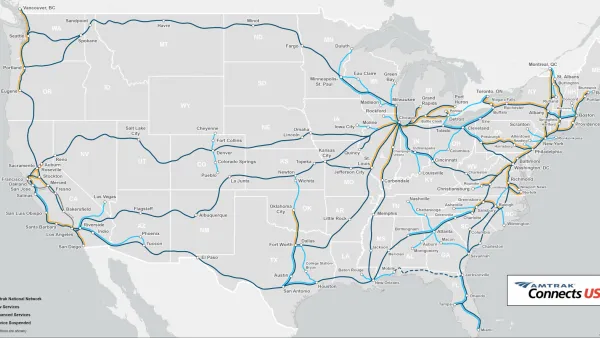
Political Support for Amtrak’s All Aboard Ohio Plans Follows Federal Infrastructure Funding
Gov. Mike DeWine’s sudden interest in working with Amtrak might have something to do with $66 billion in Infrastructure Investment and Jobs Act funding recently announced by the Federal Railroad Administration.

Desperate measures: Advocates weigh draining Lake Powell to fill Colorado River
Draining the reservoir could reduce evaporation losses by a couple hundred thousand acre-feet.

Eastern Nebraska is running out of electricity
Data centers and electrification are straining eastern Nebraska’s grid, throttling economic development.

Move over, LA: St. Louis gears up for Olympics, invests millions in downtown redevelopment
The Missouri city will host the 2028 Olympic soccer group stage and knockout matches.

Officials claim feds 'rushed' Amtrak environmental review
Amtrak plans to move their Chicago maintenance facility from an industrial area to a residential one.

NYC breaks ground on anti-flooding infrastructure project
New York City's new system will reduce stormwater flows to local sewers by 90%.

One Kentucky town’s secret to affordable housing
The Smoketown Community Land Trust has already built seven affordable homes for community members.

FREE Course: Walkable City 1: Why Walkability?
After describing his path towards focusing on walkability as the essence of good planning, Jeff Speck marches through his five principal reasons for making more walkable places.
Reinventing Malls: Planning Alchemy—Turning Gray Fields Into Gold
The course focuses on the opportunities and imperatives that shape reinvention of mall sites.

City of Rosemead
Rutgers University, Edward J. Bloustein School of Planning and Public Policy
One Hundred Miles
University of Michigan School for Environment and Sustainability (SEAS)
Hunter College, City University of New York (CUNY)
The Architects Foundation
City of Cambridge
Montrose County
The Pocatello Development Authority