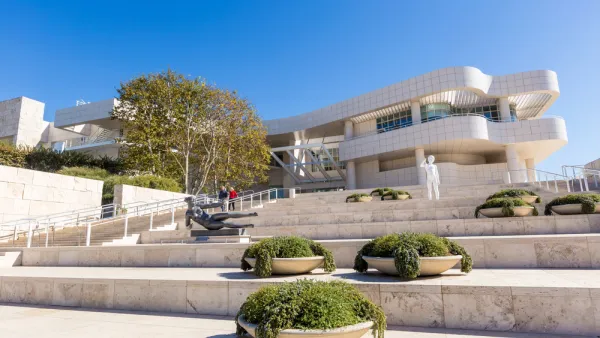
In the face of slow development in the U.S., renowned architects Richard Meier and Robert A.M. Stern have been exporting their distinctive styles overseas, where “people want to bask in the reflective glow of New York.”


"You used to look out that window and somewhere you would see a crane," said Meier. "You go around New York City today and you don't see that many cranes. It is just not happening at this moment." Before the recession, Richard Meier & Partners Architects' projects were split 50-50 between the U.S. and abroad. Now, reports Alexei Barrionuevo, about 80 percent are overseas and 20 percent in the United States.
"Why do they come to us? Because of 15 Central Park West," said Stern about the attraction of international clients to his uber exclusive "limestone monument to Old New York." Robert A.M. Stern Architects was recently commissioned to design a neighborhood in China. "The pictures and renderings of the project, dubbed 'Heart of Lake'," says Barrionuevo, "suggest a more appropriate name for the development might be 'Sternville'." The buildings closely resemble those of 15 Central Park West, and the look and "lifestyle" of that building was a strong factor in Stern Architects winning the job over two other firms, said the developer.
The brands of architects like Stern and Meier are highly sought after in other countries. Ali Pamir, a Turkish developer "on the hunt for a development in Istanbul that would interest Mr. Meier," explained that "architecture is becoming collectible." The selling point for affluent buyers, says Pamir, is that they can "sit down and share an experience with a master architect like Meier."
Read the full story: When It Works in New York, Architects Take It on the Road

AIA Reforms Award Process After #MeToo Mistakes
Former U.S. Attorney General Eric Holder will be involved in vetting the American Institute of Architect's awards process in the future.
Looking to the Skyscraper: Two High-Rises Proposed for Camden Waterfront
Camden, New Jersey, is not known for its skyscrapers, but that could change if the development of a site just south of the Benjamin Franklin Bridge is approved.
Chicago Moving Forward with Residential High Rise Designed by Robert A.M. Stern
The Chicago Plan Commission approved a 67-story residential high rise earlier this month, as the latest evidence of the city's changing skyline.

Planetizen Federal Action Tracker
A weekly monitor of how Trump’s orders and actions are impacting planners and planning in America.

Chicago breaks ground on $3 billion megadevelopment
The new neighborhood, titled Foundry Park, will one day host 3,700 residences.

This MA town is drowning in its own sewage — and residents like it that way
Susan Murcott, a waste water expert, said if Carlisle didn't address their leaking sewage, the problem could turn “deadly.”

Iowa taxpayers are paying thousands to clean manure out of their water
While the Clean Water Act makes states responsible for regulating factory farms that discharge pollutants, Iowa has turned a blind eye to the polluting farms.

Amtrak cuts ribbon on Seattle Airo maintenance facility
The $250 million, nearly 100,000-square-foot building can house an entire Cascades Airo trainset.

To power data centers, Google seeks autonomous control of thousands of homes’ electricity
The tech company has signed a deal to indirectly pay Mid-Atlantic residents to reduce their power demand when the grid is strained.

FREE Course: Walkable City 1: Why Walkability?
After describing his path towards focusing on walkability as the essence of good planning, Jeff Speck marches through his five principal reasons for making more walkable places.
Reinventing Malls: Planning Alchemy—Turning Gray Fields Into Gold
The course focuses on the opportunities and imperatives that shape reinvention of mall sites.

City of Rosemead
Rutgers University, Edward J. Bloustein School of Planning and Public Policy
One Hundred Miles
The Architects Foundation
University of Cincinnati Online
Montrose County
The Pocatello Development Authority
The Urban Renewal Agency of the City of Pocatello