An experiment in Germany engages kids to build micro-cities as playgrounds. The idea is coming to downtown Philadelphia.


Kolle 37, as it's called Berlin, is "is one of Germany's most successful attempts at reforming how children play and learn by providing an interactive space for play," reports Next American City's Alex Vuocolo. A proposal in Philadelphia may see the American version of such a project take place.
"But will a concept that works in a progressive borough of Berlin also work in the complicated legal landscape of an American city, where strict safety guidelines have defined playground construction for over 30 years?" asks Vuocolo. "[Alex Gilliam, director of Public Workshop], is confident that it will, and not only out of blind faith. He said that for youth engagement and crowd-sourcing projects to avoid liabilities and result in a successful finished product, there must also be subtle top-down management."
Read the full story: Temporary Playground to Turn Kids Into Planners

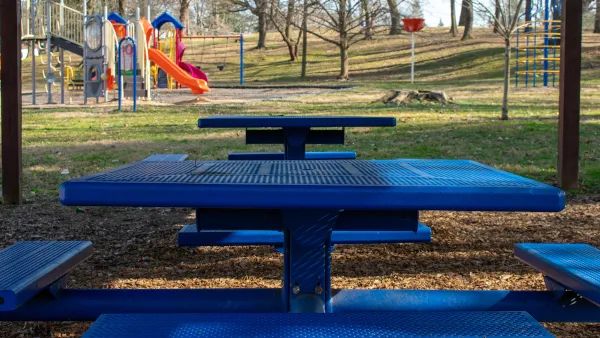
A Data-Driven Approach to ‘Playspace Inequity’
Mapping playgrounds and their conditions can reveal how childhood play opportunities are inequitably distributed within cities.
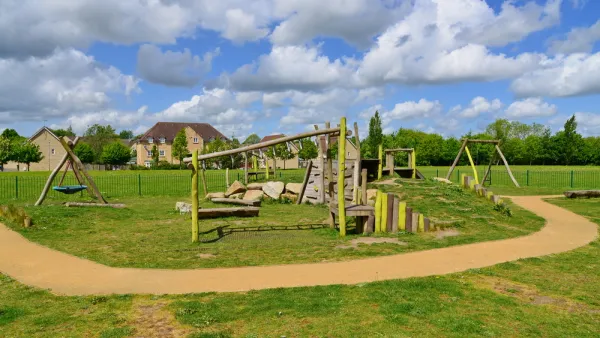
Playgrounds as an Essential Amenity
A London organization is working to bring ‘adventure playgrounds’ to park-poor neighborhoods, arguing that outdoor play is a key factor in child development.
New Market-Rate Housing Lowers Rents for Everyone, According to New Research
A study published by a German researcher adds ammunition to the cause of improving housing affordability by legalizing and building new supply.

Planetizen Federal Action Tracker
A weekly monitor of how Trump’s orders and actions are impacting planners and planning in America.

Chicago breaks ground on $3 billion megadevelopment
The new neighborhood, titled Foundry Park, will one day host 3,700 residences.

This MA town is drowning in its own sewage — and residents like it that way
Susan Murcott, a waste water expert, said if Carlisle didn't address their leaking sewage, the problem could turn “deadly.”

Iowa taxpayers are paying thousands to clean manure out of their water
While the Clean Water Act makes states responsible for regulating factory farms that discharge pollutants, Iowa has turned a blind eye to the polluting farms.

Amtrak cuts ribbon on Seattle Airo maintenance facility
The $250 million, nearly 100,000-square-foot building can house an entire Cascades Airo trainset.

To power data centers, Google seeks autonomous control of thousands of homes’ electricity
The tech company has signed a deal to indirectly pay Mid-Atlantic residents to reduce their power demand when the grid is strained.

FREE Course: Walkable City 1: Why Walkability?
After describing his path towards focusing on walkability as the essence of good planning, Jeff Speck marches through his five principal reasons for making more walkable places.
Reinventing Malls: Planning Alchemy—Turning Gray Fields Into Gold
The course focuses on the opportunities and imperatives that shape reinvention of mall sites.

City of Rosemead
Rutgers University, Edward J. Bloustein School of Planning and Public Policy
One Hundred Miles
The Architects Foundation
University of Cincinnati Online
Montrose County
The Pocatello Development Authority
The Urban Renewal Agency of the City of Pocatello