Last Friday was annual PARK(ing) Day, and for Howard Blackson, who participated in a pilot park(let) project in San Diego, the reasons to enable context appropriate civic space was underscored again.


"In 2005, San Francisco design firm, Rebar, transformed a single metered parking space into a temporary public park for 2-hours. An image of this transformational act went viral and changed the way we ‘see' public spaces. This lone 'parklet' led to PARK(ing) Day, informing the Tactical Urbanist toolbox, and being formally adopted by San Francisco, Long Beach, Boston, and New York."
"Our little Parklet on Friday was a temporary, simple place and, while it appeared to be antithetical to the beauty and grandeur of our great Civic Spaces, its democratic spirit was still intact," says Blackson, who details the lessons (re)learned during his experience:
- The Street did not feel as ‘dangerous' as we tend to expect.
- Place matters.
- Civic space really does connect people.
- America's greatest idea, "that all men are created equal," is realized in public space.
Thanks to Hazel Borys
Read the full story: Great Civic Space: It ain’t the size, it’s what you do with it
Happy Park(ing) Day! Should This Be the Last One?
Though Park(ing) day organizers stopped tracking numbers last year, it's safe to say that dozens of cities will be turning their parking spaces into public spaces today. But for Alissa Walker, participants could better spend their time and energy.
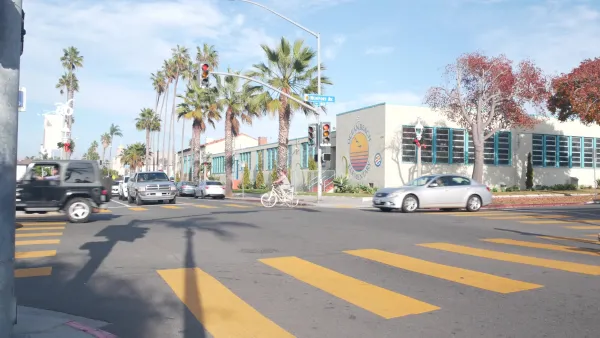
San Diego Wants to Lower Speed Limits in School Zones, High-risk Corridors
New state laws allow cities to reduce speed limits in high-risk zones.

Minneapolis Activists Use DIY Traffic Circles to Identify, Slow ICE
Residents are using the pop-up roundabouts to slow traffic and make their presence known on Minneapolis streets.

Planetizen Federal Action Tracker
A weekly monitor of how Trump’s orders and actions are impacting planners and planning in America.

California plans to bury El Niño’s downpour
If the state plays its cards right, it may be able to store a billion acre-feet of El Niño’s water in aquifers.

Desperate measures: Advocates weigh draining Lake Powell to fill Colorado River
Draining the reservoir could reduce evaporation losses by a couple hundred thousand acre-feet.

Chicago voters approve permanent festival grounds, penalty for vacant property owners
Currently, major summer and fall festivals take over public parks for weeks at a time, drawing criticism from nearby residents

NYC votes to cut outdoor dining red tape, speed up permitting
New York City also voted to allow the Department of Transportation to begin work on urgent projects before notifying elected officials.

California appears to reject Prop. 45
The proposition would have expanded the projects that qualify for a streamlined environmental review, effectively paring down the California Environmental Quality Act.

FREE Course: Walkable City 1: Why Walkability?
After describing his path towards focusing on walkability as the essence of good planning, Jeff Speck marches through his five principal reasons for making more walkable places.
Reinventing Malls: Planning Alchemy—Turning Gray Fields Into Gold
The course focuses on the opportunities and imperatives that shape reinvention of mall sites.

City of Rosemead
Rutgers University, Edward J. Bloustein School of Planning and Public Policy
One Hundred Miles
Hunter College, City University of New York (CUNY)
The Architects Foundation
University of Cincinnati Online
City of Cambridge
Montrose County
The Pocatello Development Authority