After two decades of pushing the boundaries of what it means to build a community (both physically and spiritually), the annual Burning Man festival has a lot to teach municipalities about providing services and fostering participation.


At the end of this month, Black Rock City, the annual temporary home to the Burning Man festival will swell from nothing to a population of 60,000 inhabitants. In an era in which, "Many seek to harness the creative energies of citizens to fill the gaps,
asking them to take a more active role in governance, service
provision, and even in creating new services," Black Rock City's successes in fostering participation, sharing and community can be a model for towns around America.
Jessica Reeder discusses 7 lessons Burning Man can offer your town, along with relevant examples from other communities:
- First, Adopt the Right Mindset: There are No Spectators
- Crowdsource The Budget
- Build Your Own Bank
- Share Your Profits
- Hitch, Surf & Crash
- Plug In to the Resource Grid
- Reprogram Your Government
Read the full story: 7 Ways To Reinvent Your City, Burning Man Style

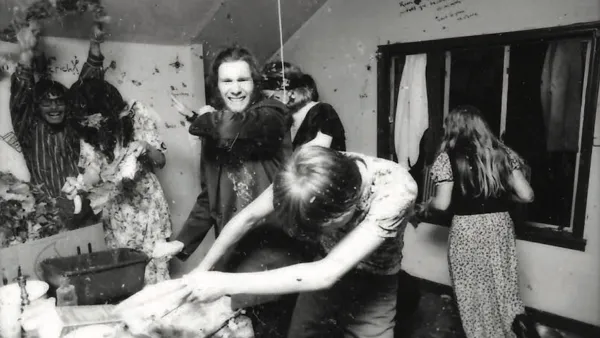
San Francisco is in a “Doom Loop.” A Legendary Artist and Burning Man Founder Knows how to Revive it.
Artists made San Francisco what it was. They might just be the key to its future.
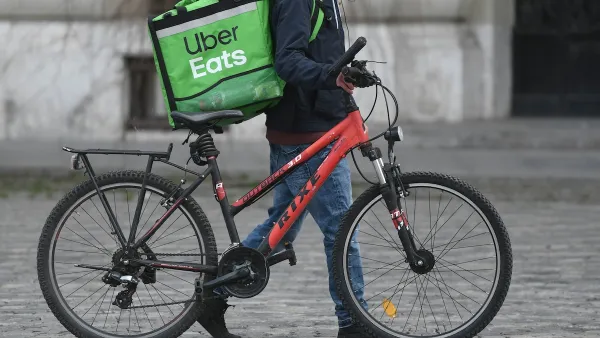
EU's New Rider Directive Poses Challenges to Cash-Strapped Delivery Platforms
The European Union has adopted a new directive aimed at improving working conditions for platform workers and increasing transparency. This new directive goes beyond Spain’s Rider’s Law, aiming for a harmonized set of standards across the E.U.
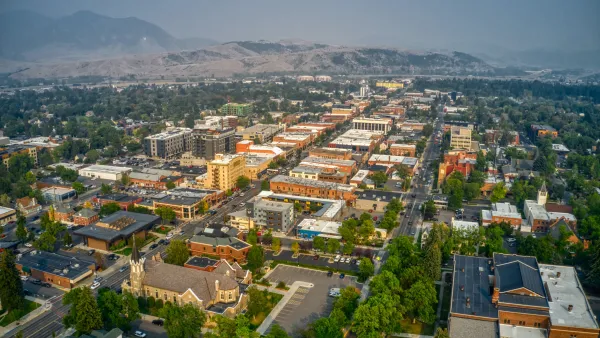
Montana Land Use Reform Overhauls Public Participation Rules
In a bid to streamline housing permits, new state legislation limits public input to the land use planning stage.

Planetizen Federal Action Tracker
A weekly monitor of how Trump’s orders and actions are impacting planners and planning in America.

Amtrak, CN end decades-long dispute with eight-year agreement
The new operating agreement establishes an updated framework for the companies to work together, including processes to resolve disputes.

Judges permit Denver to divert 77,000 acre feet from the Colorado River for reservoir expansion
Overuse and climate change have caused the Colorado River’s water levels to plummet.

Boston has spent millions making the Green Line more accessible — and there’s no end in sight
While the city has invested millions into expanding and adding platforms to the Green Line to make it more accessible, new train cars set to arrive next year will be too tall for disabled passengers to board without raising the current platforms.

Idaho may see an 18% drop in federal surface transit funding — the largest estimated cut in the US
Transit systems in rural communities are much more reliant on federal funding to provide their services.

How ‘post-disaster gentrification’ alters neighborhoods after natural calamities
After hurricanes, fires or other calamities, the original residents of a community are often replaced by younger, wealthier residents.

FREE Course: Walkable City 1: Why Walkability?
After describing his path towards focusing on walkability as the essence of good planning, Jeff Speck marches through his five principal reasons for making more walkable places.
Reinventing Malls: Planning Alchemy—Turning Gray Fields Into Gold
The course focuses on the opportunities and imperatives that shape reinvention of mall sites.

City of Wisconsin Rapids
Harvard University Graduate School of Design
KFH Group Inc.
The Architects Foundation
University of Cincinnati Online
The Pocatello Development Authority
The Urban Renewal Agency of the City of Pocatello