A Phoenix man serves time for holding prayer gatherings in his home, part of what attorney and author John W. Whitehead sees as a larger trend toward zoning out home services.


NIMBY? That is so yesterday. When it comes to home religious services, the trend appears to be Not In Your Yard Either. See one Michael Salman, a Phoenix resident who was fined $12,000 and sentenced to 60 days in one of Arizona's famously no-frills tent city jails for breaking a variety of city codes (67, to be exact) by having groups of 20 to 45 family and friends gather for worship in his rec room.
Although the worshippers parked on Salman's 4.6-acre property, the neighbors complained. After three years of unsuccessful attempts to meet code requirements (such as installing sprinklers) Salman finally faced charges. As a condition of his probation, he cannot have more than 12 guests in the house at a time, and is subject to unannounced inspections by the city.
The codes that made Salman's gatherings illegal are not unusual in the United States. To deal with illegal synagogues, one community in New York adopted codes that make it difficult to hold any sort of Orthodox prayer meeting in a residence.
Thanks to Rachel Proctor May
Read the full story: The Overcriminalization of America: Are We All Criminals Now?
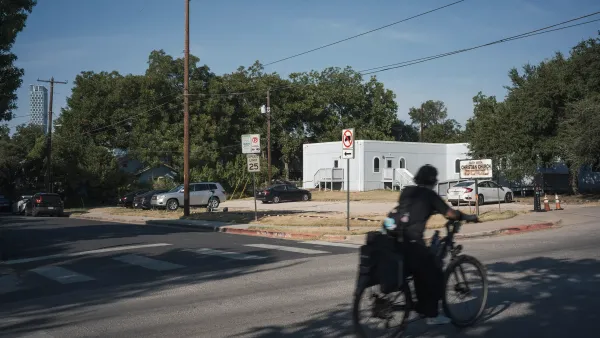
The new Texas law declawing NIMBYs
State lawmakers gutted an old Jim Crow-era state law that required a city council supermajority to approve a new housing development if neighbors petitioned the proposal.

Feds say Arizona, California and Nevada must cut Colorado River water use by 1.25 million acre-feet
The new plan does not apply mandatory cuts to any of the river’s upper basin states.
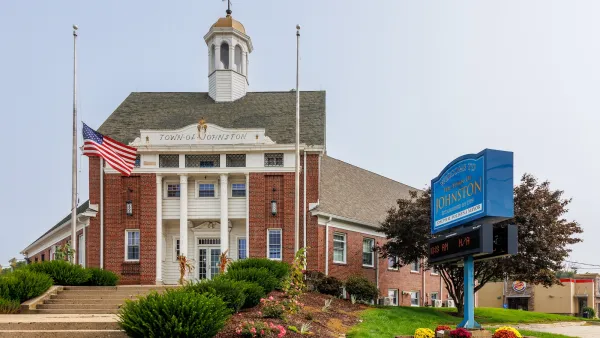
Judge says Rhode Island town can't seize private lot to block affordable housing
The town of Johnston moved to seize a lot for municipal buildings after its owners submitted a plan for a 254-unit housing development.

Planetizen Federal Action Tracker
A weekly monitor of how Trump’s orders and actions are impacting planners and planning in America.

California plans to bury El Niño’s downpour
If the state plays its cards right, it may be able to store a billion acre-feet of El Niño’s water in aquifers.

Desperate measures: Advocates weigh draining Lake Powell to fill Colorado River
Draining the reservoir could reduce evaporation losses by a couple hundred thousand acre-feet.

Voters across the country reject data centers
Dozens of communities voted on measures to restrict the buildout of data centers.

US buildings threatened, destroyed by fires set to triple by 2060
Researchers found a high fire risk for socioeconomically vulnerable neighborhoods in the American West.

LA residents may be allowed to paint their own crosswalks
Councilwoman Katy Yaroslavsky put out a motion instructing the Los Angeles Department of Public Transportation to study the feasibility of allowing volunteers to paint crosswalks.

FREE Course: Walkable City 1: Why Walkability?
After describing his path towards focusing on walkability as the essence of good planning, Jeff Speck marches through his five principal reasons for making more walkable places.
Reinventing Malls: Planning Alchemy—Turning Gray Fields Into Gold
The course focuses on the opportunities and imperatives that shape reinvention of mall sites.

City of Rosemead
Rutgers University, Edward J. Bloustein School of Planning and Public Policy
One Hundred Miles
Hunter College, City University of New York (CUNY)
The Architects Foundation
University of Cincinnati Online
City of Cambridge
Montrose County
The Pocatello Development Authority