Matt Flegenheimer reports on Mayor Bloomberg's announcement this week that the city plans to expand its so-called neighborhood slow-zone program, which is aimed at reducing driving speeds in neighborhoods across town.


Introduced with a pilot project in the Claremont section of the Bronx only last November, the expanded program would "lower the speed limit to 20 miles per hour from 30 in designated areas across as many as 13 neighborhoods," in an effort to further reduce the city's historically low level of traffic fatalities.
According to Flegenheimer, "The new zones, which may also feature speed bumps and special signs,
were tentatively selected based on crash history, community support and
proximity to schools, senior centers and day care centers, among other
factors, the city said. The neighborhoods [for implementation] include Corona, Boerum Hill in
Brooklyn, Riverdale in the Bronx, Inwood in Manhattan and Rosebank on
Staten Island."
Read the full story: City Expands 20 M.P.H. Zones Across More Neighborhoods
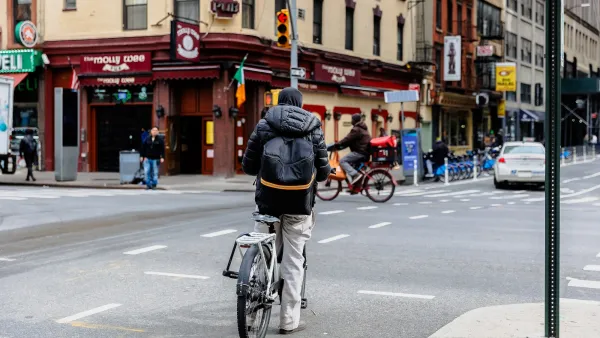
NYC e-bike injury study highlights 'critical infrastructure deficiencies'
The sharp rise in e-mobility injuries points to a need for safer roads, not more punitive laws.
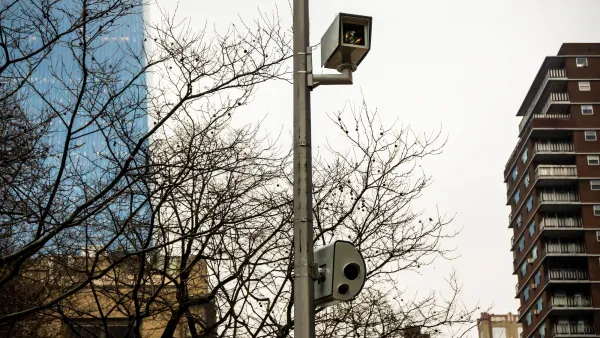
NYC Will Quadruple Traffic Camera Locations This Year
New York has used red light cameras since the 1990s and plans to deploy them to 600 intersections this year.
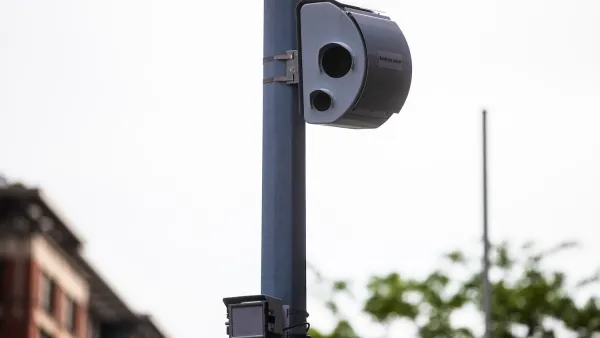
NYC to Expand Red-Light Camera Program, Target 'Ghost Cars'
The city plans to add 450 new cameras to catch red light violations.

Planetizen Federal Action Tracker
A weekly monitor of how Trump’s orders and actions are impacting planners and planning in America.

California plans to bury El Niño’s downpour
If the state plays its cards right, it may be able to store a billion acre-feet of El Niño’s water in aquifers.

Desperate measures: Advocates weigh draining Lake Powell to fill Colorado River
Draining the reservoir could reduce evaporation losses by a couple hundred thousand acre-feet.

Chicago voters approve permanent festival grounds, penalty for vacant property owners
Currently, major summer and fall festivals take over public parks for weeks at a time, drawing criticism from nearby residents

NYC votes to cut outdoor dining red tape, speed up permitting
New York City also voted to allow the Department of Transportation to begin work on urgent projects before notifying elected officials.

California appears to reject Prop. 45
The proposition would have expanded the projects that qualify for a streamlined environmental review, effectively paring down the California Environmental Quality Act.

FREE Course: Walkable City 1: Why Walkability?
After describing his path towards focusing on walkability as the essence of good planning, Jeff Speck marches through his five principal reasons for making more walkable places.
Reinventing Malls: Planning Alchemy—Turning Gray Fields Into Gold
The course focuses on the opportunities and imperatives that shape reinvention of mall sites.

City of Rosemead
Rutgers University, Edward J. Bloustein School of Planning and Public Policy
One Hundred Miles
Hunter College, City University of New York (CUNY)
The Architects Foundation
University of Cincinnati Online
City of Cambridge
Montrose County
The Pocatello Development Authority