Mixed-income housing - infusing affordable housing with market-rate units - is relying more on incentives and subsidies, than mandates, to stimulate development.


Thankfully, dwindling are the days of segregating low-income residents into affordable housing-only enclaves. Today, the need for affordable housing remains, yet an emerging trend is to utilize public incentives to co-mingle income groups in mixed-housing developments.
"The concept is finding favor among for-profit and nonprofit developers alike, particularly in today's tight lending market," states Patricia Kirk of Urban Land Magazine, "because local governments offer a number of incentives, including low-interest financing tools, cash subsidies and grants, free or low-cost land, density bonuses, tax abatement programs, rehabilitation assistance, fast-tracking of plan reviews and permits, and reduced or waived fees." It is these incentives that are driving private developers to include affordable housing in their developments, sometimes mixing affordable units with multi-million dollar ones.
While city planners and some developers state that it's simply "the right thing to do," many cities have been banned from mandating the inclusion of affordable housing into development plans by state statutes. In turn, cities are now looking at the use of incentives to coax developers into voluntarily setting aside up to 20 percent of their units as affordable housing.
For example, "Austin's S.M.A.R.T. (Safe, Mixed-income, Accessible, Reasonably priced, Transit-oriented) Housing Program offers developers a schedule of incentives based on the level of affordable housing provided. The city provides additional density and height variance, or floor/area ratio, to encourage provision of affordable housing and other community benefits, such as parking, open space, and streetscapes." Other cities like Los Angeles, New York and Portland have used similar incentive strategies to construct new transit-oriented developments, senior housing, art colonies and help revitalize economically and environmentally distressed neighborhoods.
FULL STORY: Making Mixed-Income Housing Work


Affordable Housing Bonus Program Expanded in Philadelphia
The city of Philadelphia launched a height and density bonus in 2018 to create incentives for the development of affordable housing, but so far the results have proven underwhelming.
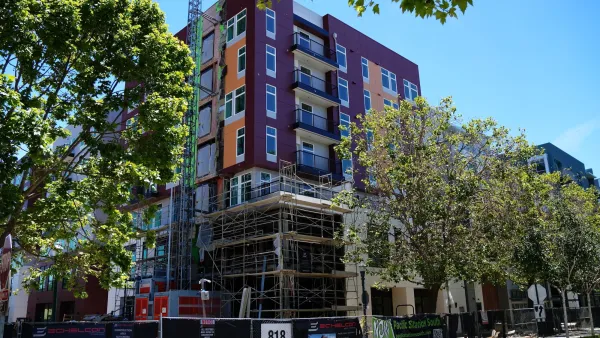
Report: California's density bonus is a 'win-win' for developers and affordable housing
Almost half of new multifamily projects in 2024 relied on a density bonus.
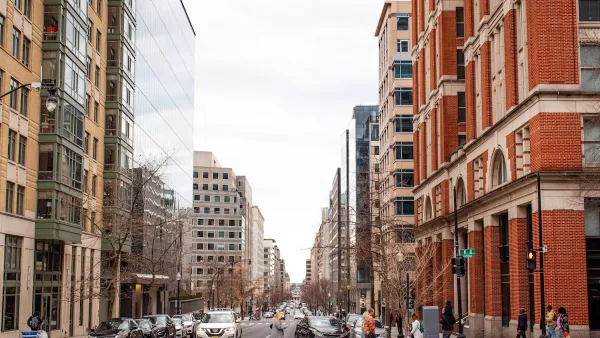
Mismanagement Leads to Loss of up to $35M for DC Affordable Housing
The District’s housing agency forfeited what would amount to $35 million in federal housing funds over the next decade.

The state-sanctioned urbicide of Austin
People don’t kill cities. Freeways do.

US to reduce Colorado River water deliveries to Mexico
A new Colorado Treaty amendment reduces Mexico’s Colorado River water allocation by 250,000 acre feet.

New Jersey’s second-largest city bans standalone data centers
Jersey City will continue to allow co-location facilities, such as those meant for research institutions that store their own data.

Amtrak not solely to blame for New Jersey commuter rail's unreliability, report finds
A new study from the Garden State Initiative found that NJ Transit’s budget grew 20% across a 4 year period, but reliability declined significantly over the same period.

EPA erases limits on planet-warming pollution from power plants
Under Monday’s plan, power plants would still have some limits on how much mercury, arsenic and other contaminants they can emit.

Phoenix announces new on-demand transit service, more frequent RAPID buses
Both new services will launch in October, and are part of Phoenix's Project Effective Access Solutions for Easing Congestion.

FREE Course: Walkable City 1: Why Walkability?
After describing his path towards focusing on walkability as the essence of good planning, Jeff Speck marches through his five principal reasons for making more walkable places.
Reinventing Malls: Planning Alchemy—Turning Gray Fields Into Gold
The course focuses on the opportunities and imperatives that shape reinvention of mall sites.

Eagle County Government
Harvard University Graduate School of Design
Nashville Planning Department
The Architects Foundation
University of Cincinnati Online
The Pocatello Development Authority
The Urban Renewal Agency of the City of Pocatello
Journal of the American Planning Association