The demolition of a Tulsa resident's edible garden, deemed "too tall" by city inspectors, has sparked a civil rights lawsuit, and is generating national attention.


Unemployed and uninsured, Denise Morrison grew more than 100 types of edible plants in her yard, which she used for food and medicinal purposes. That was before city inspectors, responding to a complaint, deemed the plants too tall and told her they needed to be removed.
As Sarah Laskow notes: "Morrison knew she was in the right; she had read the city code, which allowed plants over 12 inches if they were meant for human consumption. Hers were, so she got the police involved. They issued a citation, and she and the city went before a judge in August. The judge told them to come back in October."
"The next day, the city came to Morrison's yard and bulldozed her plants."
"Now", writes Laskow, "Morrison is suing Tulsa for violating her civil rights. She says the inspectors went way over the line. So far, the city doesn't have anything to say for itself. We're hoping that when they do, it starts with 'sorry' and ends with several zeroes."
Thanks to Christine M. Kudija, Esq., AICP, ASLA
Read the full story: Tulsa authorities bulldoze edible garden for being too tall

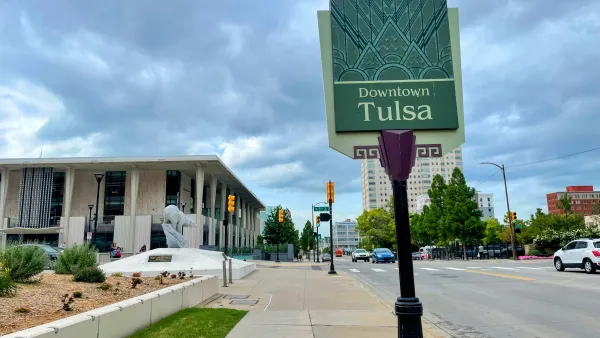
Tulsa dissolves city-county planning commission
The Tulsa Metropolitan Planning Commission, which previously oversaw both city and county planning issues, will split into two separate bodies on Sept. 2.
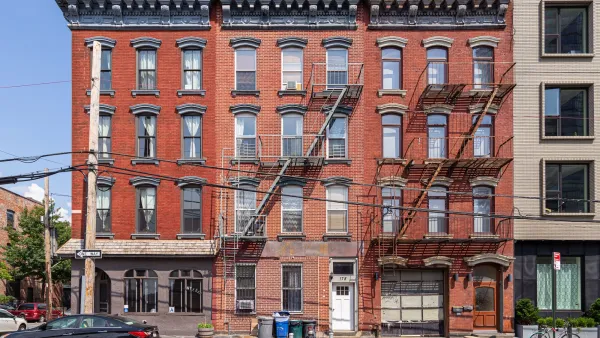
NYC Puts 250 Most Distressed Apartment Buildings on Enhanced Oversight List
The city’s Alternative Enforcement Program prioritizes buildings with the most unaddressed code violations, allowing the city to make repairs where needed.
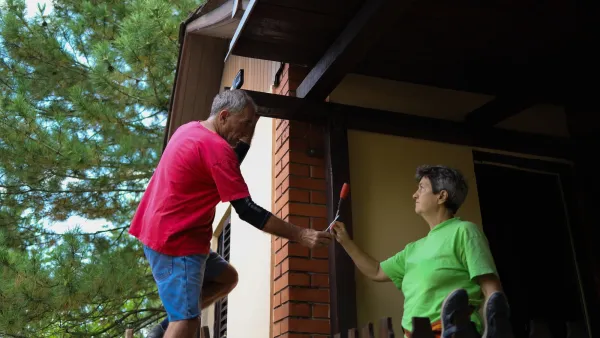
These Cities are Making Code Enforcement Supportive, not Punitive
We can upkeep homes without punishing low-income residents. Here are some lessons for change, and cities already doing that work on the ground.

Planetizen Federal Action Tracker
A weekly monitor of how Trump’s orders and actions are impacting planners and planning in America.

Amtrak, CN end decades-long dispute with eight-year agreement
The new operating agreement establishes an updated framework for the companies to work together, including processes to resolve disputes.

Judges permit Denver to divert 77,000 acre feet from the Colorado River for reservoir expansion
Overuse and climate change have caused the Colorado River’s water levels to plummet.

NYC DOT wants faster, more permanent street upgrades
The city is examining ways to build more concrete infrastructure without getting entangled in 'decades-long' projects.

'Something we’ve never seen before:' rising utility rates could strain city finances nationwide
Data centers, climate change and other factors have caused utility rates in the United States to increase by 38% since 2020.

Trump to overrule local leaders, lease millions of acres of America’s Pacific Island territories’ seafloors to mining companies
International law says that the Indigenous people of America’s territories have a right to prior and informed consent regarding projects that impact their countries.

FREE Course: Walkable City 1: Why Walkability?
After describing his path towards focusing on walkability as the essence of good planning, Jeff Speck marches through his five principal reasons for making more walkable places.
Reinventing Malls: Planning Alchemy—Turning Gray Fields Into Gold
The course focuses on the opportunities and imperatives that shape reinvention of mall sites.

Harvard University Graduate School of Design
KFH Group Inc.
Greater Baltimore Committee
The Architects Foundation
University of Cincinnati Online
The Pocatello Development Authority
The Urban Renewal Agency of the City of Pocatello